



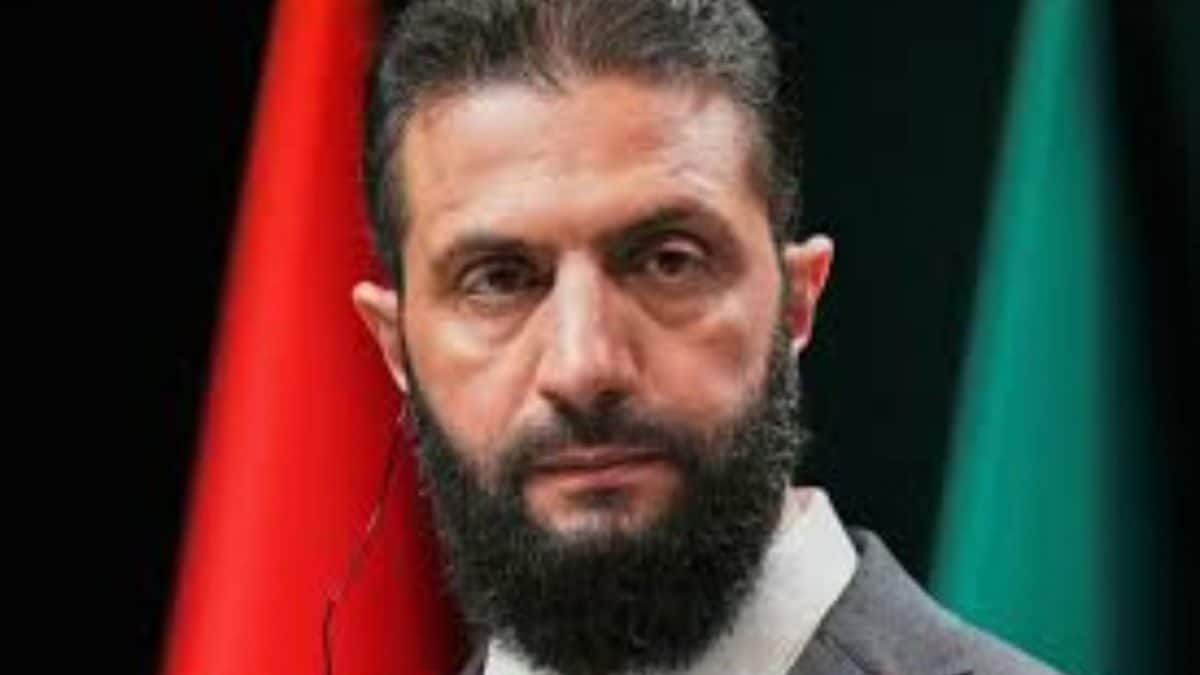
Syrians were jubilant as one year since the fall of Assad and the onset of President Ahmed Al Sharaa was celebrated. Sharaa has taken a pragmatic approach, and the Arabs, as well as Turkey and the West—especially President Donald Trump—have adopted him and helped mainstream him. It was a successful whitewash, transformation, and transition from his terroristic past. No one talks about the millions of dollars’ bounty that the US itself had placed on him. He first met Trump in Riyadh, courtesy of Saudi Crown Prince Mohammed bin Salman, and was later invited to the White House, where he was lauded for his looks and strength. He conducted himself well and endeared himself to Trump.
Since then, he has undertaken several visits to various capitals, entrenching his position and securing international support—21 visits to 13 countries since 29 January 2025. He even mended fences with Russia and visited the Kremlin to confer with Putin. There appears to be some understanding that Russians can stay in their bases at Tartus. Of course, they are expected not to interfere in domestic affairs through partisan support.
Even in the south, they could help provide forces to monitor the fragile modus vivendi between Israelis and Syrians to avoid any flare-up. Israel was quick to decimate Assad’s military and equipment and moved into, and occupied, the strategic Golan Heights. In any case, President Trump had declared both Jerusalem and the Golan Heights as Israeli territory, despite history and international opinion stating otherwise. Hence, even if the current weaker regime may want to pragmatically play it down, this will remain a major flashpoint in the future. As such, there is no love lost between Netanyahu and Al Sharaa, as the former continues to consider the latter a terrorist in a pinstriped suit.
Al Sharaa’s main problem has been the integration of rival ethnic groups like the Druze, Kurds, Alawites, and Christians, who have their historic grievances and fear Sunni Arab domination. Moreover, Israeli aggression and occupation in the Golan Heights, along with their support for the Druze community, has added another layer to instability in Syria. The biggest challenge for Sharaa remains the US-supported Syrian Democratic Forces (SDF), comprising the Kurdish community also fighting for their identity and geographical space across Iraq, Turkey, Iran, and Syria. US support, in the wake of the Arab Spring and their regime-change agenda against Assad over a decade ago, was supposed to be “Transactional, Temporary, and Tactical”.
The SDF was supposed to be integrated into the eventually emerging governing architecture. However, integrating a large number of independent militants and groups into one unified whole—and arguably asking them to surrender their perceived geographical, ideological, and ethnic sovereignty—is quite a challenge, especially given the tremendous trust deficit and unabated external support.
On March 10, 2025, the two parties signed a framework agreement. Under intense pressure from the United States, the SDF’s commander-in-chief, Mazloum Abdi, agreed to a timeline that would see it fully merge into the Syrian army, and the Kurdish autonomous administration dissolve into the central government by the end of the year. The text promised respect for Kurdish culture and language. The deal was widely celebrated by supporters of both sides in the country. But there are too many slips between the cup and the lip, even in the implementation of “Democratic Confederalism”, considered the only viable alternative to a fragmented country. This is also subscribed to by Kurdish leader Abdullah Öcalan, detained in Turkey, who hopes to find a political modus vivendi with Erdogan and has urged his followers to desist from violent clashes—a pragmatic stance.
Many observers, however, also commented that the regime in the north-eastern part is using the same repressive tactics as Assad, or indeed the current regime: an exclusionary structure and diktat against Sunni tribes and Arabs, such as banning the “Labbat, Labbat” song and symbols, including the newly adopted Syrian flag by AANES. Kurds and the SDF, on the other hand, have a long history of being persecuted and don’t want to hand over their future to another Sunni militant group, while they see a credible opening for extracting their fair share. But the power differential is not in their favour.
Even the likely Shia Prime Minister of Iraq, Nouri Al-Maliki, maintained: “Syria is now a country under Turkish and Israeli rule, and the government consists of terrorists who used to be imprisoned in Iraq. Do you really believe these terrorists can properly govern an ethnically and religiously diverse country like Syria?”
Recent conflict between the SDF and Syrian security forces exposed mistrust between them. Kurds, who successfully fought against ISIL (Daesh), want fair representation in the emerging architecture, with some degree of autonomy. Trump spoke to Sharaa, and the issue was discussed even at Davos. While leading a delegation to Damascus on 31 May, Abdi refused to meet with President Al Sharaa or Foreign Minister Asaad al-Shaibani, choosing instead to negotiate exclusively with US envoy Tom Barrack. It is rumoured that the fate of 12,000 Kurdish female fighters is also an issue, as given HTS philosophy, they would be expected to return home and tend children, which is unacceptable to the SDF. Abdi did not want to meet Sharaa and Shaibani as he felt the regime was unstable and might not last long.
Most observers agree that it is too little, too late to generate confidence, and much will depend on how the US, Turkey, and Israel behave—whether in unison or against each other—to eventually hurt or help the Syrians, irrespective of their ethnicity. Meanwhile, on 17 January, in an attempt to move negotiations forward, Al Sharaa issued a presidential decree affirming the rights of Syrian Kurds. The decree recognises Kurds as an integral part of the Syrian nation, guarantees cultural and linguistic rights (including the use and teaching of Kurdish), addresses long-standing citizenship issues for stateless Kurds, and designates Nowruz as a national holiday. But Kurds say that lasting protections require constitutional guarantees rather than relying solely on executive decrees. And the fight goes on.
India has been a consistent supporter of Syria’s sovereignty, territorial integrity, and development. While Syrian Foreign Minister Faisal Shaibani was expected to attend the Arab League Foreign Ministers’ meeting in New Delhi, Syria is instead expected to send a senior official; had the minister attended, it would have provided a valuable opportunity to discuss a range of bilateral issues with the new regime.
(The author is the former Indian Ambassador to Jordan, Libya and Malta and is currently a Distinguished Fellow with Vivekananda International Foundation. Views expressed in the above piece are personal and solely those of the author. They do not necessarily reflect Firstpost’s views.)
End of Article
