



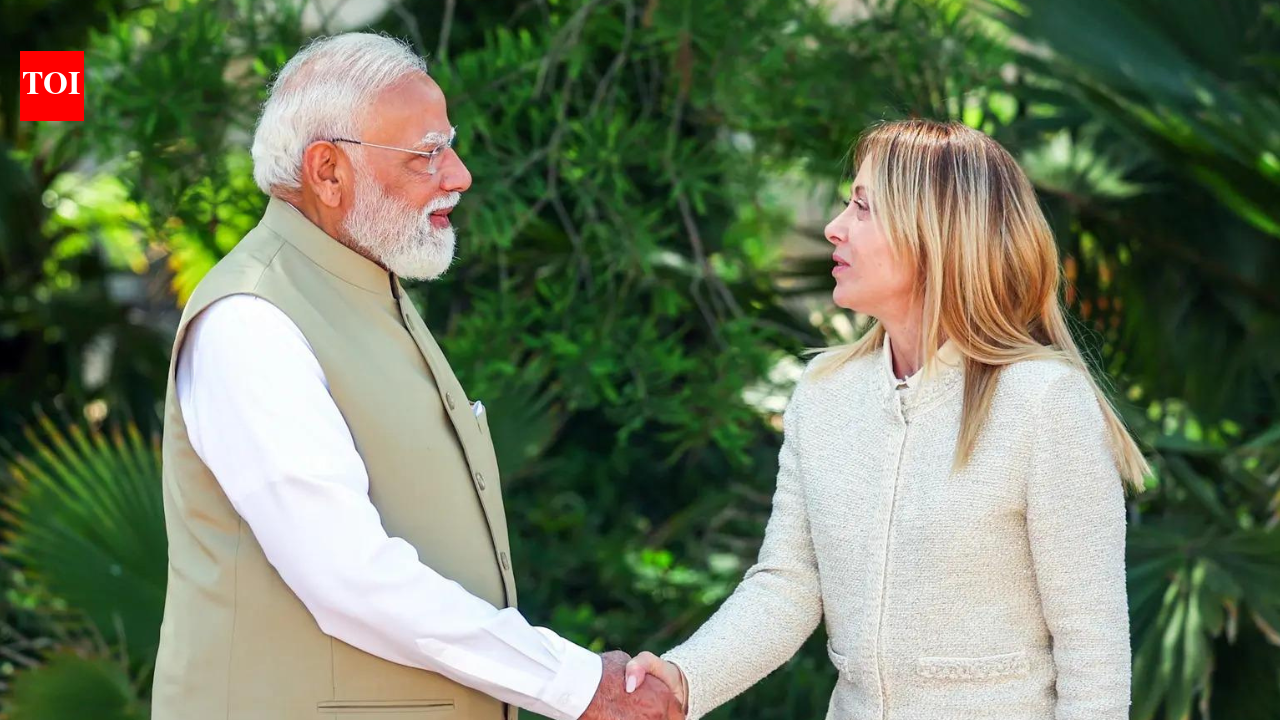
The world India built its partnerships on is shifting and shifting fast.Washington is increasingly transactional, with tariffs and trade threats making America a partner India values but can no longer rely on exclusively. China remains India’s largest trading partner, but unresolved border tensions and a deepening strategic rivalry make dependence on China a risk New Delhi is actively working to reduce. And Russia, a friendship built over decades, is quietly fraying, the war in Ukraine has isolated Russia and made deep engagement with the Kremlin a diplomatic liability India can ill afford. Furthermore, Ongoing Middle East conflicts threaten India’s economic stability by disrupting energy, shipping, and expatriate welfare.So the question sitting at the heart of India’s foreign policy today is simple if not them, then who?The answer, with growing conviction in New Delhi, is Europe. And at the centre of India’s European bet is a partnership that in a telling sign of the times the internet noticed before the diplomats did.Clips of Prime Minister Narendra Modi and Italian Prime Minister Giorgia Meloni on the sidelines of multilateral summits have generated millions of views across India and Europe. The warmth is visible and unscripted, two leaders who appear to genuinely enjoy each other’s company. And in the transactional world of modern diplomacy, that is rarer than it sounds.But here’s what most people scrolling past those clips don’t realise.While the world was watching the chemistry, India was building the architecture, a corridor anchoring Italy to India’s supply chain ambitions, and a free trade agreement with Europe that could be the most consequential economic deal India signs this decade.This is that story. Meloni, since taking office in 2022, has approached India not through the tired lens of old European paternalism but as what India actually is, a civilisational power, a manufacturing giant in the making, and a geopolitical force that Europe can no longer afford to treat as a developing-world afterthought. In Modi, she found a counterpart who prizes directness, responds to genuine respect, and brings his own extraordinary public reach to every room he enters.Their political instincts rhyme. Their audiences overlap more than either capital’s foreign ministry would formally acknowledge. And in an era where public sentiment shapes diplomatic momentum, two leaders who can generate popular interest in a bilateral relationship are a strategic asset to each other. People are watching. That matters!But behind the rapport lies something more durable than chemistry.India and Italy have not always been natural allies. For years, the relationship carried the weight of real damage. The AgustaWestland VVIP helicopter scam poisoned defence cooperation for nearly a decade. Italian firm Finmeccanica was blacklisted, contracts were cancelled, and the very mention of India-Italy defence ties conjured images of courtrooms rather than collaboration. Then came the Italian marines case, two soldiers accused of killing Indian fishermen off the Kerala coast in 2012, a legal battle that ground through international tribunals and strained diplomatic tempers on both sides.Trust, once bruised, is slow to heal. But it does heal.The Joint Strategic Plan of Action 2025–2029, agreed between the two governments, is not a declaration of goodwill. It is an operational roadmap covering defence, technology, energy, connectivity and trade. New frameworks for defence industrial cooperation are being built. Italy brings aerospace, naval and cybersecurity sophistication, India brings scale, ambition and a modernisation programme of historic proportions.On trade, bilateral exchange has crossed 16.77 billion US dollars, with a joint target of 20 billion euros by 2029. Italy is already India’s fourth largest trading partner within the European Union. Tata Motors’ 3.8 billion euro acquisition of the Iveco Group, the single largest Indian investment ever made on Italian soil, signals that this is no longer a relationship of pleasantries. India is planting flags in European manufacturing.Then there is IMEEC the India-Middle East-Europe Economic Corridor, perhaps the most geopolitically significant infrastructure initiative India has backed in recent years.IMEEC is an alternative to chokepoints. A hedge against disruption. A new artery connecting India through the Gulf and the Middle East all the way into Europe, building resilience into supply chains that the pandemic and geopolitical shocks have exposed as dangerously fragile.Italy is not merely a signatory to this corridor. It is its western anchor. The Sparkle-Airtel Blue-Raman submarine cable now live connects India digitally to the port of Genoa. That is not a metaphor. That is fibre optic infrastructure binding two economies in real time, with more to follow.For India, IMEEC is about energy security and supply chain sovereignty. For Italy, it is a generational opportunity to position itself as Europe’s gateway to the Indo-Pacific. Both sides need this to work. Both sides are invested in ways that go beyond formal commitment.And then there is the biggest prize of all.Speaking at the European Round Table for Industry in Gothenburg, Sweden attended by European Commission President Ursula von der Leyen, Swedish Prime Minister Ulf Kristersson, and the continent’s most senior business leaders, Modi made India’s most direct and public pitch yet for the India-EU Free Trade Agreement, stating that it will open new opportunities in trade, technology, manufacturing and resilient supply chains, while cementing India’s place as Europe’s most trusted economic partner. The pitch was comprehensive and deliberately forward-looking. PM Modi called for collaboration in artificial intelligence, semiconductors, electronics, clean energy, telecom infrastructure, mobility, healthcare and deep-tech manufacturing, framing the FTA not as a tariff negotiation but as the foundation for building diversified, resilient supply chains together. He also pointed to India’s young workforce as a structural advantage for Europe at a time when the continent is ageing and labour shortages are biting across key industries.The EU is the world’s largest single market. An FTA would give Indian exporters, manufacturers and services firms access to nearly 450 million high-income consumers, with Italy, as one of Europe’s largest economies and India’s most enthusiastic advocate within the bloc, positioning itself to be the agreement’s first mover.Italy isn’t just a friend inside Europe. It is, increasingly, India’s most effective voice inside the room where European trade policy is made.India and Italy have had their years of drift, their diplomatic bruises, their courtroom dramas. That history is real. In some quarters, the trust deficit lingers.But what the Modi-Meloni relationship represents today is something more durable than a summit or a viral clip. It is the consolidation of a recalibrated partnership built on interests that are no longer peripheral but strategic, and powered by two leaders who understand each other in ways that make officials in both foreign ministries move faster than they otherwise would.IMEEC provides the corridor. The FTA will provide the framework. The Modi-Meloni bond provides the political will to make both move.In a world where Washington is unpredictable, Beijing is complicated and Moscow is constrained, Europe is no longer India’s backup plan.Europe is the plan.

