



India has grown economically. While reminiscing about my last degree, my coursemates checked whether hostel rooms were equipped with jetsprays and geysers, slightly over a decade ago. Today, students check whether 10-minute delivery apps, working on a complex system of logistics, have their dark warehouses nearby.
There is a level of comfort that was once aspirational that is now taken for granted by a very large population. The possibility of moving from poor to lower-middle and from lower-middle to upper-middle socioeconomic classes, due to increasing urbanisation, private job creation, and even increased governmental land acquisition, has made the common Indian more comfortable than ever before. So comfortable, in fact, that many have little cognition of what war and strife bring.
For many, experiences in a quickly urbanised setting have devolved from exposure to new knowledge, food, literature, language, and hobbies to virtual views of curated collections of some of these. The experiential dimension of life has rapidly shrunk into a handheld kaleidoscope that allows them to see what a large machine wants them to see, distancing them from the true emotion of a situation.
While there are many issues with the world being experienced virtually, the reality of human strife occurring through economic destabilisation, political upheaval, and war are stark reminders of truths of human nature. The way everyday news is framed today showcases a lot of information but, at the same time, manages to make war seem like an accessible spectator sport. The idea of distant wars being engaged with through Instagram trends and flags on Twitter, much as memorabilia gets traded for team support, is astonishingly common, while those indulging in such acts treat them almost as intellectual self-care while depriving their minds of deeper knowledge through actual reading and counter-analysis.
Blood Island, by Deep Halder, remains a cornerstone in recording the experiences of the Marichjhapi Massacre. Written in a journalistic, straightforward style, it still manages to evoke the utter helplessness of the victims of the refugee camps. Inshallah Bangladesh is another work in a similar strain.
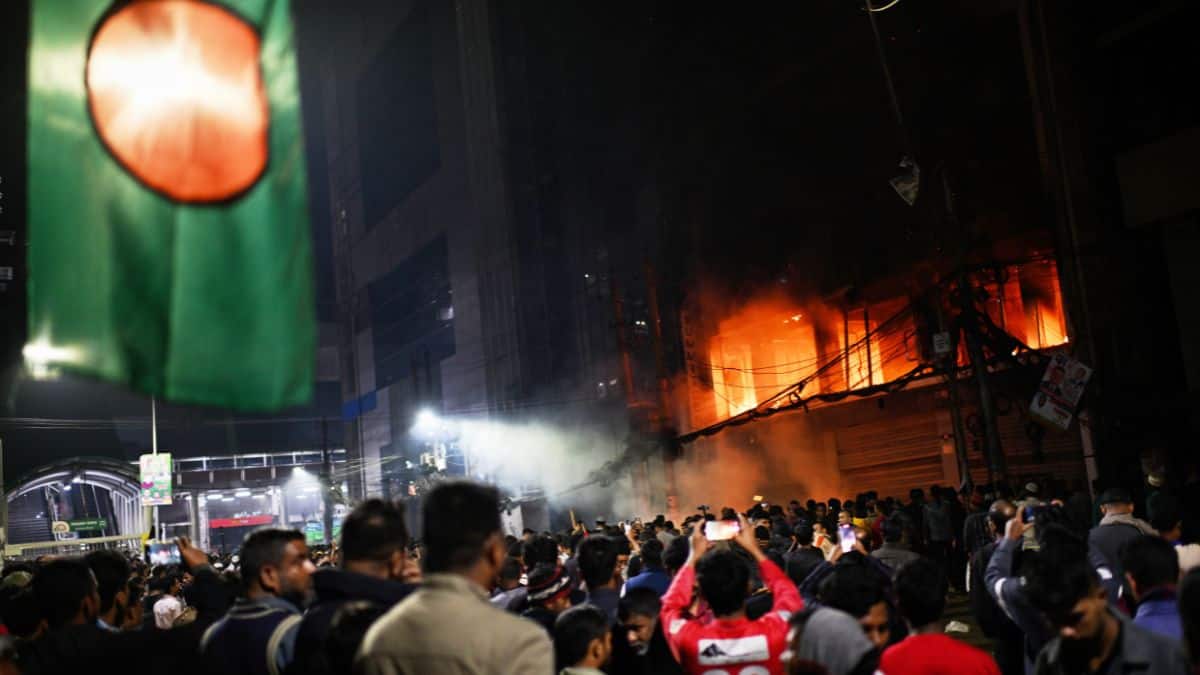
Now closer in time, covering events from barely 1.5 years past, the records in Inshallah Bangladesh of eyewitness accounts from both sides of the border are likely to be pivotal decades later when the 2024 coup of Hasina is discussed. Shahidul Hasan Khokon, another co-author, is now forced to escape to India, as journalists deemed unfriendly to the new regime are still hunted down and lynched while the police pretend at helplessness.
The book lays out the story of how a nation simmering with radicalism underneath a thick layer of economic optimism and administrative control imploded, catalysed through factors both internal and external. Revelations in the book are based completely on professional interviews and rarely veer into commentary without analysis. Bringing to the fore reminiscings of ministers of the Awami League who managed to survive the brutal chaos that was unleashed under the interim government of Mohammed Yunus, Inshallah Bangladesh lays out their opinions on betrayals and the many players in the small field. While Hasina’s own impressions of who organised her downfall are backed up by her ministers, there is no political agenda that grants her a clean moral victory during her rule that saw revisionism of educational material, corruption and suppression of protests.
The story of Bangladesh in itself is important. What is also of wider interest is the ways in which institutions responsible for upholding the integrity and sovereignty of a nation can find themselves manipulated to serve vested interests inimical to their nation while pursuing narrow political agendas. From the judiciary to the police to the army, each of these institutions plays an enormous role in maintaining the stability of a nation. Each of these can be corrupted if they disrupt the hierarchy of functioning. Bangladesh offers a case in point in a larger study of how these institutions affect extreme change and how each is responsible and requires committed leadership and responsibility for the lives of their citizens.
The radicalisation within the populace of Bangladesh, which has been remarkably less visible under every rule by Sheikh Hasina, who sought to portray Bangladesh as another haven for art and culture and economic opportunity, has always existed. The veteran journalist authors hark back to the Gulshan incident, which saw extremely educated, “posh” young men go on a murder spree on behalf of ISIS, taking hostage multiple foreigners and killing police and civilians alike. As Sahidul escapes his home to find refuge in India, he witnesses mass versions of the same, and this psychology of war that is brought forth when a radical population is frothing to end the “other” is the sad reality that has split the Indian subcontinent multiple times.
As Tarique Rahman takes over the reins of the nation, there is talk of undoing the damage that Yunus’s interim government wrought on the India-Bangladesh relations. Very immediate steps have seen Indian diplomats and even the Speaker of the Lok Sabha attend the Bangladeshi PM’s swearing-in. While the Indian Prime Minister was invited and could not attend due to the previously scheduled AI Summit seeing multiple world leaders attend, his representatives hold high positions and honour the event. Jamaat-e-Islami, the shadow that has always loomed but looms much larger today after growing its electoral presence in this year’s election, has been understood to be a significant player, and its chief, Shafiqur Rahman, has been seen to meet India’s Foreign Secretary, Vikram Misri. The attempt at a reset and rapprochement is clear.
However, the border boils still, and every day Hindus are killed in Bangladesh. The new regime can attempt to allow for Islamic radicalism to fester behind the curtains of administrative capability that Hasina has previously shown. However, Inshallah Bangladesh’s deep coverage of the nation allows one to question the direction that any government installed in chaos can steer towards. The read remains the most sincere coverage of ongoing events, spanning decades that coalesce into the present day, and is as much a recommended read for the serious geopolitical analyst as for a casual reader due to its writing style and very human stories.
(The author is a columnist at several Indian publications and hosts a podcast on geopolitics and culture. She writes about international relations, public policy and history, and posts on X on her handle @sagorika_s. Views expressed in the above piece are personal and solely those of the author. They do not necessarily reflect Firstpost’s views.)
End of Article
