



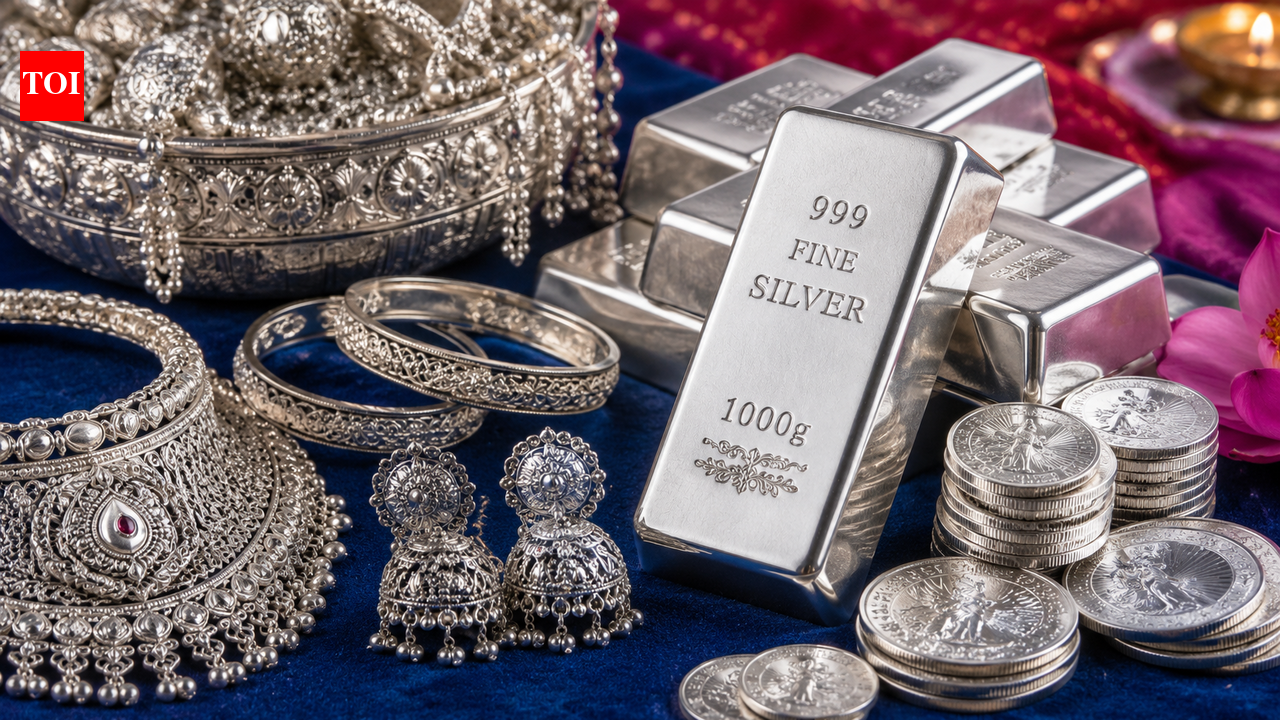
Rising silver prices are not just pushing investment demand, they are also opening the door to a surge of impure silver bars and coins in the Indian market. The trend has raised concerns among industry stakeholders over widespread counterfeiting and lapses in quality standards. Precious metal refiners have now stepped up calls for the Bureau of Indian Standards (BIS) to enforce mandatory hallmarking across silver products, arguing that stronger safeguards are needed to protect consumers.Alongside this, they have also demanded compulsory licensing for silver refiners to improve oversight, tighten quality control and bring greater transparency into the sector, according to ET. Although hallmarking for silver has been made mandatory from September 2025, industry executives say compliance remains weak, with a large section of jewellers yet to adopt the requirement. According to James Jose, president of the Precious Metals Refineries Forum, a significant portion of silver bars and coins being sold in retail markets fail to meet the required standards of purity. “Field-level studies have indicated that a majority of the silver articles available in the market contain prohibited elements such as nickel, cadmium and lead,” he said. “At present, much of the new silver jewellery is manufactured from scrap silver without adequate refining. A certain quantity of purified silver bullion is mixed with the scrap merely to achieve the required fineness level.” Industry hubs such as Jaipur, Agra, Salem, Rajkot, Kolhapur and Cuttack continue to play a central role in the country’s silver jewellery and artefact production. India’s annual silver consumption stands at nearly 7,000 tonnes, yet the infrastructure for quality testing remains limited, with only 286 assaying and hallmarking centres for silver. This contrasts sharply with gold, which has 1,595 centres despite lower annual consumption of around 800–850 tonnes. Stakeholders argue that this gap in testing infrastructure, combined with the use of scrap silver in manufacturing, has allowed the entry of unsafe elements like lead and cadmium into jewellery and artefacts. More than 50% of silver sold in India is in the form of items such as worship products, lamps and utensils, further widening the scale of concern regarding purity standards. The Precious Metals Refineries Forum has also highlighted that silver offerings made in temples are frequently found to be below acceptable quality levels. It has suggested that a wider availability of hallmarked silver bars from certified refineries could help address these issues and strengthen trust in the market. At the same time, commodity exchanges including MCX, BSE and NSE are preparing to introduce quality-certified silver bars through their trading platforms, aiming to standardise supply. “India needs world-class silver refineries to supply asset-class silver bars to the commodity exchanges,” said Jose. He added that several BIS-licensed gold refineries are already involved in silver refining and are awaiting a formal BIS licensing framework dedicated specifically to silver.
