



“Before any representative government can count votes, it must first know whose votes may be counted.” That arresting opening line from CJI Surya Kant’s 124-page judgment in Association for Democratic Reforms vs Election Commission of India, delivered on May 27, sets an appropriately philosophical tone for one of the most consequential electoral rulings in recent memory. It is a judgment that gets the constitutional law largely right — and the ground reality almost entirely wrong. It also mistakes a demolition for a renovation.
Let me begin with the credit due.

The court has affirmed what election administrators have long known: Clean electoral rolls are not an administrative nicety but the foundation of democratic legitimacy. More than two decades had passed since Bihar’s last Special Intensive Revision (SIR). Rapid urbanisation and large-scale migration had produced rolls riddled with duplication, dead voters, and multiple recording of migrant voters. Annual Summary Revisions were addressing these issues, but problems persisted. The ECI’s decision to undertake the SIR was legally and constitutionally valid, as the SC has upheld — even if the manner of its execution was anything but.
The Court correctly holds that the SIR is traceable to Section 21(3) of the Representation of the People Act, read with Article 324, and does not conflict with the constitutional imperative of free and fair elections. More importantly, it draws an intelligent and necessary line on citizenship: The ECI can examine it, but for the limited purpose of determining inclusion or exclusion from the electoral roll. Deletion from the voter list does not amount to a declaration of non-citizenship. Final adjudication remains with the competent authority under the Citizenship Act. Without this guardrail, the SIR could have silently become a backdoor NRC. The Court refused that.
One more direction deserves appreciation. The ECI has been told to refer, within four weeks, all persons whose names were deleted from the 2003 Bihar roll on citizenship grounds to the competent authority — and if that authority finds them to be citizens, their names shall be restored. On paper, this is a meaningful protection.
Now for the cons — and they are serious.
The judgment does not address what is perhaps the most fundamental objection: What the current ECI conducted was not a revision at all. It was a de novo collection of data — starting from scratch, discarding rolls on which successive ECs had laboured for nearly three decades. Through painstaking summary revisions, the Commission had achieved about 99 per cent accuracy in the electoral rolls. Elections as consequential as the 2024 general election were conducted on these very rolls without challenge. To throw that work into the dustbin, and to harass one billion voters just to fix a residual inaccuracy, is not a SIR within the meaning of Section 21(3). It is something altogether different. The Court simply did not engage with this distinction. That silence is a serious lacuna.
The Court upheld the use of the 2003 roll as the reference baseline, meaning every voter enrolled after 2003 must re-verify. Think carefully about who that is: The young first-time voter, the migrant labourer, the woman newly enrolled under SVEEP. These are the citizens that the ECI’s own outreach programmes spent years bringing into the democratic process. The SIR, as validated, risks systematically disenfranchising the people democratic deepening was meant to reach.
Then there is the documentation problem. The Court upheld the ECI’s document framework as a “considered exercise of administrative discretion”. But a large portion of India’s poor do not possess neat documentary proof of identity and residence. The one reliable proof that existed, namely the Elector’s Photo Identity Card, has been trashed in one stroke.
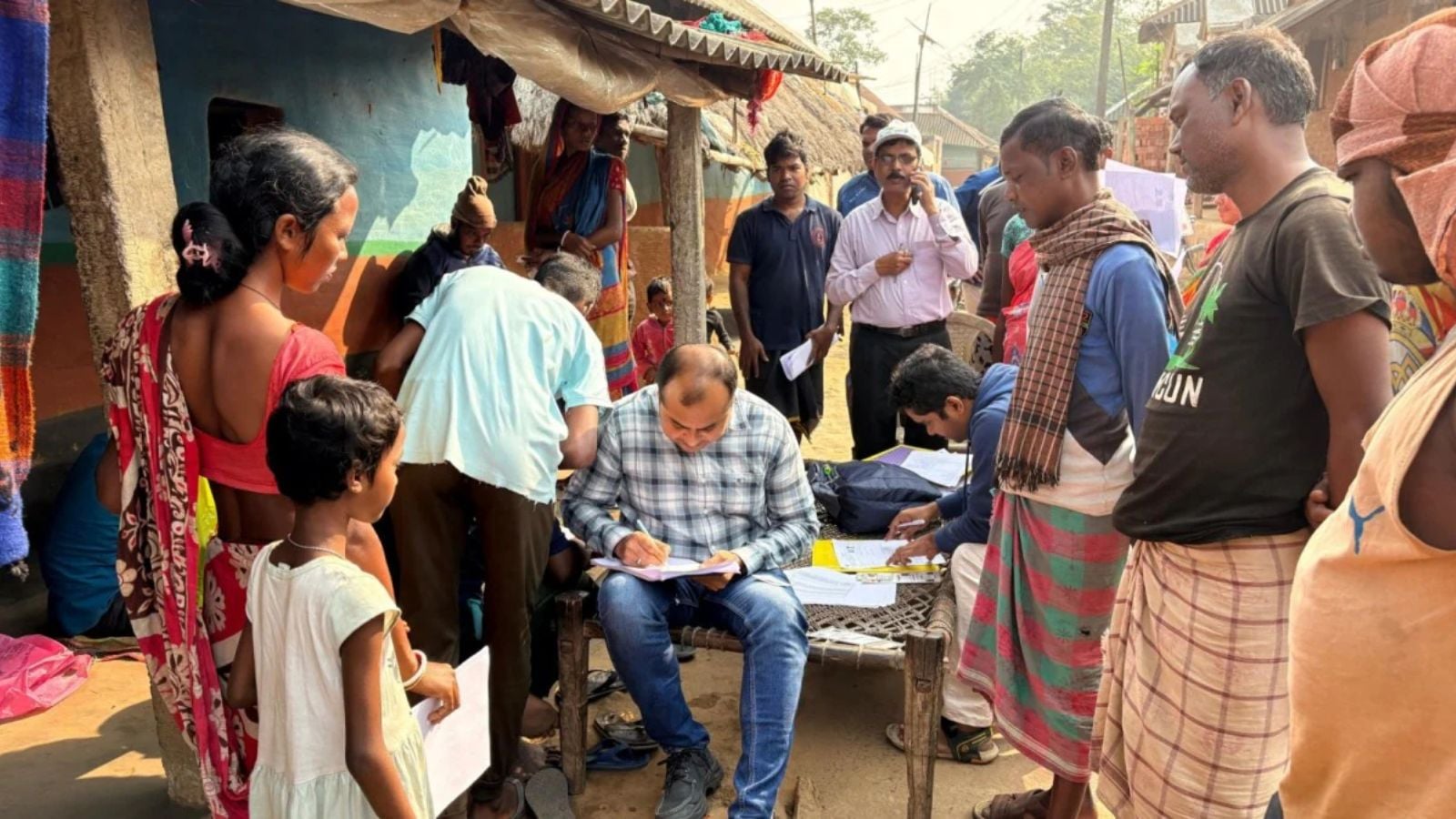
Most troubling of all is the remedy the judgment prescribes for wrongful deletions. Persons deleted erroneously may, the Court says, “assail the decision of the Commission by way of judicial review.” Picture the voter this is addressed to: The daily wage labourer in Sitamarhi or Murshidabad who has been removed from the rolls, possibly without knowing it, possibly having never seen the draft roll, certainly without a lawyer, and almost certainly without the time, money, or legal literacy to file a petition before a competent court. Judicial review is a remedy designed for citizens with resources and time. For the poor voter, it is no remedy at all — it is the law’s way of closing a door while appearing to open it.
The citizenship referral direction carries a similar infirmity. The competent authority under the Citizenship Act has no established infrastructure to handle millions of individual cases. The judgment directs completion before “the next Parliamentary, Assembly, or Local Body election, whichever is earlier” — an impossibly compressed timeline. Crucially, the Court has specified no penalty for non-compliance. What if the authority is unable to decide by the earliest upcoming election? Will the voters be advised again to wait till the “next election”? A direction without teeth is a direction in name only.
In West Bengal alone, over 90 lakh names were deleted from the draft rolls. In Tamil Nadu, nearly 74 lakh. The scale of potentially wrongful exclusion is not theoretical. It has already happened. The court’s safeguards arrive after the damage.
Just 12 days ago, CJI Surya Kant — the author of the judgment — expressed anguish from the Bench about lawyers with fake degrees and no briefs, “like cockroaches”. Today, with this judgment, the learned Chief Justice has unwittingly heaped a bounty on them. With crores of wrongfully deleted voters potentially seeking judicial review, the same briefless lawyers across India will find themselves overwhelmed with work. They will laugh all the way to the bank. Whether the poor voter, whose only power was the vote, will find anything to laugh about is quite another matter.
The voter roll is not a bureaucratic document. It is, in practice, every citizen’s certificate of democratic belonging. Every name wrongly struck off is democracy denied — not by an enemy of the state, but by the state itself. The SC has told us SIR is constitutional. What it has not told us — and what no judgment can — is whether a democracy that disenfranchises its poorest voters in the name of clean rolls deserves to call itself one.
The writer is former Chief Election Commissioner of India and author of An Undocumented Wonder — The Making of the Great Indian Election
