



5 min readFeb 21, 2026 01:51 PM IST
First published on: Feb 21, 2026 at 01:46 PM IST
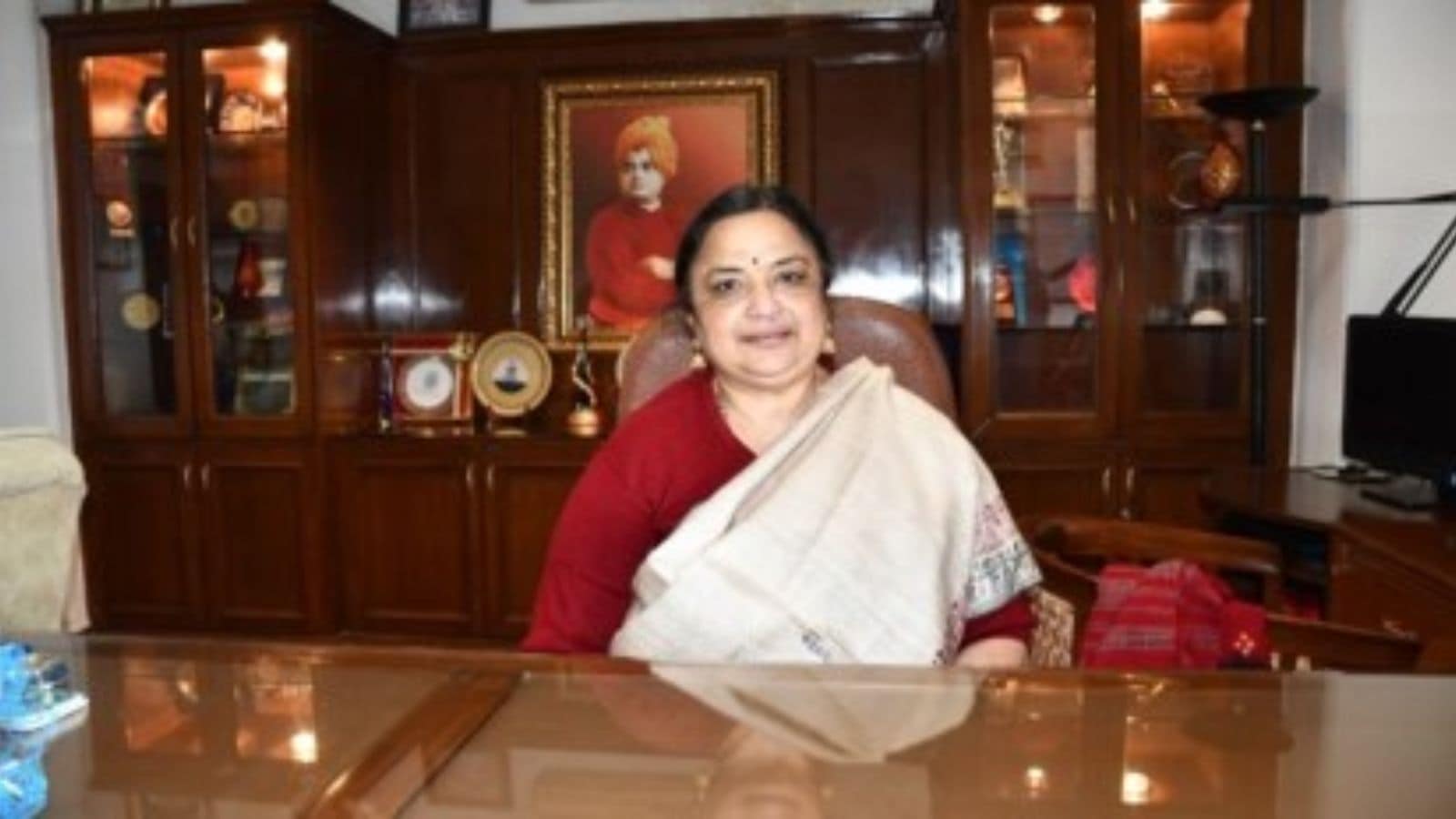
The discourse surrounding the recent UGC guidelines on equity in the classroom has gone off the rails — so much so that the agency of vocalising our pain has also been stripped away. From public intellectuals to social-media trolls, the conversation across platforms appears fixated on a single question: Who is the victim? Jawaharlal Nehru University vice-chancellor Santishree Dhulipudi Pandit‘s recent statement is not merely disappointing but alarming, revealing how sections of the intelligentsia can perpetuate and justify systemic injustice. Her remark on the proposed UGC guidelines, now stayed by the Supreme Court until further hearing, and struggles of caste-based discrimination show exactly why the guidelines are necessary. As an alumna of the hallowed institution she helms, it breaks my heart to witness the erosion of decades of scholarship it has produced, and the seeming attempt to deny us the agency to articulate and process our own experiences of marginalisation — and victimhood. Her remarks are not merely hollow and headline-grabbing; they reveal a myopic understanding of caste. The new UGC guideline is a powerful moral and political reminder of the need to address India’s unfinished project of social justice; to call it “irrational and totally unnecessary” is outrageous. The guideline is about the redistribution of power, voice, and visibility. It gives voice to question privilege and offers institutions the wisdom to reform.
At a recent dinner conversation, a friend repeatedly and with great ease asserted her upper-caste identity. “We are traditional people; you must be aware of our cultural practices,” she said, assuming that I was familiar with her dominant cultural world. What struck me was not the content of her words, but the confidence with which she affirmed her caste location. It was unselfconscious, secure, and socially validated. In that moment, I found myself confronting an uncomfortable question: why does the assertion “I am a Dusadh” not carry the same effortless legitimacy or confidence in my identity and cultural heritage? This is not a matter of personal hesitation; it reflects a broader issue of epistemic justice. The hesitation is not a psychological weakness, but the product of centuries of graded inequality, as B R Ambedkar observed.

Speaking about discrimination in academia carries professional risks. Silence often feels safer than dissent. Yet, the uncomfortable questions that must be asked are: Who produces knowledge in our universities? Who validates it? Our struggles and resilience are frequently reduced to archives of suffering. Our narratives have largely been produced, interpreted, and circulated by those outside these lived experiences. We are often positioned as subjects of study rather than authors of theory. The cycle of knowledge production, dissemination, and institutional recognition has historically excluded us as creators while including us as objects. Even our accounts of pain and resistance are often quoted selectively, depending on when others choose to portray us as victims or dismiss us as playing the victim.
Our stories of marginalisation are appreciated and received well, so long as they can be adapted into cinema or converted into research grants that generate social and cultural capital for others. They become uncomfortable, however, when we claim the right and agency to tell our own stories. We are not merely objects of study; we also seek to create our own narratives. When we do so, we are accused of “playing the victimhood card.”
This brings me to a pertinent question for institutional leadership: Who gets to speak about our stories? Whose experience is recognised as objective? Whose pain is deemed credible? What we seek is not sympathy, but recognition of epistemic agency — the right to define our own experiences, to produce knowledge from our social locations, and to have that knowledge treated as intellectually legitimate. It has taken centuries for our voices to enter institutional spaces. Please do not trivialise the courage it takes to use them.
The UGC guideline brings us to the table to discuss equity and equality, which are not about giving everyone the same resources, but about recognising different circumstances and allocating tailored support to achieve fair outcomes. From Ambedkar to Mohan Bhagwat, there has been an emphasis on the evolution of a just and inclusive society — grounded in dialogue with dignity and a call to those at the centre to empower those at the margins.
The writer is assistant professor of Sociology, Lakshmibai College, Delhi University
