



4 min readFeb 19, 2026 07:44 AM IST
First published on: Feb 19, 2026 at 07:43 AM IST
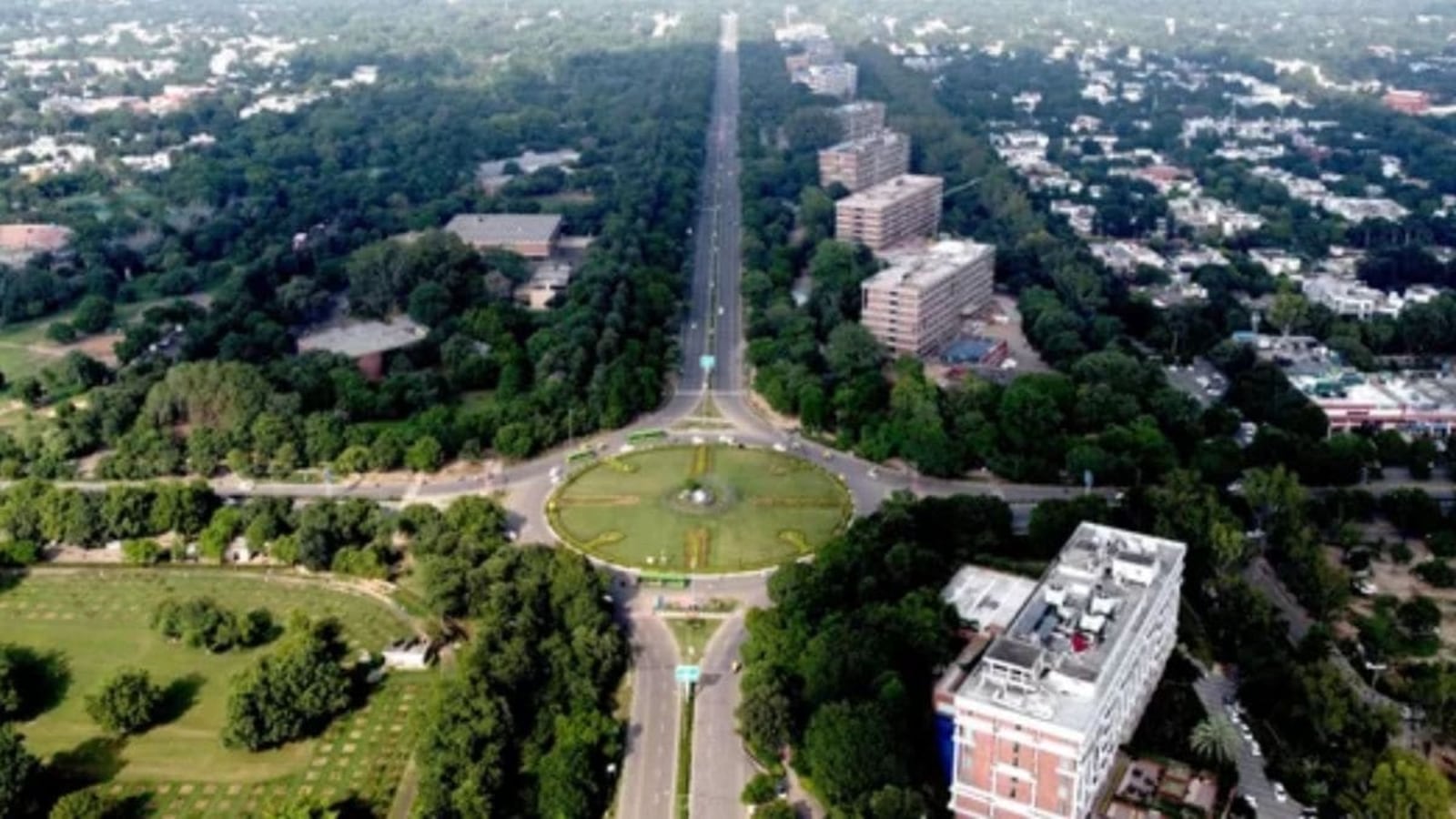
At 75, Chandigarh represents a political dilemma: How is the city to be claimed as a landmark of Indian history when all its elements reflect Western aesthetics? It also stands as a paradox: Admired for its order, yet plagued by institutional fatigue.
Conceived as India’s first planned modern city, Chandigarh is a symbol of Nehruvian optimism, rationality and architectural excellence that masks deep social hierarchies. It is not a single city, but two unequal realities. It is celebrated as heritage, yet the living city is in decay. The physical layout structurally privileges the elite while costs, energy, labour and waste are pushed to the periphery. Even within the heritage core, the problems of physical deterioration, functional obsolescence of housing, an ageing population and administrative concentration have set in. Administrative offices and elite residential sectors were placed close to the Capitol Complex. Service workers, lower-level staff, and informal labour commuted daily from peripheral areas outside the planned city. This quietly organised the city by class, deepened in the name of maintaining the original plan.

The living city, which includes vegetable markets, lower courts and waste heaps, was pushed to the southern sectors. This was done to maintain the northern sectors as a museum of modernisation: Clean and pollution-free, with low-density habitation.
The rigidity of Chandigarh’s planning mindset is best illustrated by the Rock Garden. Created secretly over nearly two decades by Nek Chand, a government employee, it was built from industrial and domestic waste on forest land near Sukhna Lake. When the authorities discovered it in the mid-1970s, Nek Chand was harassed and the site was declared illegal. It was only after widespread public protest that the administration reversed its decision to demolish it. The Rock Garden was officially inaugurated in 1976, Nek Chand was appointed its curator, and the “illegal” space was gradually absorbed into the city’s planning framework.
This episode is telling. One of Chandigarh’s most loved public spaces exists not because of the master plan, but because citizens forced the plan to accommodate creativity, informality, and cultural expression. The Rock Garden stands as a rare moment when people, rather than planners, reshaped the city.
Chandigarh’s reputation as a “green city” also merits scrutiny. Spaces like the Rose Garden prioritise visual aesthetics over ecological function. Sukhna Lake, an artificial water body, serves recreational and symbolic purposes but requires constant intervention and delivers uneven environmental benefits.
Nature in Chandigarh was designed as a spectacle rather than as climate infrastructure. With rising temperatures and water stress, the distinction is consequential. These structural planning flaws have been compounded by a serious governance anomaly. Chandigarh is administered through a dual system: An unelected UT administration controls planning, land use, and heritage regulation, while an elected Municipal Corporation manages limited civic services. Responsibilities overlap, accountability blurs, and decision-making slows.
Chandigarh’s decay is not only accidental or managerial; it is the structural outcome of an elite, modernist planning perspective out of touch with social realities and insulated from democratic correction. Its experience mirrors that of other planned capitals such as Brasília and Canberra — cities of administrative brilliance that struggled to adapt to everyday urban life. As Chandigarh marks 75 years, preservation alone will not secure its future. Heritage without reform risks turning the city into a museum — orderly, admired, and disconnected from social realities. The real question is no longer whether Chandigarh was well planned, but whether it can finally learn to change.
The writer is chairperson, Institute for Development and Communication (IDC), Chandigarh
