



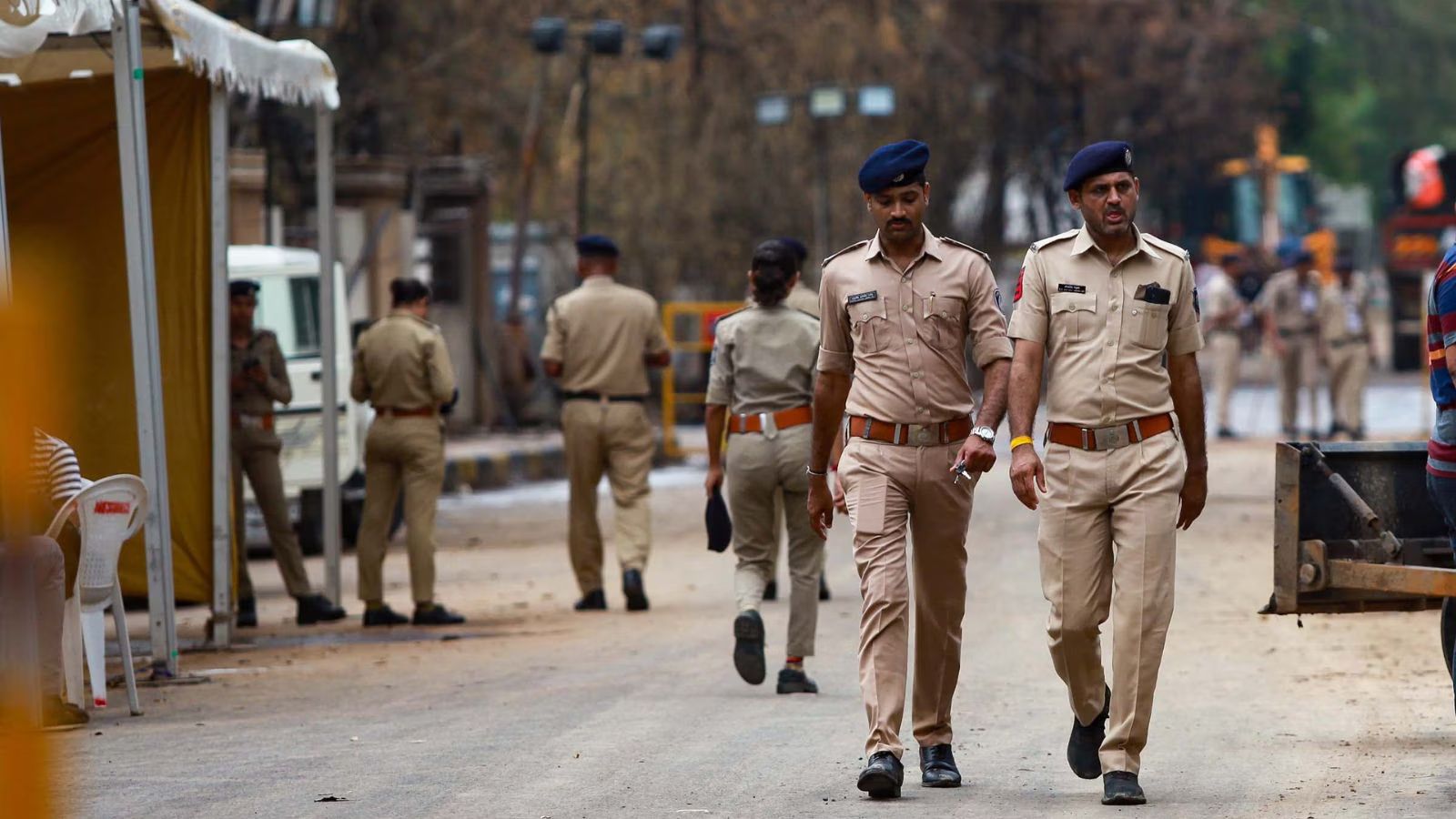
The Supreme Court has recently criticised state governments for making ad-hoc appointments to the post of Director General of Police (DGP) despite its earlier directions for a minimum assured tenure of two years. The persistent disregard for the Court’s directives is because very few state governments are willing to accept an independent-minded police chief. In today’s highly politicised environment, an officer with professional integrity is often seen as an inconvenience.
A self-assured police leader, whether a Station House Officer (SHO) or Superintendent of Police (SP), strives to maintain professional standards instead of pandering to the whims of politicians. They focus on improving investigation, strengthening evidence, and increasing conviction rates that are sliding down. As per the data released by the National Crime Records Bureau for 2023, the conviction rate for murders was mere 37.7 per cent and for rape it was lower at 22.7 per cent.

Across departments, politically neutral officers are often unwanted. “Rubber stamps”, who comply unquestioningly and obey the orders of even their kith and kin, are preferred.
While many elected representatives sincerely raise public concerns, most have failed to protect institutions that can deliver transparent and efficient services. In my view, this reluctance stems from fear and insecurity: Strong institutions reduce dependence on politicians. When citizens can approach offices directly and receive timely service, they no longer need to wait outside politicians’ chambers with folded hands. For many political leaders, power is not only to be exercised but also displayed. The authority to transfer and appoint officers is one such pompous display. It also allows them to reward loyalty and punish independence.
It must also be acknowledged that the police have not always earned public trust. Delays in FIR registration, corruption, and insensitive behaviour are genuine grievances. Police leadership is aware of these shortcomings, and some officers have made efforts to reform the system. However, when such officers are sidelined or kept waiting indefinitely for confirmation, a damaging message is conveyed to the entire force: Conform to the prevailing culture of mediocrity and patronage, or become irrelevant.
Gradually, institutional values give way to personal loyalty. Sycophancy replaces professionalism. As a result, officers across departments increasingly function as subordinates to political “masters” rather than work as public servants within the framework of the Constitution.
The Supreme Court’s intervention in the Prakash Singh case in 2006 was a sincere attempt to arrest this decline. Its seven directives — fixed tenure for officers on operational duties like the SHO, district SP etc., national and state security commissions, complaints authorities at different levels, separation of investigation from law and order, and creation of establishment boards — were designed to promote stability and accountability. Unfortunately, most states have implemented these reforms only in form, not in substance.
Ad-hoc appointments continue. Complaints authorities remain weak or nonexistent. Investigation and law-and-order functions are rarely separated due to chronic vacancies. Establishment boards, meant to consider merit in appointments, exist largely on paper, while informal political instructions dominate transfers and postings. Security commissions, where they exist, are largely ineffective in providing any meaningful policy guidelines.
The result is that citizens remain helpless. Courts alone cannot correct this imbalance. Police reforms cannot be driven only by judicial orders; they must be supported by civil society, the media, and committed professionals within the system. And is it too much to expect politicians to understand their role as institution-builders and prevent the decay?
The police leadership must also introspect. Improving service delivery at the police station level is essential. Measures such as online FIR registration, technology-based licensing, better investigative training, regular sensitisation programmes, and firm accountability for misconduct are no longer optional. The police station is where citizens form their first and often lasting impression of the state.
Court-mandated reforms must be accompanied by meaningful ground-level changes. Strengthening the DGP’s office alone is insufficient. The police station must become the true centre of reforms. Without active citizen participation, sustained public scrutiny, and internal commitment, the system cannot change.
The writer, IPS (R), was the commissioner of police, Pune
