



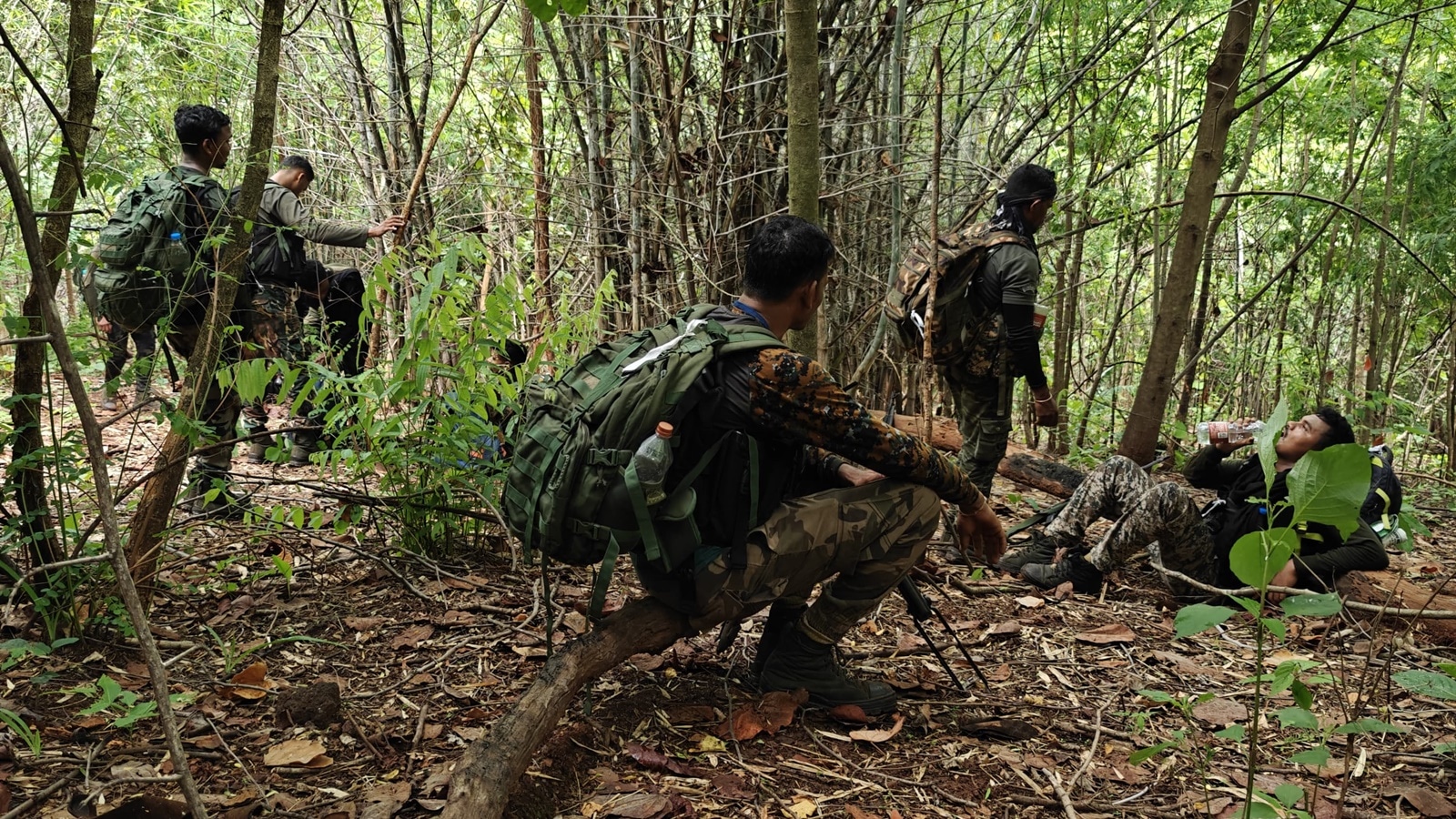
It began in the rice fields of Naxalbari in 1967, flamed through the forests of Bihar, Jharkhand, Andhra Pradesh, Odisha and Chhattisgarh, survived splits, purges, ideological rigidity, state neglect and tribal anger — and for over five decades seemed impregnable. But the Naxalite movement is now staring at the possibility of its definitive end. Two developments have struck at its heart: First, the killing of Basavraj, the LTTE-trained military strategist, last May, and more recently the elimination of his handpicked disciple, Madvi Hidma, the dreaded PLGA commander of Bastar, in November. The second is the surrender of Venugopal Rao, alias Sonu, Central Committee member — and his public call urging cadres to put down arms. When ideology itself concedes defeat, the end is near.
Hidma was the only high-ranking Bastariya leader in a largely Telugu-dominated Maoist hierarchy. That made him invaluable — the bridge between ideology and the soil. His ambushes were designed not only to kill but to terrify. But in the last two years, Hidma was running, not leading. Forced out of his strongholds, stripped of sanctuaries, and pursued by multi-state operations, he was killed far from Dandakaranya, deep inside Andhra Pradesh. For an organisation built on the myth of fear, this was the greatest psychological blow. A spate of surrenders followed.

If Hidma’s death shattered the movement’s body, Sonu’s surrender shook its soul. He stated what no top Maoist had ever said publicly: Maoist ideology had been betrayed by its own cadres. That the state had transformed dramatically, while local Maoist units had stagnated into rent-seeking groups extorting contractors and villagers. For the first time, a senior Maoist leader acknowledged that the revolution had become irrelevant to the people it claimed to represent. A series of setbacks — leadership losses, dwindling finances, shrinking territory, growing tribal resentment — added to this ideological collapse.
The statistics of 2024–25 narrate the story of this lost war. Over 260 Maoists were killed in 2025 in Chhattisgarh, Maharashtra and Andhra. Multiple top commanders were neutralised. More than 1,500 cadres surrendered in two years across Bastar, Gadchiroli, Malkangiri and Khammam.
The success is due to the work of the CRPF’s COBRA battalions, state police forces, District Reserve Guards, and the Intelligence Bureau. In the last two years, dozens of officers and jawans laid down their lives. Credit also goes to the Union Home Minister, whose backing changed the ground reality.
The turning point came when forces stopped merely “clearing” areas and began to hold them, from fortified police stations in high-threat zones to delivery of public goods. Tribals saw that the state was not a visitor but a resident and enabler. And in Bastar, it was ultimately the people who defeated the Maoists — by withdrawing shelter, food, intelligence and legitimacy.
The Home Minister’s deadline for a “Naxal-free India” is fast approaching. The final mile is not military — success now depends on a rehabilitation policy that changes minds. Encouraging models are emerging, such as the Pundum Café in Bastar, run entirely by surrendered Naxals. The Gadchiroli SP’s “One Village, One Library” initiative is expanding the horizons of tribal youth. Job linkage programs, skill centres, sports academies, and forest-produce cooperatives also play important roles.
More is needed: Protection of tribal land, no acquisition without full compensation, and guaranteed livelihood options; a strict environmental impact assessment before any forest land is acquired for mining; safe avenues for tribal youth who want to step into the “new world”; and an system that is firm but empathetic.
History offers stern lessons. Earlier counterinsurgency efforts — like the Jan Jagran Abhiyan in the 1980s and Salwa Judum in 2005 — ended up feeding the rebel ranks by alienating the very people they sought to protect. In 1999, after the killing of Nalla Reddy, there was hope that top leader Ganapathy would surrender. Instead, the movement grew stronger. Hence, premature celebration is dangerous.
The forests that once echoed with the march of guerrillas now hear the sounds of schoolchildren and market days. The ideologues are disillusioned, the commanders are dead or running, and the foot soldiers are returning home. The end of Naxalism will not be announced by a parade or a peace treaty. It will be known the day a young tribal in Bastar imagines a future without fear — and sees the state as a partner, not a stranger.
The writer has served as special director, Intelligence Bureau; secretary (security), Government of India; and Central Information Commissioner
