



4 min readFeb 23, 2026 12:25 PM IST
First published on: Feb 23, 2026 at 12:25 PM IST
Mukul Roy’s rise to power in Bengal’s politically charged environment was rather unconventional. He didn’t rely on impassioned speeches; instead, his influence was built brick by brick through meticulous record-keeping and constant communication. Looking at his career, after his untimely death, is essentially like examining the rise and eventual fall of a specific political strategy that has become deeply ingrained in Bengal’s current political scene.
He was the ultimate strategist, a modern-day Chanakya, proving that in West Bengal, grassroots influence is as much about logistical skill as it is about political beliefs. In the end, however, Roy’s lasting impact serves as a stark warning: The very political machine skillfully crafted by its architect could ultimately become its undoing.

Mukul Roy was central to the Trinamool Congress’s (TMC) structure. While Mamata Banerjee was the ideological heart and public face, Roy designed its operational backbone. From 2001 to 2011, he navigated the complexities of rural West Bengal, influencing local party units and gaining the loyalty of key local leaders who controlled access to polling stations.
He understood a simple, pragmatic truth: Politics is fundamentally a management game, extending far beyond mere ideological alignment. His role in the 2011 “Parivartan” (change) movement was critical; he was the key implementer, ensuring the TMC’s organisational reach extended into every local community and marketplace. At the peak of his power, he was arguably the second most influential person in the state, the trusted insider who understood the intricate details of political operations.
To truly grasp Roy’s significance, one must compare his methods to the rigid, top-down “party-society” model seen in the Communist Party of India (Marxist). While the Left depended on ideological indoctrination and a Politburo-led structure, Roy pioneered a more distributed, post-ideological franchise approach. He replaced disciplined party members with a loose network of local power brokers. Where the CPI(M) saw an organisational network, Roy saw a logistical network. His aim wasn’t ideological uniformity but concrete results, transforming West Bengal’s political landscape from a party-driven stronghold into a competitive arena of political patronage.
The Saradha and Narada scandals cast a long shadow over Roy’s political career, marking a significant turning point. These weren’t just financial misdeeds; they represented the first cracks in the TMC’s carefully crafted image of integrity. Roy’s name became deeply associated with the nexus of political funding and systemic exploitation. Critically, how Roy handled the ensuing investigations shaped his subsequent political path.
Unlike individuals defined by steadfast ideological commitment, Roy’s political approach was fundamentally transactional. As central investigative agencies tightened their focus, the “architect” began to strategically reposition himself within the political arena.
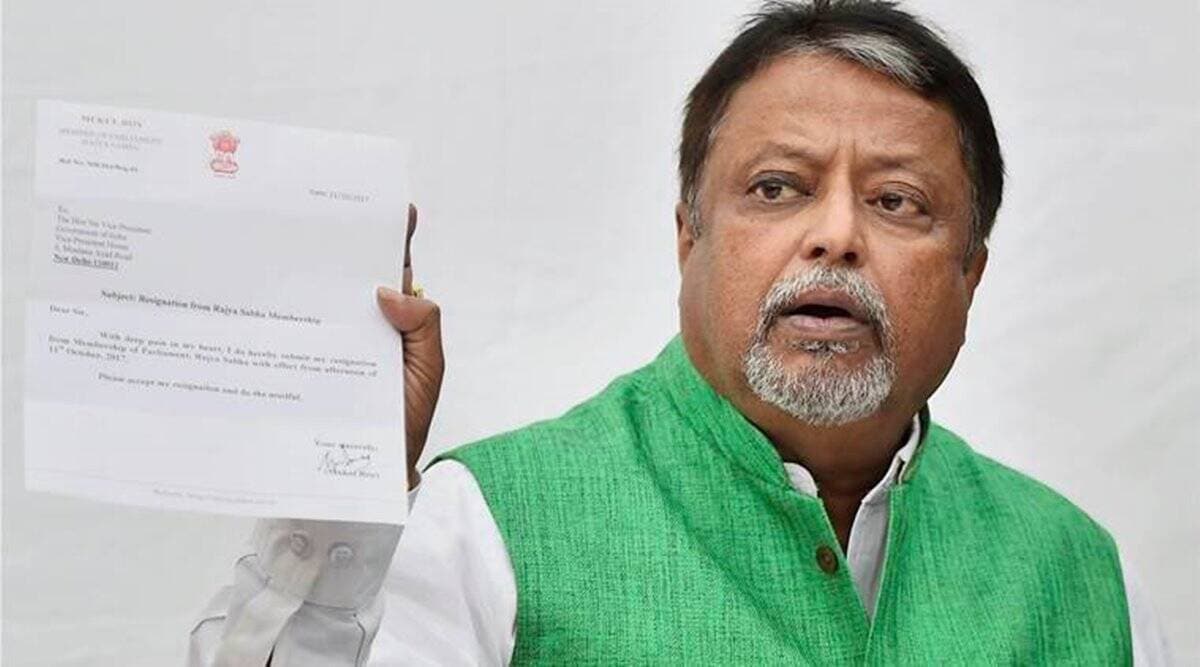
Roy’s move to the Bharatiya Janata Party (BJP) in 2017 was a watershed moment in Indian politics. He brought not only his personal influence but also the TMC’s strategic playbook. He equipped the traditionally urban-focused BJP with the tactics needed to effectively compete in West Bengal’s rural areas, significantly contributing to their strong showing in the 2019 Lok Sabha elections. However, his return to the TMC in 2021, after the BJP failed to win the state government, was met with considerably less enthusiasm.
Roy leaves behind a political system where the organisational structures are liquid, competitive, and yet effective, that he meticulously built still operate, though now primarily with a transactional purpose. He essentially professionalised political switching, redefining the role of the political “worker” as a “contractor” and transforming the “voter” into a strategic “target.”
While he may have been a master of the political game, his relentless pursuit of electoral victory inadvertently contributed to the degradation of meaningful discussion within West Bengal’s political sphere.
The writer is a political anthropologist and teaches anthropology at the Government General Degree College, Keshiary

