



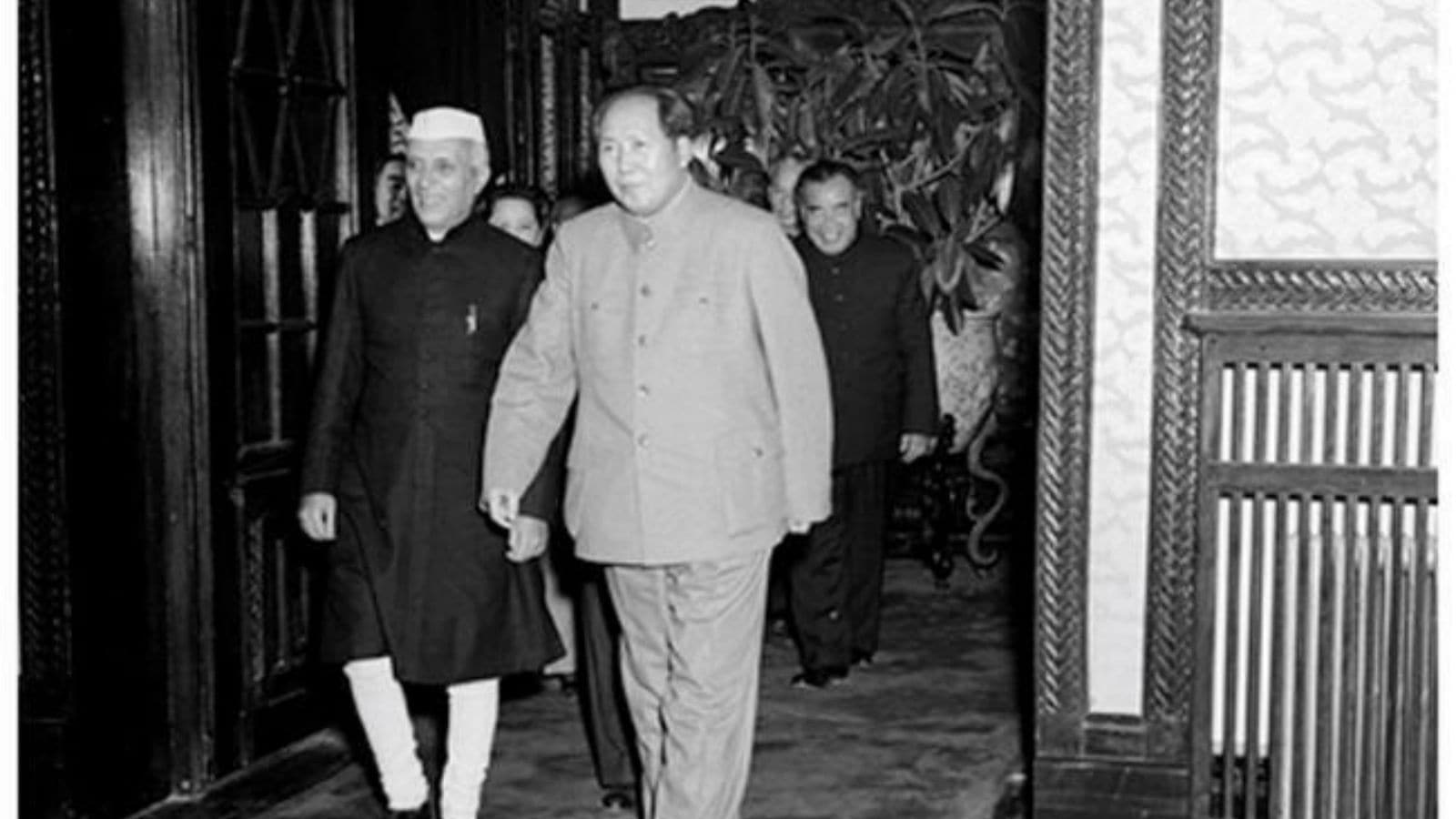
The Chief of Defence Staff General Anil Chauhan, while inaugurating the Bharat Himalayan International Strategic Manch think-tank at Dehradun on Friday, spoke on “Frontiers, Borders and LAC: The Middle Sector”.
Among the diverse issues he addressed, two statements have garnered extensive attention, — that Jawaharlal Nehru recognised Tibet as part of China in 1954; and that, with the signing of the Panchsheel Agreement between Nehru and Chinese Premier Zhou Enlai, “…India assumed that it had settled its border [with China] through a formal treaty… however, the Chinese position was that the agreement was negotiated only for trade and did not reflect their stand on the border dispute.”

Both these statements merit examination.
After its founding in 1949, the People’s Republic of China (PRC) quickly renounced all prior foreign agreements as “unequal treaties” imposed upon it during the “century of humiliation” and demanded the renegotiation of all borders, including the McMahon Line. This was a warning to all.
In October 1950, China attacked Tibet and seized it by 1951. India protested China’s invasion of Tibet. However, on September 16, 1952, the Indian Ministry of External Affairs announced the replacement of the Indian Mission in Lhasa by a Consulate-General subordinate to the Indian Embassy in China. This downgrade, requested by the Chinese Premier Zhou Enlai, signified India’s tacit acceptance of Chinese sovereignty over Tibet.
On April 29 , 1954, India and China signed the Panchsheel Agreement/Agreement on Trade and Intercourse Between Tibet Region and India. While this enunciated dealings between India and the “Tibet region of China”, India formally and explicitly recognised the Tibet Autonomous Region as part of China only in the joint declaration entitled “Declaration on Principles for Relations and Comprehensive Cooperation”, signed between Prime Minister Atal Bihari Vajpayee and Chinese Premier Wen Jiabao on June 23, 2003.
China’s intransigent position on the border was deeply influenced by two geopolitical events:
The Korean War (June 1950-July 1953) and the CIA’s covert operations in Tibet.
On July 13, 1950, Jawaharlal Nehru warned US President Harry Truman and the USSR’s Joseph Stalin that if the United Nations Command (UNC) troops led by the US crossed the 38th Parallel, China may intervene and hoped the conflict would be resolved through peaceful negotiations. However, after the UNC troops crossed the 38th Parallel and moved towards the Yalu River (border between Korea and China), China entered the Korean War on a massive scale, with its “First Offensive” in late October 1950, just a week after the invasion of Tibet. The fighting was terminated through a UN-led armistice.
This, along with the close ties between the two communist powers, China and the USSR, led the US to focus on opening a new front against China. Tibet was in the throes of post-invasion unrest, and from 1951 onwards, the US commenced efforts to exploit the turmoil, even urging the 14th Dalai Lama (Lhamo Thondup) to flee to India.
Now, about the CIA’s covert operations. In September 1952, Gyalo Thondup, one of the six siblings of the Dalai Lama, fled to India. In January 1953, US President Dwight Eisenhower reorientated American covert activities to push back against communism, with a US National Security Council directive (5412/2) of December 1954 establishing the secret “5412 Committee” for coordinating covert operations of the “Tibet Program”. With Thubten Jigme Norbu, the Dalai Lama’s elder brother, in contact in Washington, and Gyalo Thondup establishing contact with the CIA office in Kolkata, US covert operations commenced.
In 1959, the Dalai Lama was granted refuge in India. Mao Zedong, humiliated by India’s reception of and refuge granted to Tibetans, suspected that India was covertly working with the US to destabilise Tibet. This suspicion was reinforced by the fact that historically, it was Indian cultural and religious influence that spread into Tibet and, prior to 1950, the majority of Tibetan trade was with India. Even today, Chinese leadership views the overseas Tibetan movement as the single biggest ethnic challenge.
Former CIA official Bruce Riedel, in his book JFK’s Forgotten Crisis: Tibet, the CIA and the Sino-Indian War; John Kenneth Knaus, a former CIA operative who led the Tibet operations for some time, in his book Orphans of the Cold War; and Gyalo Thondup and Anne F Thurston in their book The Noodle Maker of Kalimpong, together outlined that for Mao, India was a surrogate for his rivalry with Moscow and Washington.
The writer, a retired Army officer, was the principal director in the National Security Council Secretariat

