



5 min readFeb 17, 2026 04:07 PM IST
First published on: Feb 17, 2026 at 12:24 PM IST
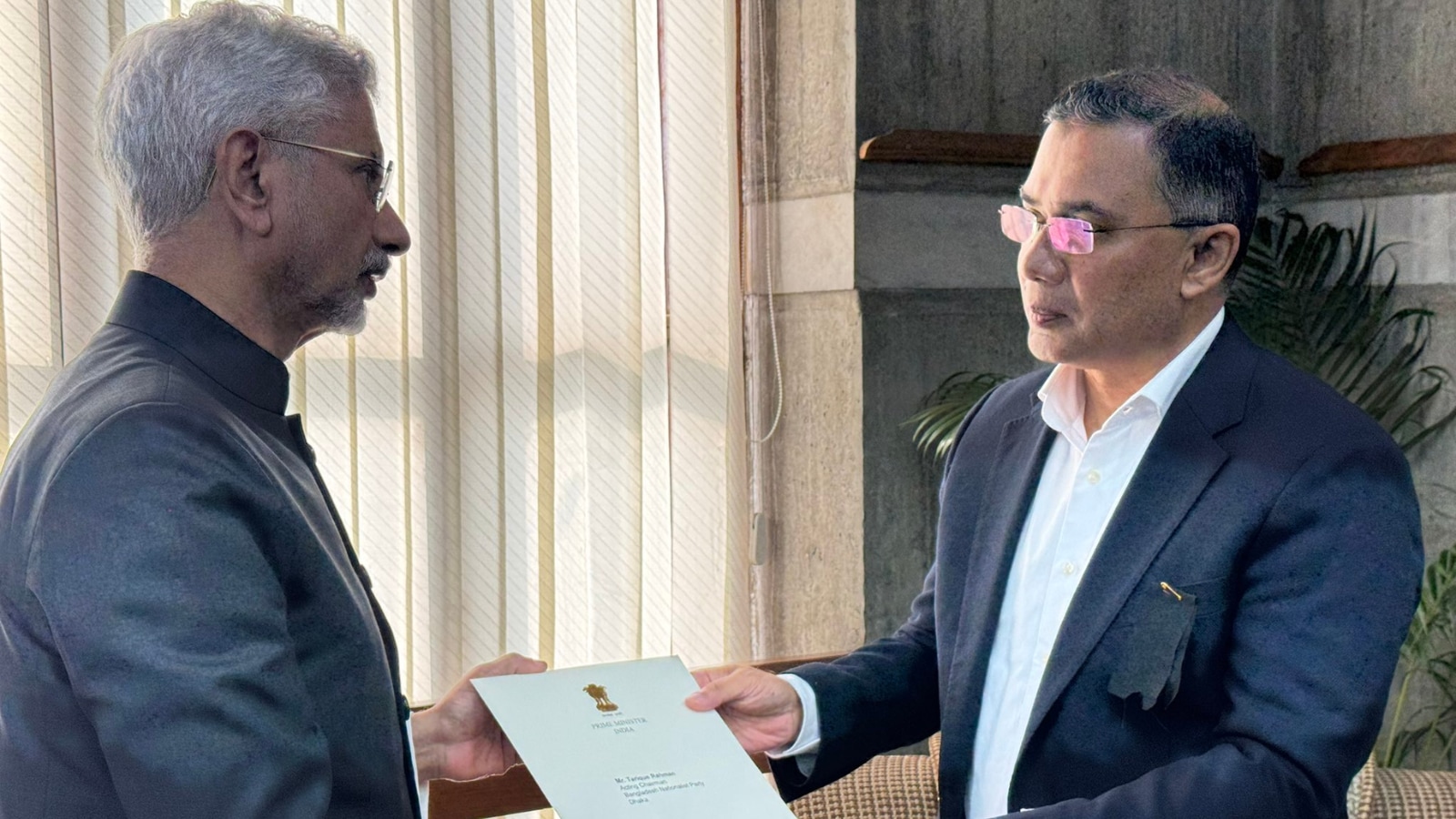
After the much-awaited Bangladesh elections, in which the BNP secured a landslide victory, New Delhi seems to be all set to engage with Dhaka to improve bilateral ties. Prime Minister Narendra Modi’s congratulatory message to the BNP chief Tarique Rahman on his victory and his earlier tweet expressing sincere condolences when Rahman’s mother, and former Prime Minister of Bangladesh, Khaleda Zia, died, were welcomed by the BNP. Even Foreign Minister S Jaishankar went to Dhaka with a condolence letter from PM Modi. However, the Mustafizur Rahman episode eclipsed the political overture.
Now that the newly elected government is about to assume office, New Delhi must not miss the opportunity to take early initiatives to improve ties. However, before formal engagement, the two countries must accept that there are new political realities. Unlike the one led by Hasina, the new government in Bangladesh is not going to always favour India over others in external matters; and, in the domestic arena, it is less likely to manage dissatisfaction, anger, and perceptions of India in Bangladesh. Likewise, to move ahead in a relationship, Dhaka must address some of India’s serious political and strategic concerns.

First, the increasing strength of Islamic groups, attacks on the Hindus in the recent past, and the growing anti-Hindu sentiment in Bangladesh have been condemned by the Hindutva groups in India, affecting ties between the two countries. The Mustafizur Rahman episode is an example of how vocal Hindu groups can affect bilateral ties. As promised in its manifesto, the BNP government must take steps to establish religious harmony in the country.
Second, despite her contribution in raising Bangladesh’s economic profile, Hasina was an “authoritarian” leader. Hasina and her supporters may differ, but all available reports and evidence point to the brutality carried out by institutions under her rule during the student protests. In November 2025, Hasina was charged with a crime and sentenced to death by the ICT. Bangladesh has made a formal request to India for her extradition. The two countries have an extradition treaty. The extradition of Sheikh Hasina is not only a political but also an emotional issue in Bangladesh. However, India appears unlikely to extradite Hasina to Bangladesh for persecution. Hence, the two countries must find a way out through negotiation.
Third, the renewal of the Ganges Water Treaty and the conclusion of the interim deal on the Teesta River between India and Bangladesh will be important parameters. The BNP manifesto called for ensuring a fair share of the transboundary rivers. It’s better that the Indian government, after satisfactorily addressing water issues with domestic actors, move ahead with water diplomacy on the India-Bangladesh transboundary rivers. If domestic differences remain, implementation will be problematic, as is the case with an interim deal on the Teesta River water. The BNP government may not follow Hasina’s policies on the transboundary water issues.
Fourth, the behaviour of Indians toward Bangladeshis and statements by the Indian leaders, ministers, or chief ministers vilifying Bangladeshis and “illegal” immigrants contribute to increasing “anti-India” sentiment in Bangladesh. The vilification of Bangladesh and Bangladeshis increases particularly during the assembly elections in the Indian states bordering Bangladesh. In 2026, West Bengal and Assam are going to the polls. The two states have already seen an increase in political rhetoric and statements targeting Bangladeshis, “illegal” migrants and Muslims. The continuity in vilification may further widen the political distance between Dhaka and New Delhi. Not only in the border states, but incidents like the vandalism of a Bangladeshi food stall at an international food festival at the Maharashtra Institute of Technology, World Peace University, in Pune, also play a role in bilateral ties.
Fifth, during Hasina’s tenure, the opposition groups, including the BNP, condemned her government for what they called “selling out” to India. After Hasina’s exit, the interim government has reset its ties with Islamabad and deepened relations with Beijing. Recently, Pakistan’s support for the Bangladesh Cricket Board during the India-Bangladesh and India-Pakistan tussle over cricket during the T20 Cricket World Cup further brought Islamabad politically closer to Dhaka. The Indian government could have intervened in the matter and resolved it in line with its broader political interests. The views expressed by some Indian commentators in the media, on YouTube channels, and on social media platforms further worsened the situation. Mending ties with Bangladesh requires cautious and prudent handling of such situations.
The “new” Bangladesh, unlike during Hasina’s term, is more sensitive to its identity, foreign policy, and politics. Hence, affairs with Dhaka need to be treated differently from here on.
The writer is a fellow, Institute of South Asian Studies, National University of Singapore
