



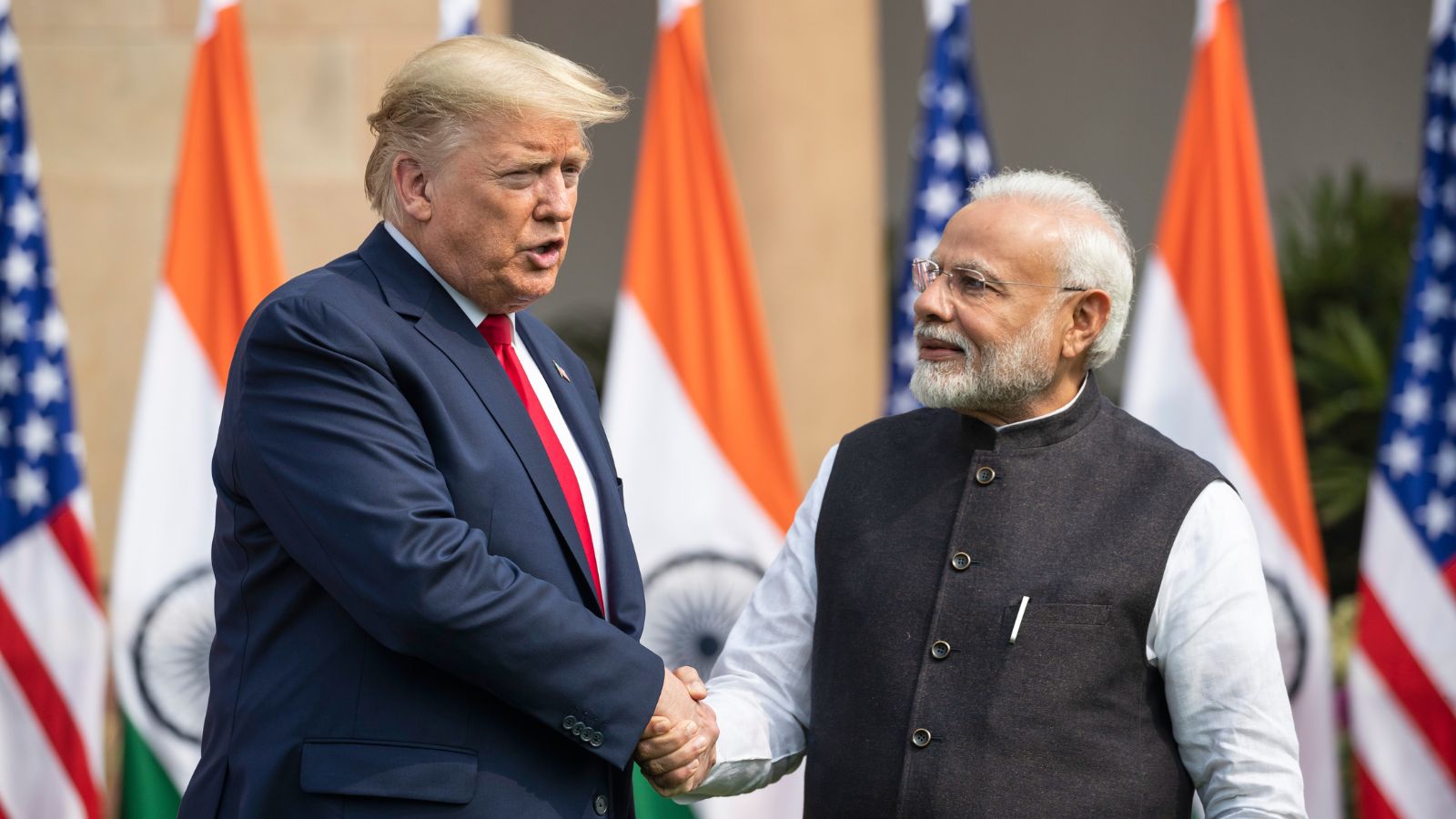
It is a kite.., it is a bird.., it is an airplane. ‘What is it?’ is the apt question for the joint statement issued by the governments of the United States and India on February 6, 2026. The joint statement has triggered endless speculation, and the Indian government’s stubborn evasion of the details has not helped to remove the cloud of doubt. Since Mr Trump is dealing the cards, the joint statement may not be of concern for the US, but it is for India.
The joint statement was based on deception. Indian negotiators claimed repeatedly in 2025 that they were negotiating a Bilateral Trade Agreement (BTA). The minister of commerce said numerous times that a BTA will be concluded in the near future; in fact, he said before the “end of the year.” As it turned out, the joint statement is not a BTA; it is not even an Interim Agreement; it is a framework for an Interim Agreement. We moved a mountain and we got a mouse.

Whither reciprocity?
After the joint statement was issued, both sides claimed that the deal was reciprocal. The claim is an insult to the reader’s intelligence. Even a cursory reading of the joint statement will reveal that it is not based on reciprocity. Take a close look at the text of the joint statement (which I have largely copied below):
l While India will eliminate or reduce tariffs on all US industrial goods and a wide range of US food and agricultural products, the United States will apply a reciprocal tariff of 18 per cent (reduced from 25 per cent imposed on April 2, 2025) on originating goods of India, including textile and apparel, leather and footwear, plastic and rubber, organic chemicals, home decor, artisanal products, and certain machinery. The US will remove the reciprocal tariff on a wide range of goods including generic pharmaceuticals, gems and diamonds, and aircraft parts only on the ‘successful conclusion of the Interim Agreement’. Where is the reciprocity in 0 per cent vs 18 per cent?
India agrees to address long-standing barriers to trade in US medical devices and eliminate restrictive import licencing procedures that delay market access for US ICT goods. ….India also agrees to address long-standing non-tariff barriers to trade in US food and agricultural products. There is no corresponding obligation on the United States. In respect of non-tariff barriers, where is the reciprocity between obligation and no obligation?
l India intends to purchase USD 500 billion of US energy products, aircraft and aircraft parts, precious metals, technology products, and coking coal over the next five years. Both governments will significantly increase trade in technology products — including Graphics Processing Units (GPUs) and other goods used in data centres. All the products mentioned in this paragraph are American export goods and not Indian goods that the US intends to buy. Where is the reciprocity?
l In an Executive Order accompanying the joint statement, Mr Trump referred to ‘significant steps’ taken by India — India’s commitment to stop directly or indirectly importing Russian Federation oil, India’s representation that it will purchase United States energy products, and India’s framework agreement with the United States to expand defence cooperation. Hence,
Mr Trump decided to eliminate the additional ad valorem rate of duty imposed on August 6, 2025 (the penal tariff of 25 per cent). Where is the reciprocity in extracting three promises from India in return for none from the US?
The open threat
l If India resumes directly or indirectly importing Russian Federation oil, the US government will consider taking additional action including potentially reimposing the penal tariff of 25 per cent on Indian goods. The entire Framework agreed on February 6, 2026 hinges on one issue — Russian oil. Where is the reciprocity between the threat of America and the submissiveness of India?
Before April 2, 2025, US tariffs on Indian goods was at the MFN rate of 3 per cent. Since India enjoyed a bilateral trade surplus,
Mr Trump invoked his questionable Emergency Powers and imposed the reciprocal tariff of 25 per cent, now reduced to 18 per cent. The legality of the ‘reciprocal’ tariff on several countries is reserved for judgment in the US Supreme Court, and may be struck down as unconstitutional. If that happened, India has to thank the US Supreme Court and not President Trump. The result will be the two countries will revert to the status quo ante but the US would have extracted several concessions from India without conceding any. So much for reciprocity!
The hidden burdens
Mr Ajay Srivastava, a trade expert, has pointed out that tariffs on steel and aluminium will stay at 50 per cent and on auto components will remain at 25 per cent, but “India is offering much deeper concessions” on US industrial goods, many agricultural products, red jowar, soybean oil, wine and spirits, automobiles and high-end motorcycles.
The riddle is what will India buy for USD 500 billion over 5 years. This will wipe out the small trade surplus India enjoys with the United States. The US has few goods that will help bolster India’s economy. We may be left with no choice but to buy large quantities of expensive aircraft/military equipment and American oil at higher landed cost, and not knowing what to do with them.
