



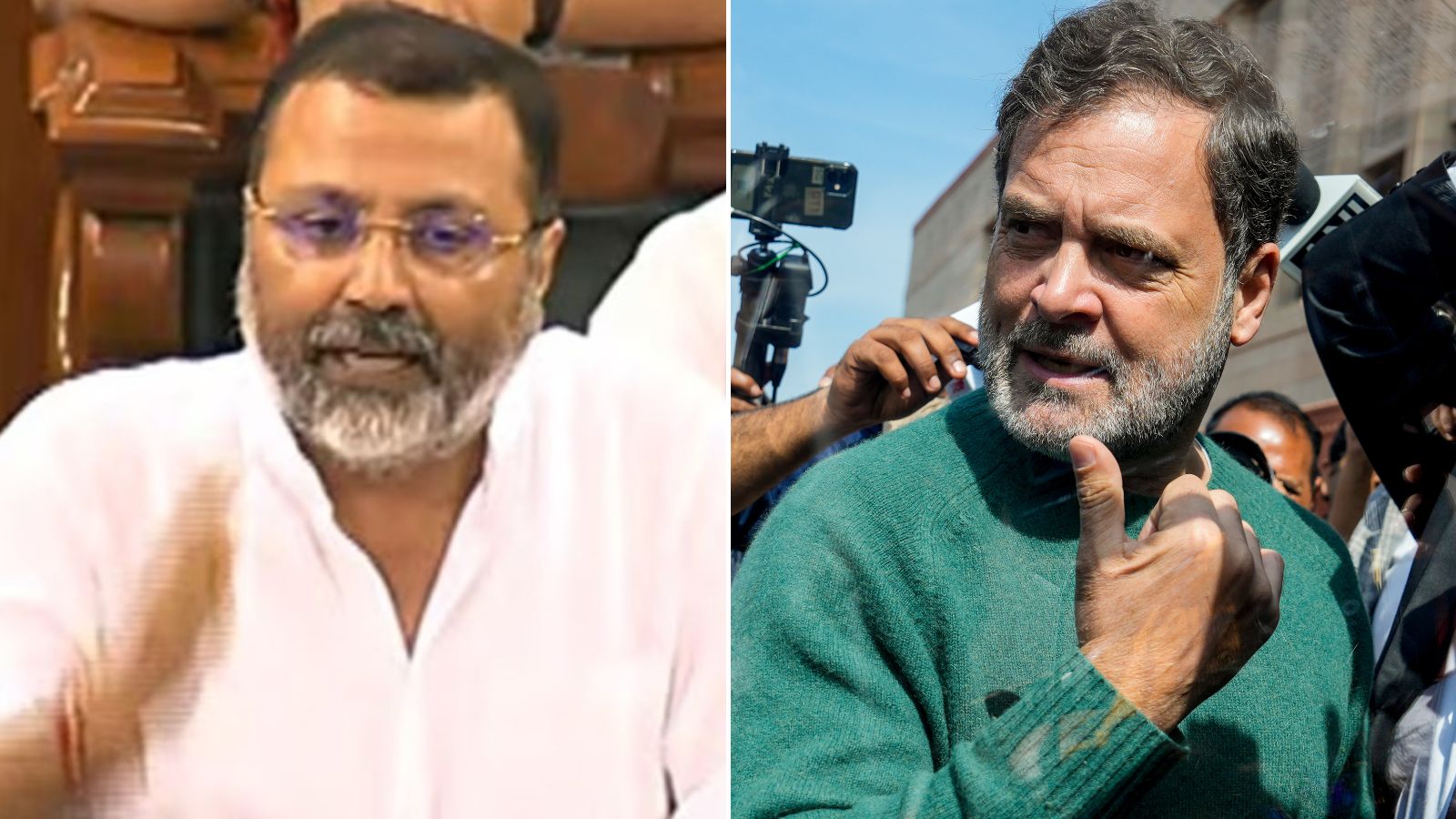
The recent disruption in the Lok Sabha, triggered by remarks from Nishikant Dubey directed at Rahul Gandhi, did not surprise me. It saddened me, but it did not surprise me. Once again, policy was eclipsed by provocation. Once again, the House was adjourned not because we disagreed on substance, but because language itself became the weapon. What should have been a forum for persuasion and accountability descended into personal confrontation. For me, this was not an isolated episode. It was a reminder of a humiliation I endured and of a troubling pattern that persists.
In 2023, during a debate in the Lok Sabha, Ramesh Bidhuri subjected me to a stream of derogatory and profane abuse on the floor of the House. I stood there, a duly elected Member of Parliament, listening as slurs and insults were hurled at me in full public view. The remarks were widely condemned and eventually expunged from the official record. But expunction does not erase experience. It does not restore the dignity of a representative, or of the constituents whose voice he carries.

I formally served a privilege notice to the Speaker, seeking accountability for what had transpired. I believed then, as I do now, that Parliament must defend its own institutional sanctity. Yet no meaningful punitive action followed. I wrote to Prime Minister Narendra Modi, urging him to act against a member of his party whose conduct had brought disrepute to the House. That letter, too, met with silence.
The incident drew international attention. It cast an unwelcome spotlight on the standards of debate in India’s Parliament. But instead of introspection, there appeared to be indifference. When those in positions of authority choose not to act, the message received by others is unmistakable. It is this perceived support from the top that emboldens repeat behaviour.
Nishikant Dubey is a habitual offender, someone deployed not merely for rebuttal and disruption, but for personal attacks and disinformation campaigns against opposition MPs. The pattern leaves little doubt that such confrontational tactics are not accidental outbursts; they are part of a larger political culture that has taken root. In this culture, the treasury benches are often the biggest disruptors.
It reflects a broader pattern in which the brute majority is used not only to govern but to silence dissent. Last year, nearly 150 Opposition members were suspended in one sweep for allegedly disrupting proceedings. Some were not even present in the chamber; some were in their constituencies. Such wholesale suspension reveals how rules can be weaponised to empty opposition benches and bulldoze legislative business without scrutiny.
In the absence of opposition, significant legislation has been passed without meaningful debate. The Bharatiya Nyaya Sanhita was cleared without substantive discussion. Labour codes affecting millions of workers were passed without the deliberation reforms of that scale deserve. Parliament is not meant to be a mere clearing house for executive decisions; it is a site for examination, amendment, and accountability.
Today, by contrast, we confront recurring complaints of curtailed speaking opportunities and selective enforcement. The culture of interruption and insult carries tangible institutional costs. Each confrontation leads to adjournment. Question Hour collapses. Legislative scrutiny weakens. Complex bills are debated in hurried sessions, sometimes without adequate discussion. The public exchequer bears the financial burden of lost hours, but the greater loss is deliberative. Citizens watching our proceedings see spectacle instead of scrutiny, confrontation instead of considered argument.
The causes of this deterioration are not merely personal. They are structural. Our media ecosystem rewards outrage. A provocative clip circulates widely; a carefully reasoned intervention rarely does. Visibility and political currency become tied to rhetorical escalation. Members perform for external audiences rather than persuade colleagues within the chamber. Over time, this performance reshapes norms. What would once have been unthinkable becomes merely controversial; what was once controversial becomes routine.
Norms rarely collapse in a single moment. They erode through repetition and tolerance. Each unpunished breach recalibrates the threshold of acceptability. What happened to me was not just about one Member abusing another. It was about whether Parliament would signal that such behaviour has consequences. When privilege notices are ignored, and appeals for accountability elicit no response, the signal transmitted is permissive rather than corrective.
This coarsening is not confined to Parliament alone. State assemblies increasingly echo similar tones. When representative institutions across the country normalise derision, public expectations adjust accordingly. Parliamentary speech carries symbolic weight. It tells citizens what kind of democracy they inhabit.
I do not seek sympathy. I seek standards. Enforcement of rules governing unparliamentary expressions must be predictable, transparent, and non-partisan. Consequences must be swift and consistent, irrespective of party affiliation. New members should be oriented not only to procedure but to rhetorical responsibility, the distinction between forceful critique and personal vilification.
Above all, political leadership must lead. Condemnation of excess cannot be selective. If abuse is wrong, it is wrong regardless of who utters it or who receives it. Parliament’s reputation belongs to all of us; its degradation diminishes us collectively.
Civility does not demand the dilution of conviction. I will continue to criticise policies I oppose with clarity and firmness. But there is a boundary between adversarial engagement and rhetorical degradation. When language crosses that boundary, the institution itself is weakened.
India’s Parliament cannot demand respect from citizens while tolerating disrespect within its own chamber. Restoring standards is not nostalgia for a gentler era. It is a practical necessity for governance, public trust, and democratic credibility. What happened to me was not a transient controversy. It was a signal. Whether we respond with institutional resolve or allow gradual normalisation will determine the character of our parliamentary democracy for years to come.
The writer is former Member of Parliament, 17th Lok Sabha and is currently with the Congress
