



4 min readFeb 14, 2026 01:13 PM IST
First published on: Feb 14, 2026 at 07:20 AM IST
By Riaan Dhankhar
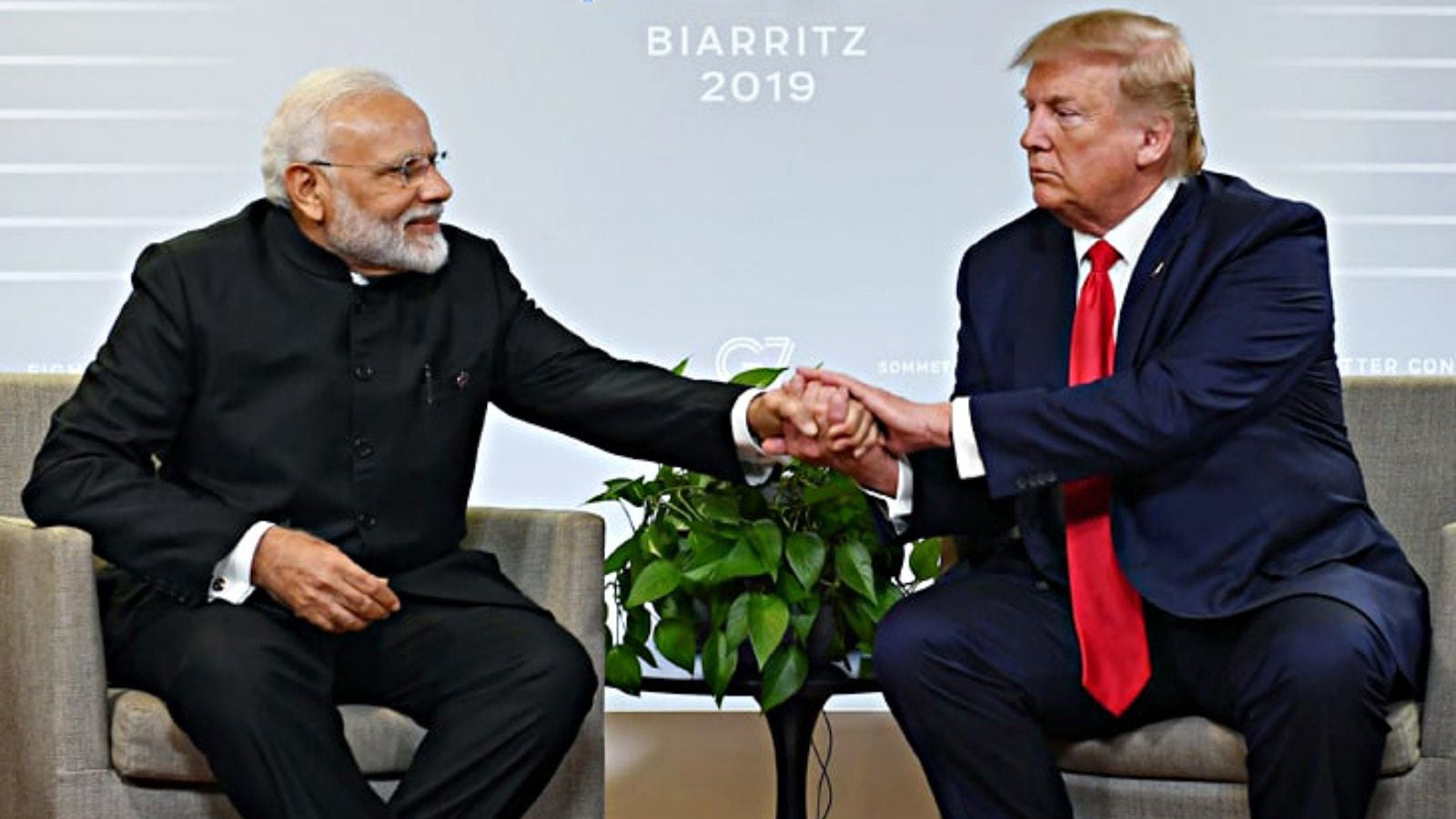
The US-India trade deal marks a welcome thaw after months of tariffs, recriminations, and diplomatic strain. But the deal itself will not fix the trust deficit between Washington and New Delhi. It lowers the temperature but does not restore confidence. Read it as an opening: A chance to convert de-escalation into strategic repair, if leaders act quickly and deliberately.

The trust deficit began with coercive trade policy. After talks stalled, US duties on Indian exports shot up as high as 50 per cent, turning commerce into a public test of India’s reliability. Then the politics got sharper. Washington compounded the damage with muddled Pakistan-related optics: President Donald Trump claimed credit for ending the May 2025 India-Pakistan crisis and floated US mediation on Kashmir — precisely the kind of third-party framing New Delhi rejects and treats as interference. The trade deal addresses one part of that cascade: It de-escalates. The agreement reduces US tariffs on Indian goods to 18 per cent and rolls back additional penalties tied to India’s purchases of Russian oil.
Still, tariffs were never just an economic variable. They became the symbol of unpredictability – of a relationship that could turn punitive. India’s Russian oil imports became a proxy fight over strategic autonomy and US signalling towards Pakistan became a proxy fight over whether Washington understands India’s red lines. A lower tariff rate is a first step. It is not, by itself, a durable solution to reviving the relationship to its former height.
The good news is that the bureaucratic machinery of the relationship has kept moving under the surface even as the relationship frayed. After the tariffs were announced, a new 10-year defence framework was signed, and the US also approved an Indo-Pacific Maritime Domain Awareness package for India.
That operational density shows up in the numbers, too. India conducts more military exercises with the US than with any other country, an indicator of how routine the security partnership has become. The personnel layer reinforces it. Ambassador Sergio Gor, a close Trump aide, is reported to have been central in pushing for an expedited trade breakthrough. Read that for what it is: Institutionalisation. It’s proof that this partnership has resilience.
But time is not infinite. This is among the sharpest leadership-level downturns in roughly a quarter-century, and bureaucratic momentum has limits. The trade deal should be treated as a bridge back to diplomacy, not a substitute for it. If Washington wants this thaw to become a durable reset, it will need leader-driven moves that create visible alignment.
Two moves must happen quickly. First, de-risk the Pakistan optics. Washington does not need to abandon counterterrorism engagement with Islamabad. But it should make explicit what Indian strategists need to hear: The US is not rehyphenating India and Pakistan, and it is not seeking to mediate
Kashmir. Here, the trade deal helps at the margin. The 18 per cent tariff on India is lower than the rate imposed on China and Pakistan, a step in the right direction that is already being received well in New Delhi as a signal of relative prioritisation. Second, go big at the leadership level. A presidential visit to India would be the cleanest confidence-building mechanism. The most plausible vehicle, politically and logistically, is a Quad leaders’ summit. India was set to host the Quad before the relationship soured and the summit was postponed. Reviving it in the first half of this year would give the thaw a strategic frame and create space for visible alignment.
The trade deal is a welcome thaw. The trust reset will require leadership: Disciplined signalling on Pakistan, and a visible strategic anchor at the top. The bureaucracy can keep the lights on. Only the leaders can restore the line of sight.
The writer is a Fulbright-Nehru Scholar, affiliated with JNU and CSEP. Views are personal
