



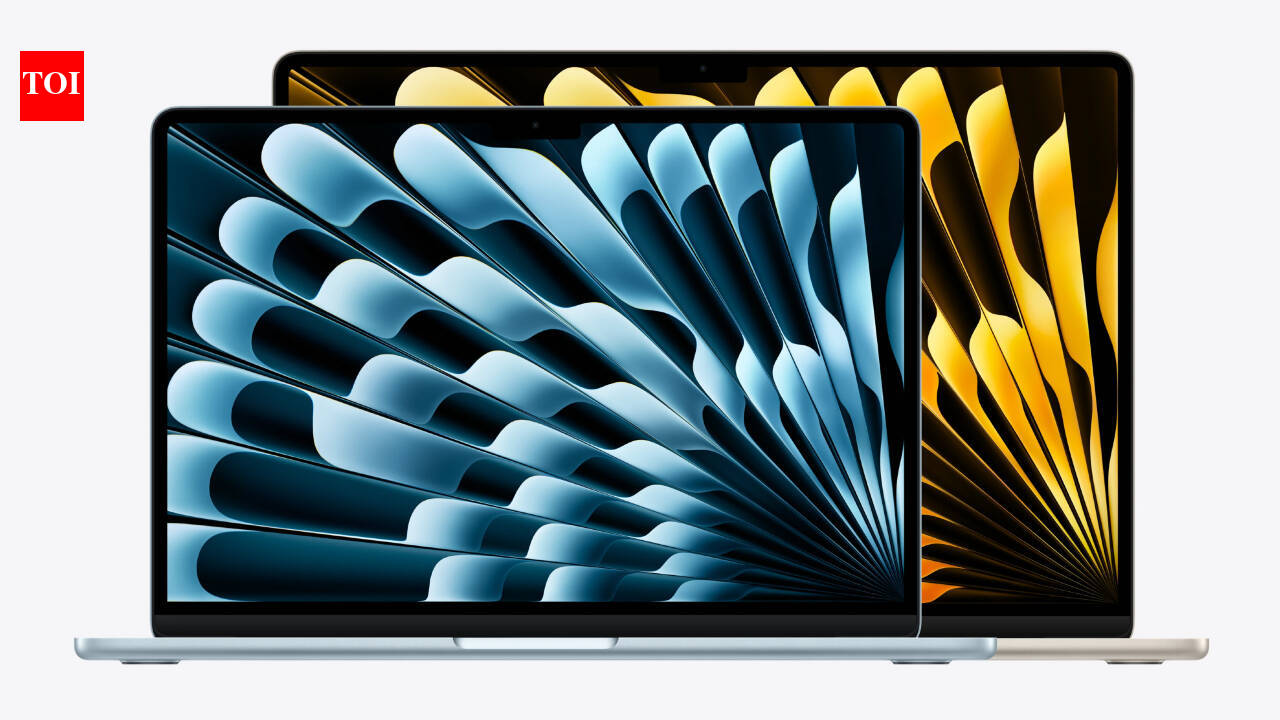
Apple has sharply increased prices across its Mac and iPad portfolio in India, citing an unprecedented surge in memory and storage component costs fuelled by the global artificial intelligence boom.The steepest increase has come in the MacBook Pro lineup. The base 14-inch MacBook Pro with the M5 chip and 16GB RAM, launched at Rs 1,69,900, is now priced at Rs 2,39,900 — a jump of Rs 70,000. The MacBook Air with the M5 chip has gone from Rs 1,19,900 to Rs 1,49,900, while the 15-inch variant now costs Rs 1,79,900, up Rs 35,000 from its launch price of Rs 1,44,900. Apple’s entry-level MacBook Neo has also become Rs 10,000 more expensive.The price increases extend to iPads as well. On Apple’s India website, the iPad Pro now starts at Rs 1,39,900, the iPad Air at Rs 89,900, the standard iPad at Rs 49,900 and the iPad mini at Rs 69,900.
Why Apple has increased prices of iPad and MacBooks
In a statement shared with TOI, Apple said the company had resisted passing on higher costs for as long as possible.“The consumer electronics industry is facing an unprecedented challenge. The rapid expansion of AI data centers has created an extraordinary surge in demand for memory and storage. We have never seen a component price increase this much, this quickly,” the company said.Apple added that it had “shielded customers” from the increases so far but had now reached a point where it needed to raise prices on products including iPads and Macs.The move comes after Apple had warned that higher component costs were becoming unavoidable. Chief executive Tim Cook recently said rising memory and storage prices had made it increasingly difficult for the company to absorb costs without affecting profitability.Industry analysts have linked the increases to what Morgan Stanley has dubbed “chipflation” — a phenomenon where AI infrastructure spending is driving up costs across the broader technology ecosystem. According to the brokerage, memory chip prices have risen six-fold over the past year as suppliers prioritise high-margin AI and data-centre customers over consumer electronics manufacturers.Apple said it was “working tirelessly to find solutions”, but acknowledged that the current environment had left little choice but to begin passing some of the cost burden on to consumers.The crisis stems from a massive surge in the cost of dynamic random-access memory (RAM). According to industry tracker TrendForce, RAM prices shot up by as much as 98% in the first quarter of 2026 and are projected to jump another 58% to 63% in the current quarter.The price adjustment does not come as a total surprise as during a late-April conference call with analysts, CEO Tim Cook warned that rising component expenses were going to catch up with the company.“We expect significantly higher memory costs. Beyond the June quarter, we believe memory costs will drive an increasing impact on our business,” Cook said at the time. He also confirmed about the price hike last week.

