



4 min readFeb 11, 2026 01:35 PM IST
First published on: Feb 11, 2026 at 01:29 PM IST
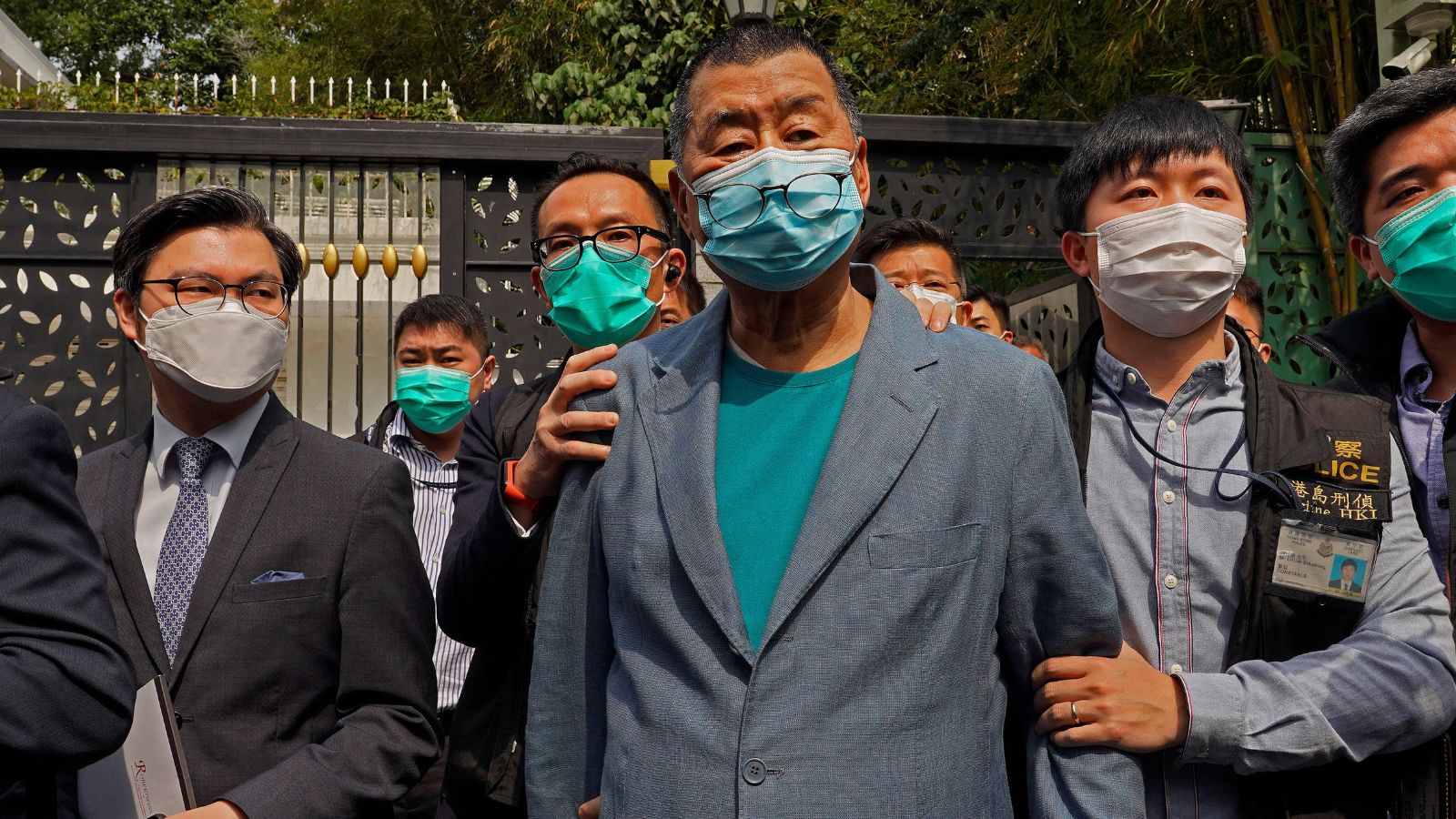
Jimmy Lai, 78, the founder of the pro-democracy newspaper Apple Daily (forced to close down in 2021), was sentenced to 20 years in prison on February 9 under the national security law for “sedition and colluding with foreign forces”. In the words of his son Sebastien Lai, the verdict “signifies the total destruction of the Hong Kong legal system and the end of justice”. This has been the harshest sentence under the 2020 national security law (NSL) after Beijing clamped down on a pro-democracy mass uprising the previous year.
Beijing and the Chinese media have doubled down on the sentencing. An article in the Global Times argues, “The NSL has decisively propelled Hong Kong from chaos to order and from order toward prosperity. The Lai case stands as the most powerful proof of the NSL’s legitimacy, normativity, and compatibility with the development of common law”.

China’s State Council released a white paper a day after this sentencing titled ‘HK’s Efforts on Safeguarding China’s National Security’. It argues, “In response to the turbulent and changing circumstances in Hong Kong, the central government has applied a holistic approach to national security, and effectively exercised overall jurisdiction over the HKSAR in accordance with the Constitution of the People’s Republic of China and the Basic Law of the Hong Kong Special Administrative Region”. The message is clear: National security under Xi Jinping means the centrality of order and adherence to the Party line.
Jimmy Lai’s case has received significant international criticism. But the Hong Kong media, once the beacon of freedom and critique, has been silent. Some quarters have even praised the sentencing. But this should hardly come as a surprise. Since the national security law was passed, many pro-democracy leaders in Hong Kong have been arrested and sentenced citing “sedition” and anti-government conspiracies. A number of pro-democracy parties have even been disbanded due to safety concerns.
The law has completely eradicated the space for criticism or questioning of the Chinese Communist Party and Xi Jinping. According to Reporters Without Borders, since the law came into force, around 900 Hong Kong journalists have lost their jobs, and there has been a rise in incidents of harassment and intimidation. In 2015, Causeway Bay booksellers were “kidnapped” after they published gossip and books critical of the Chinese leadership.
The transfer of Hong Kong to China on July 1, 1997, was achieved under the idea of the Basic Law and One Country, Two Systems. This ensured the essence of Hong Kong — free-market economy, civil liberties, media freedom, and judicial independence — for 50 years. But this has been getting in the way of Xi Jinping’s stated goal of “rejuvenation of the Chinese nation” and building a coherent Chinese identity.
Lai’s sentencing effectively ends the One Country, Two Systems principle upheld by Deng Xiaoping. In his own words, “After Hong Kong returns to the motherland in 1997, the policies will remain unchanged for 50 years, including the Basic Law we have written, which should at least last for 50 years. I would even say that there will be no need for change after 50 years.” But the NSL has attacked the core of what it means to be a Hong Kong citizen. Emily Feng in her book Let Only Red Flowers Bloom: Identity and Belonging in Xi Jinping’s China argues, “The protests that kicked off that summer in 2019 were Hong Kong’s biggest protests yet, one over the identity of Hong Kong and what it should stand for”. But, “the law’s precepts were diametrically opposed to Hong Kong values, the core of its identity and what had separated it in spirit, if not politically, from mainland China”.
Today, if Hong Kong has to survive, its people have to accept Xi Jinping’s diktats.
The writer is Associate Professor, O P Jindal Global University
