




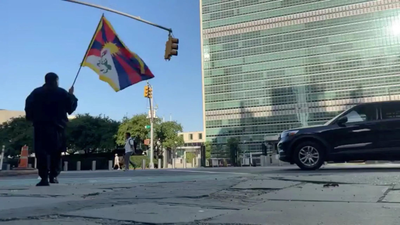
TOI correspondant from Washington: The death of a Tibetan activist who set himself on fire outside the United Nations headquarters on Thursday has thrust one of the world’s longest-running, and increasingly neglected, human rights issues back into the international spotlight, confronting the global community with a tragedy that many Tibetan campaigners say was born not of madness but of desperation.The activist, identified by Tibetan exile groups as Lobga Rangzen, died after suffering severe burns outside the UN complex in Manhattan on Thursday evening. Police said they found the man critically injured after responding to an emergency call, and he was pronounced dead at Bellevue Hospital. Activists said he was a 52-year-old Uber driver who had lived in the United States for about two decades.Moments before setting himself ablaze, he unfurled a Tibetan flag, reportedly displayed a placard reading “China Out of Tibet,” and livestreamed what he described as a final appeal for Tibetan unity and independence. Tibetan groups shared the graphic video with trigger warnings.The protest came just days after China brought into force a new “Ethnic Unity” law, legislation critics say further institutionalizes the assimilation of Tibetans, Uyghurs and other ethnic minorities into a single national identity while extending Beijing’s campaign against what it calls separatism. Chinese authorities reject such accusations, insisting the measures promote national cohesion and stability.The act also revived memories of a grim statistic that has gradually faded from international headlines. Since 2009, more than 150 Tibetans are reported to have self-immolated inside Tibet to protest Chinese rule, restrictions on religion, language and culture, and the continued absence of meaningful dialogue between Beijing and the exiled Tibetan leadership. Human rights organizations have long argued that many of those deaths passed with little sustained international response.The International Campaign for Tibet described Rangzen as a committed advocate who had devoted himself to peacefully raising awareness of conditions inside Tibet, saying his final act reflected profound despair over the worsening human rights situation. Exiled Tibetan lawmakers similarly hailed what they called his “ultimate sacrifice” while urging governments to focus on the message behind his death rather than the manner of it.The protest has also exposed how far Tibet has slipped down Washington’s diplomatic agenda. During the 1990s and early 2000s, Tibet regularly featured in congressional hearings and White House discussions. Lawmakers including Nancy Pelosi became some of the cause’s most outspoken champions, repeatedly criticizing Beijing’s policies and meeting the Dalai Lama despite Chinese objections.Hollywood too embraced the issue, with Richard Gere emerging as perhaps Tibet’s best-known celebrity advocate, joined over the years by figures such as Harrison Ford, Susan Sarandon, Bianca Jagger and musicians including Sting.Yet as US-China relations evolved from engagement to strategic competition focused on trade, technology, Taiwan and military rivalry, Tibet gradually became a secondary issue. Successive administrations, Republican and Democratic alike, have continued to voice concern over religious freedom and human rights, but the question rarely occupies the front rank of bilateral diplomacy.Analysts say Washington has increasingly calibrated its public messaging to avoid adding another flashpoint to an already fraught relationship with Beijing.As of Friday, the White House had not issued a substantive public statement specifically addressing the self-immolation – unsurprising given the deference with which President Trump treats China’s leader Xi Jinping. Similarly, there was no immediate public statement from New York Mayor Zohran Mamdani on the protest. The United Nations, meanwhile, confirmed the incident occurred outside its headquarters, but beyond expressing sympathy, it has offered no indication that the tragedy would alter its approach toward Tibet.Whether Rangzen’s death marks a turning point remains uncertain. Beijing has consistently dismissed criticism of its Tibet policy as interference in its internal affairs, insisting Tibet has been an integral part of China for centuries. But diplomats say the location of the protest — at the doorstep of the UN — could see an issue many governments have quietly relegated to the margins suddenly returned to center stage. If the objective was to remind the international community that Tibet remains an unresolved moral and political question, the flames outside the UN have made it impossible, at least for now, to look away.

