




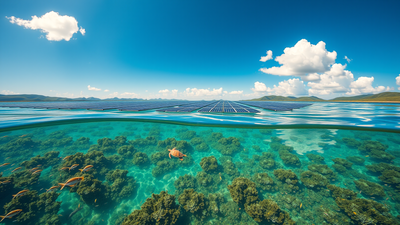
A floating solar farm in the Netherlands is turning out to have an effect nobody quite expected; it is giving underwater life a real boost. Bomhofsplas is a large artificial lake near the city of Zwolle, and its surface is now covered with more than seventy thousand solar panels installed by the energy company BayWa r.e. along with its Dutch arm GroenLeven. Instead of simply harvesting sunlight and leaving the water below untouched, the developers decided to test something different, hanging twenty specially designed underwater shelters called Biohuts from the anchoring system beneath the panels. Over three years of monitoring, researchers tracked what moved into these shelters, and the results have surprised even the scientists involved in the project, challenging the common worry that floating solar farms simply smother the water beneath them.
What a Biohut actually is and why it was tried
A Biohut is a fairly simple underwater cage, filled with shell material and textured surfaces that mimic the kind of natural nooks and crannies young fish and invertebrates usually look for in the wild. In a quarry lake like Bomhofsplas, which started out largely lifeless along its edges, these structures were meant to give small creatures somewhere safe to hide, feed and grow before larger predators could pick them off. Twenty of these cages were fixed beneath different sections of the solar farm, and researchers from Hanze University of Applied Sciences in Groningen, working alongside the consultancy Buro Bakker and ATKB, tracked the site from 2020 through 2023 to see what would actually turn up.
How many fish and invertebrates moved in
By the time the monitoring wrapped up, the shelters had drawn in more than four hundred fish and close to two thousand invertebrates, including mussels and sponges that had colonised the structures over time. That is a striking number for a lake that had very little going on beneath the surface before the panels went in, and it directly challenges the assumption that covering a lake with solar panels is automatically bad news for whatever lives underneath it. Researchers say the shelters appear to have functioned almost like a nursery, giving smaller and more vulnerable species a place to establish themselves away from open water where they would otherwise be easy pickings for birds and bigger fish.
What the water itself looked like under the panels
Alongside the Biohut study, a separate piece of research at the same site looked closely at basic water quality using sensors and an underwater drone, comparing conditions beneath the solar panels against a nearby open water reference point. According to the peer reviewed study published in the journal Sustainability, the water beneath the panels showed only small differences from the open water nearby, though the upper layers stayed slightly cooler and experienced fewer temperature swings across the seasons studied. Dissolved oxygen levels did dip a little more under the panels during the warmer summer months, but researchers found the water stayed within a range that was still safe and workable for the fish and invertebrates settling in below.
Why this pushes back against a common worry
Solar farms built directly on water are often criticised on the grounds that blocking sunlight from reaching a lake or reservoir will inevitably choke off the ecosystem underneath, starving plants and algae of the light they need and dragging oxygen levels down as a result. The Bomhofsplas project suggests that the outcome is not automatic and that thoughtful design choices, like adding artificial shelters specifically meant to support wildlife, can meaningfully offset whatever downsides come from reduced sunlight. It fits into a wider pattern researchers have started to notice with renewable energy projects generally, where facilities built with local ecosystems in mind from the outset tend to produce far better outcomes for wildlife than those that treat environmental impact as an afterthought.
How important is the incorporation of wildlife shelters like Biohuts in renewable energy projects?
3k+ users shared opinion today
5k+ users already voted today
3k+ users shared opinion today
Share Opinion
What this could mean for future floating solar projects
The Netherlands is particularly well suited to test ideas like this, given how much of the country’s landscape is already shaped by water, and floating solar is expanding quickly there as a way to generate clean power without competing for scarce land. If a relatively simple and inexpensive addition like a Biohut can meaningfully boost fish and invertebrate populations beneath a working solar farm, it offers a fairly straightforward blueprint that other floating solar projects around the world could copy without needing a major redesign. Researchers involved in the work say more long-term monitoring is still needed to understand how these ecosystems evolve over many years and across different types of water bodies, but the early results from Bomhofsplas offer a genuinely hopeful sign that renewable energy and aquatic biodiversity do not have to come at each other’s expense.
