




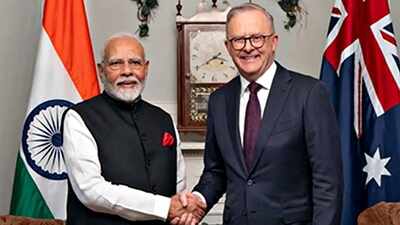
Nuclear power push: Prime Minister Narendra Modi’s visit to Australia this week may see a key uranium supply agreement being signed. It’s one of the key expected outcomes of PM Modi’s visit to Australia this week, as India seeks to strengthen fuel supplies for its expanding nuclear power programme.Australia, which has nearly one-third of the world’s known uranium reserves, signed a framework agreement with India over a decade ago. According to people familiar with the matter, Modi’s visit to Melbourne could pave the way for a commercial arrangement under which Australia would begin supplying uranium to India.The two countries are also likely to finalise or advance agreements in several strategic areas, including critical minerals, cybersecurity, emerging technologies, clean energy and supply-chain resilience, following the annual summit between Modi and Australian Prime Minister Anthony Albanese in Melbourne, according to an ET report.During the visit, Modi is also scheduled to attend the India-Australia CEOs Forum, where business leaders from both countries are expected to discuss investment opportunities in manufacturing, technology and clean energy.Economic engagement between India and Australia has strengthened significantly in recent years. In February 2025, the Australian government unveiled “A New Roadmap for Australia’s Economic Engagement with India”, aimed at deepening commercial and strategic ties with New Delhi.A key pillar of the relationship is the India-Australia Economic Cooperation and Trade Agreement (ECTA), which came into effect on December 29, 2022. The landmark trade pact grants immediate zero-duty access to 98.3% of Australian exports entering India, while ensuring duty-free access for all Indian exports to the Australian market. In FY25, bilateral trade in goods and services between the two countries reached $54.4 billion, making India Australia’s fifth-largest trading partner.The benefits of the ECTA have spread across a wider range of industries, with Indian exports of textiles, pharmaceuticals, chemicals and agricultural products recording notable growth. On the import front, the agreement has continued to improve India’s access to key industrial inputs, including base metals, raw cotton, chemicals, fertilisers and pulses, which remain vital for the country’s manufacturing and industrial sectors.

