



5 min readFeb 25, 2026 01:14 PM IST
First published on: Feb 25, 2026 at 01:12 PM IST
Earlier this month, the Union Budget inspired a meme-fest among Malayalis. It had little by way of announcements for Kerala, with the long-awaited AIIMS failing to materialise. What it did offer was “ecologically sustainable Turtle Trails along nesting sites”. The trolls had a field day with the poor turtles (aama in Malayalam). Now, Kerala is set to acquire an additional ma — the letter “m”. On Tuesday, the Union Cabinet set the ball rolling for the state to be renamed “Keralam”, approving a demand raised earlier by the state assembly. Kerala may get aama and ma, but will still be AIIMS-less.
The additional “m” is simply a matter of Sanskrit versus Malayalam. Take the Sanskrit word svarga (heaven), for example. It becomes svarg in Hindi and svargam in Malayalam. In the same way, it’s Kerala in Sanskrit (stem form) and Keralam in Malayalam, and should logically be Keral in Hindi. In modern times, the Sanskrit form ended up being used in English.

The origins of the word don’t necessarily lie in Sanskrit, however. It may be derived from the name of the ancient Chera kings, who ruled parts of modern-day central Kerala and the Kongu region of Tamil Nadu. In Old Tamil literature, these rulers are referred to as Cheralar. But the “ch” here is the result of a sound change that occurred in Tamil sometime before the earliest records; originally it was “k”. So, the Prakrit name Ketalaputo (Sanskrit: Keralaputra), used by Emperor Ashoka in the third century BCE for one of the rulers beyond his borders in the south, could either be from an earlier Tamil form of Cheralar — Keralar? — or transmitted via another Dravidian language that didn’t undergo the sound change. Thus, the Prakrit/Sanskrit forms may preserve an older Dravidian pronunciation.
The later Chera kings are known to have used the term Kerala when referring to their dynasty in Sanskrit — for example, the royal dramatist Kulashekhara (likely identical with the ninth-century King Sthanu Ravi) calls himself Keralakulachudamani, “Crown jewel of the Kerala dynasty”. As a personal name (“Kerala Varma”), it has continued to be popular among post-Chera royals up to modern times. At the same time, Keralavishaya (“the land of Kerala”) developed as a term to denote the region ruled by the Cheras, and eventually this was shortened to just “Kerala”. In Malayalam, it naturally became Keralam, and when used to refer to the region, the Sanskrit word can also be Keralam in certain grammatical forms.
After the region was divided among warring rulers in the later Middle Ages, and even into the colonial period, the memory of a unified Kerala(m) survived — hence the mythologised origin stories found in works such as the Keralolpatti. It was revived as a name for a hypothetically unified Malayalam-speaking political unit, bringing together the princely states of Travancore and Cochin, and British Malabar, by the Aikya Kerala Movement in the early-mid 20th century. This finally came to fruition with the formation of the state of Kerala on November 1, 1956.
Seen through the lens of this recent history, the renaming is perfectly justified in principle — it makes no sense for a linguistic state not to have its official name in its own language. In practice, however, another question must be asked: What are the costs?
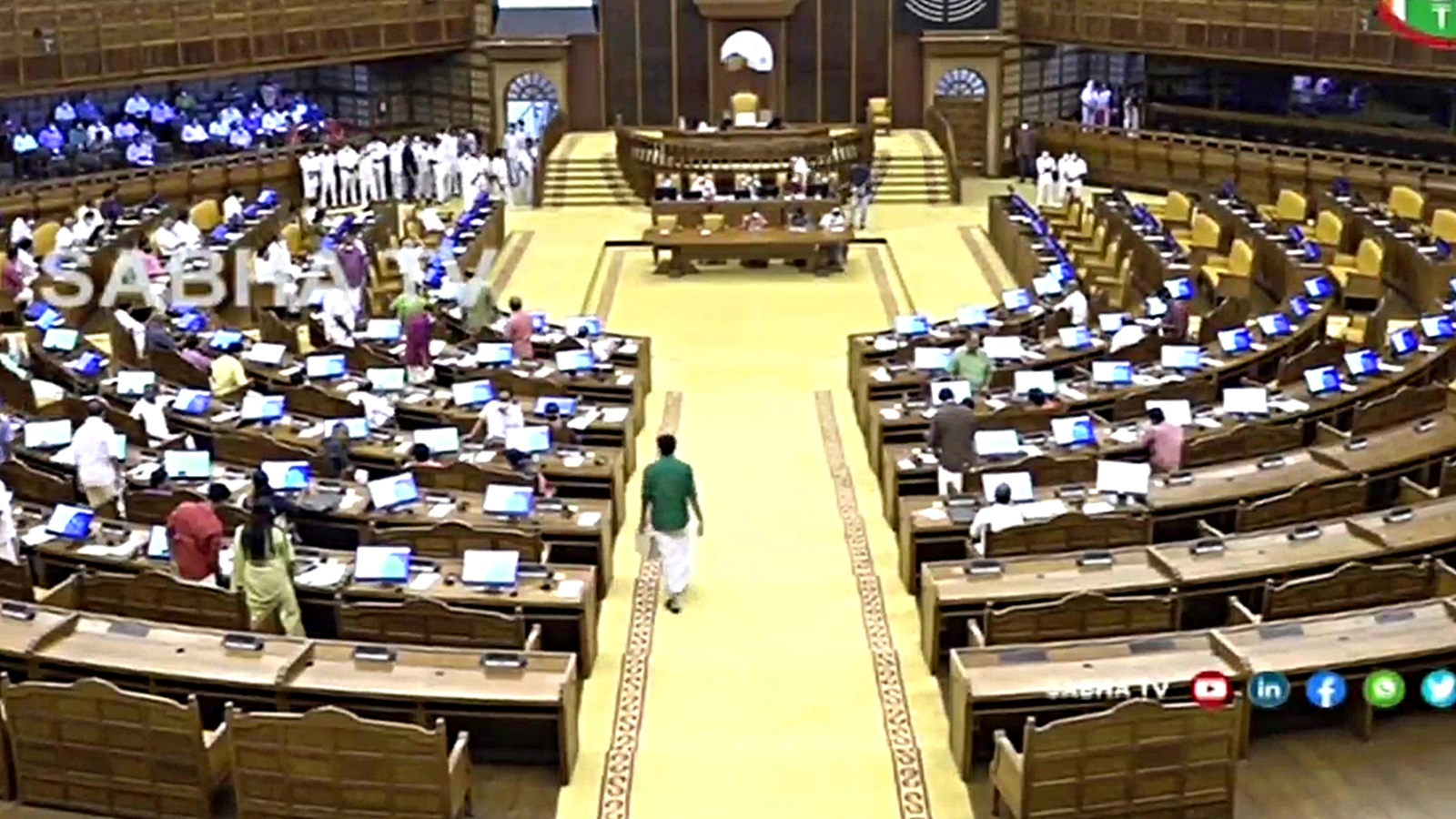
The Cabinet is moving forward with the state’s request to amend its name in the First Schedule of the Constitution. When this is done, will the state take it to its logical conclusion — repainting and rebranding everything from signposts to institutions? Will the University of Kerala become the University of Keralam? How much will all this cost the exchequer? There are always other, more pressing demands on it. Right now, for instance, government doctors are protesting over salary arrears.
For a point of comparison, let’s go back to 2006, when Parliament passed a Bill to rename another state, Uttaranchal, to Uttarakhand. During the debate, BJP MP Ravi Shankar Prasad claimed the move would cost the state at least Rs 400-500 crore, and questioned Congress for raising the issue ahead of an election. Twenty years later — and despite the lack of a mass movement as in Uttarakhand — another state is about to be renamed on the eve of an election. Who stands to gain politically, the LDF government in Kerala or the BJP? Or nobody at all, if the voters would rather have substance than symbolism, AIIMS than “m”?
The writer is senior assistant editor, The Indian Express. rohan.manoj@expressindia.com
