



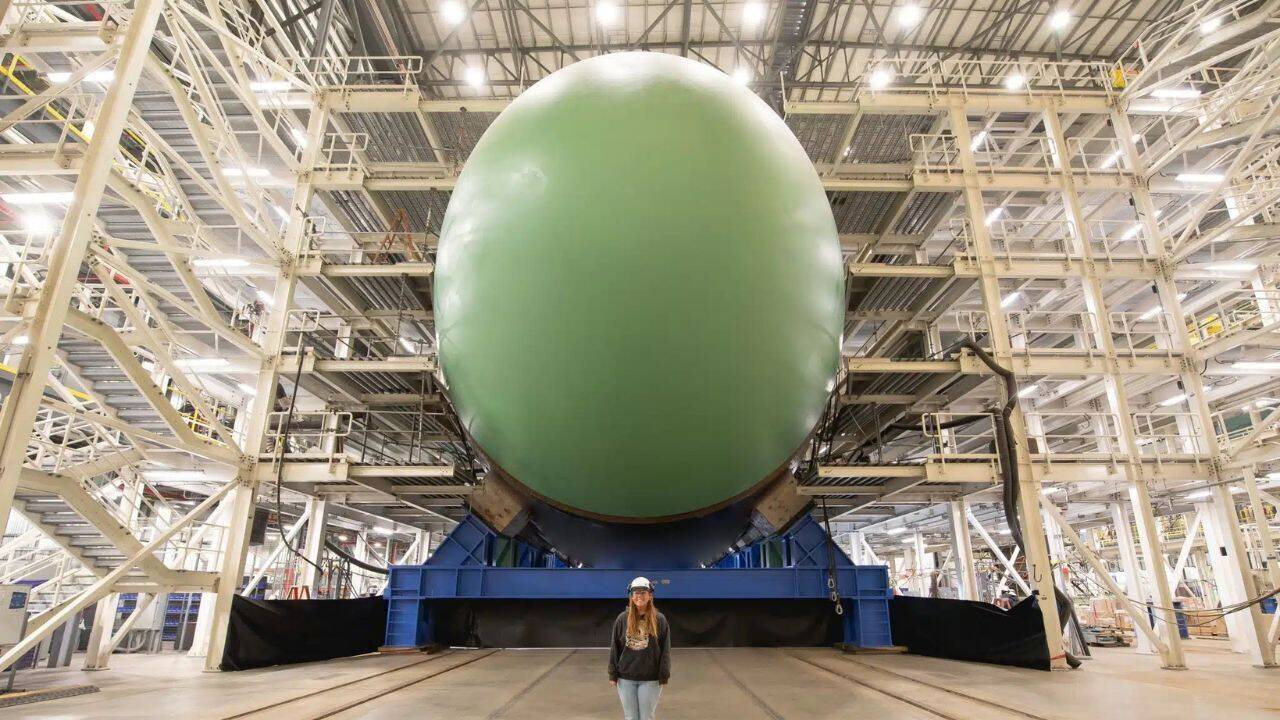
The United States is building a new generation of ballistic missile submarines that will anchor the country’s sea-based nuclear deterrent for decades to come.Designed to replace the aging Ohio-class fleet, the 12-boat Columbia-class submarines has been identified by the US navy as its highest acquisition priority.But beyond its stealth, nuclear payload and advanced propulsion, the programme’s most significant engineering breakthrough lies deep inside the submarine, a life-of-the-ship nuclear reactor core that eliminates the need for a mid-life reactor refueling, a maintenance evolution that has traditionally kept nuclear submarines out of service for more than three years.According to the US department of energy’s naval reactors programme, the innovation will increase operational availability, enable 12 Columbia-class submarines to perform the mission currently carried out by 14 Ohio-class boats, and generate more than $40 billion in operational and sustainment savings over the life of the class.The Columbia class will replace the Ohio class submarines that entered the service in early 1980’s. Total 12 submarines will be made with the lead boat expected to be delivered in the 2029.With the length of around 170 metres and displacement of approximately 21,000 tonnes, it will be powered by an electric-drive propulsion system coupled with a pump-jet propulsor, a combination designed to reduce acoustic signatures and enhance stealth.It will be armed with 16 Trident II D5LE submarine-launched ballistic missiles and Mk 48 heavyweight torpedoes, providing the sea-based leg of the United States’ nuclear triad with a survivable second-strike capability.The reactor that lasts a lifetimeAt the core of Columbia class submarines, is S1B nuclear reactor, developed under the U.S. Naval Reactors programme, featuring a life-of-the-ship reactor core designed to power the submarine throughout its planned 42 year service life. The reactors aboard the Ohio-class submarines require a complex mid-life refueling overhaul.According to the US department of energy’s naval reactors programme, a conventional mid-life reactor refueling overhaul keeps a ballistic missile submarine out of service for more than three years while engineers open the reactor compartment, remove the spent nuclear fuel, install a new reactor core and carry out extensive testing before the submarine returns to operational duty.By eliminating this lengthy and highly demanding process, the Columbia-class will spend significantly more time available for strategic deterrent patrols.Although the submarines will still undergo routine maintenance and a major mid-life overhaul for upgrades to propulsion equipment, combat systems, sensors and other onboard machinery.How a nuclear reactor powers a submarineA nuclear reactor does not propel a submarine directly. Instead, it serves as a highly efficient source of heat. Inside the reactor, atoms of uranium fuel undergo nuclear fission, a process in which atomic nuclei split and release enormous amounts of energy.This heat is transferred to a pressurized water cooling system, which in turn generates steam in a separate steam generator. The heat generated by the reactor is used to produce high-pressure steam, which becomes the submarine’s primary source of power. This steam is directed onto a series of turbines, causing them to spin at high speed.In conventional naval propulsion systems, these steam turbines convert thermal energy into mechanical energy, which is then transferred through a system of reduction gears to rotate the submarine’s propeller shaft.However, Columbia-class will adopt a different approach. Instead of mechanically linking the steam turbines to the propeller shaft, the turbines drive electrical generators that produce electricity. This electricity powers an electric-drive propulsion system, which in turn rotates a pump-jet propulsor.By eliminating the direct mechanical connection between the turbines and the propulsor, the design reduces noise and vibration, making the submarine significantly quieter and more difficult to detect.
