



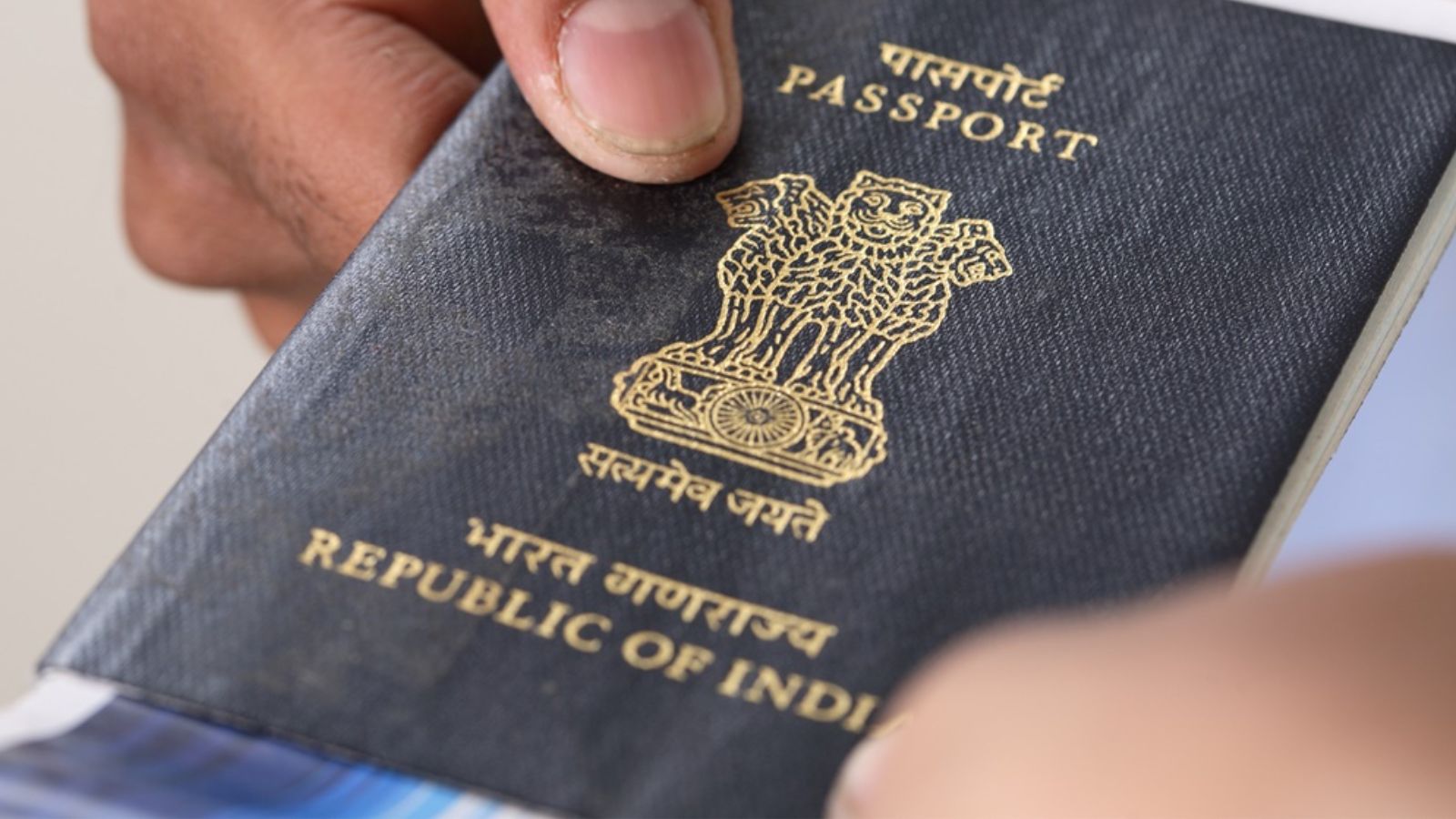
When a nation turns alien to one of its own, it does so not with conquest but with the quiet stroke of a pen. R Rajagopal, former editor of The Telegraph, watched his name vanish from West Bengal’s electoral rolls in a routine revision, stripping him of his vote and stalling his passport, despite a lifetime spent bearing witness to India’s story.

The furore over the denial of his passport (which he eventually received), along with the remarks by Bombay High Court judge Madhav Jamdar affirming the fundamental right to protest, has brought in some fresh air. These small but significant victories remind us that democratic safeguards, when invoked, can still push back against arbitrary executive overreach.
Yet the deeper warning remains.
Every constitutional democracy must revise its electoral rolls. Every sovereign nation must verify the credentials of those to whom it issues passports. Every statute has its own purpose, every authority its own jurisdiction and every administrative process its own legal consequences. None of this is controversial.
What should concern us is when the consequence of one statutory process begins to migrate into different legal domains, producing disabilities that Parliament never contemplated and the governing statute never authorised. That is the constitutional question now confronting India.
The public debate has focused on the wrong question. Much ink has been spilled over whether an Indian passport is “proof of citizenship”. The Ministry of External Affairs has consistently maintained that it is not conclusive proof of citizenship. But that is not the real issue.
The real question is whether the consequences flowing from an electoral exercise under the Representation of the People Act can cause collateral damage by encroaching upon passport administration.
Modern constitutional democracies seldom diminish liberty through dramatic legislative changes. The Constitution deliberately fragments public power. That fragmentation is not bureaucratic inefficiency; it is one of liberty’s most effective safeguards.
The Passport Authority administers the Passports Act. The Election Commission administers the Representation of the People Act. Citizenship is governed by the Citizenship Act. Income tax authorities administer fiscal legislation. Professional regulators administer licensing statutes. Each authority functions within defined legislative boundaries. The autonomy of statutory authorities is not accidental. The rule of law depends as much upon this institutional separation as upon judicial review itself. The concern arises when those carefully drawn boundaries begin to dissolve.
The Special Intensive Revision (SIR) was conceived as an electoral exercise to improve the accuracy of electoral rolls. Whether one supports or opposes the policy is an entirely different political debate.
Constitutionally, electoral revision serves one purpose: Determining electoral entitlement. It was never intended to become a parallel mechanism for regulating passports, licences, welfare benefits or other civil rights.
The Election Commission’s own data indicate that more than 5.8 crore names have been deleted from electoral rolls across twelve states and Union Territories over the past year under the SIR, while similar exercises continue elsewhere. In West Bengal alone, nearly 91 lakh names were removed following the SIR exercise, giving rise to extensive litigation and public controversy.
Whether the SIR has been properly conducted, or whether individual deletions are justified, are questions that belong to electoral law and, where necessary, to constitutional adjudication. The constitutional concern addressed here begins elsewhere: It arises when the consequences of an electoral exercise begin to migrate into statutory fields for which Parliament has prescribed entirely different legal frameworks.
Suppose electoral exclusion starts affecting passport renewal. Tomorrow it may influence professional licences. The day after, it may affect scholarships, public employment, banking, taxation, education, welfare entitlements or even the right to file a writ petition before the Supreme Court — not because Parliament has legislated such consequences, but because one administrative authority begins relying upon another’s conclusions without independently applying the statute it administers. Collectively, however, these could produce consequences far more severe than any formal citizenship proceeding itself.
A person who is effectively treated as a non-citizen may continue to approach the Supreme Court under Article 32 for the enforcement of several Fundamental Rights available to all persons, such as those under Articles 14 and 21. However, the Constitution reserves several important Fundamental Rights — including the freedoms guaranteed under Article 19 and certain other constitutional protections — for citizens alone.
If administrative assumptions regarding citizenship begin to travel across statutory regimes without any adjudication under the Citizenship Act or authority of law, the practical consequence is not merely the denial of a passport or the franchise. It is the progressive erosion of the ability to invoke and enforce constitutional rights that the Constitution itself confers exclusively upon citizens. That is precisely why the migration of administrative consequences from one statute to another cannot be treated as a matter of bureaucratic convenience.
Administrative law has long resisted precisely this phenomenon. Its central discipline is simple: Every statutory authority must independently exercise the discretion entrusted to it by Parliament. The Passport Authority cannot surrender its judgment to an Electoral Registration Officer. This is not merely a matter of statutory interpretation. It is a constitutional imperative.
The Supreme Court’s decision in Maneka Gandhi transformed passport administration by insisting that restrictions on personal liberty must satisfy standards of fairness, reasonableness and due process. The judgment’s enduring contribution was not confined to passports. It constitutionalised administrative discretion itself. Public authorities may no longer act mechanically. They must independently apply the law governing them.
If deletion from the electoral roll — even while under statutory appeal — becomes sufficient to deny passport renewal, an electoral exercise acquires consequences never contemplated by the Passports Act. The issue then ceases to be about one passport or one individual. It becomes a question of constitutional method. Should Parliament’s carefully designed legislative compartments yield to executive convenience? Should independent statutory authorities gradually cease to exercise independent statutory judgment? These are not technical questions. They go to the heart of constitutional governance.
Perhaps the greatest strength of the Indian constitutional system lies not merely in the rights it guarantees but in the manner in which it distributes power. Every authority operates within defined limits. Every exercise of public power remains answerable to the legislation from which it derives legitimacy. That architecture is now under quiet strain.
The danger, therefore, is not that one journalist may temporarily remain without a passport. It is the emergence of what may be called a “cascade of civil disabilities” — where the consequence of one administrative process gradually travels across multiple statutory regimes until a single determination begins to shape rights that Parliament deliberately chose to regulate separately.
That is why the present controversy deserves attention far beyond the immediate facts.
It is not fundamentally about passports. It is about preserving the constitutional discipline that every public authority must remain faithful to the statute it administers, every restriction upon liberty must have legislative authority, and every citizen is entitled to have his rights determined by law — not by the unintended spillover of administrative decisions made elsewhere.
Brittas is Rajya Sabha Member of Parliament belonging to CPM and Babu is a research associate
