



3 min readFeb 26, 2026 08:48 AM IST
First published on: Feb 26, 2026 at 08:48 AM IST
Please, mind the gap.” Whenever I hear this announcement in the Metro, it brings me a moment of pause. I have seen it written on the back of trucks and heavy vehicles: Kripaya doori ka dhyan rakhen (Please maintain distance).
In the case of vehicular traffic, these warnings stand vindicated. If you don’t mind the gap, you may end up paying a heavy price. But there are other areas in which we cling to the warning. “Mind the gap” is entrenched in us when it comes to social hierarchy — “apni aukat mei raho (stay in your lane)”, we keep reminding each other, making sure that the distance of caste, class and gender is never bridged.

The only place where people never seem to mind the gap is when it comes to our attitude to women. They feel entitled to offer advice for what they believe is the “benefit” of women. From governments telling women who they may or may not love, to courts advising prudence and circumspection in dealing with partners before marriage, women are at the receiving end of well-meaning patronage at all points of time.
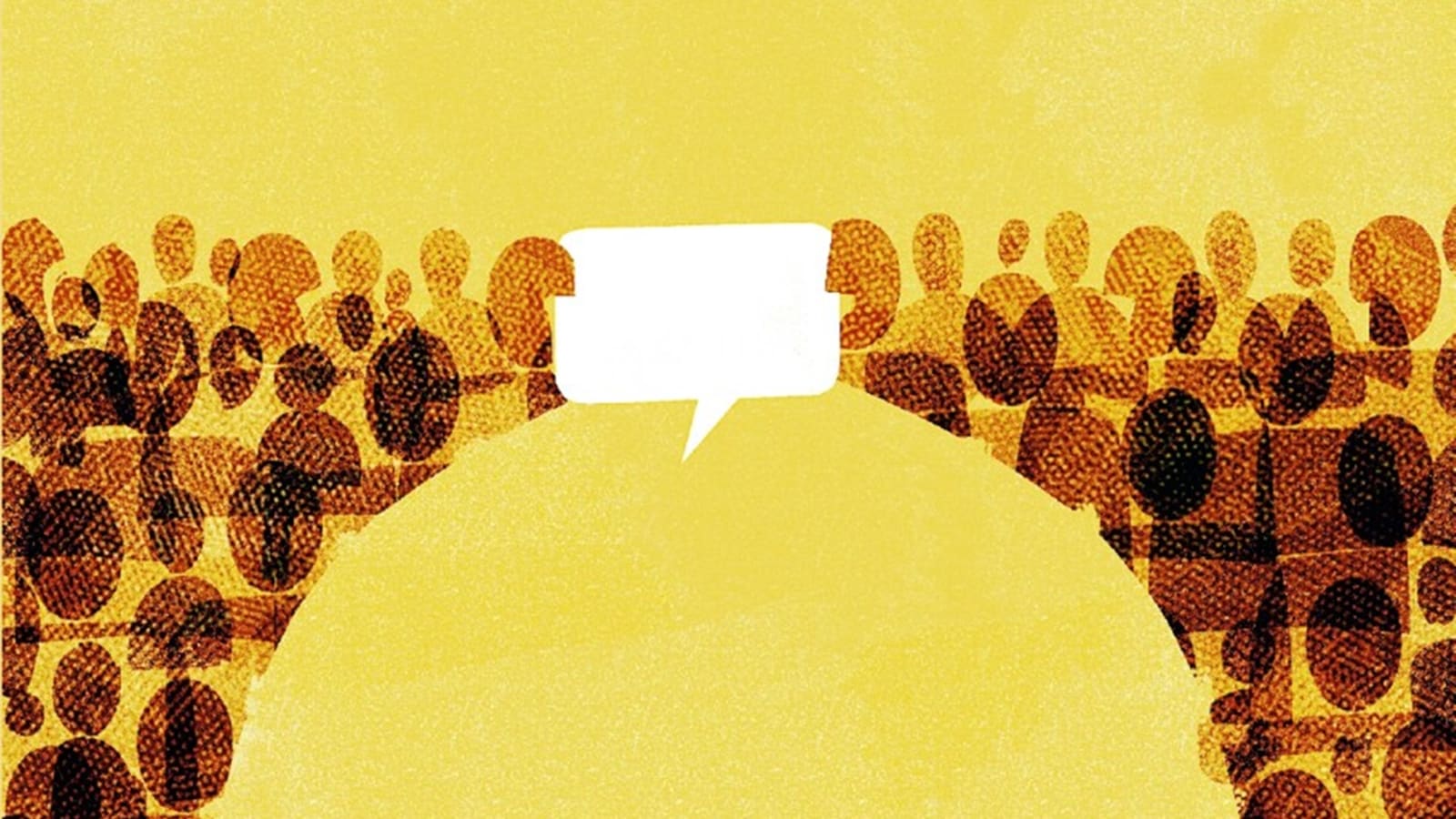
The reaction is often revealing when the tables are turned. Many men feel like it is an attack on their entitlement if they hear a woman assert her rights or push back. But why men alone? It is the way of most power equations — between teacher and student, blue-collar worker and employee, and the list goes on. “Mind the gap”, in that sense, is really about three entities: Two people, and the chasm between them. Neither would exist without the other. The gap is essential to recognise the individuality of, and the relationship between, the two.
What can we do to erase this distinction, especially in a world in which inequality is normalised and othering is routine? Goswami Tulsidas says, “Jaki rahi bhawna jaisi, prabhu murat dekhi tin taisi” — the world, and the people in it, appear to us through the prism of our own inner conditioning. It is a difficult path because it demands that we examine the lacunae that shape our prejudices. It pushes us to ask whether the distances we defend are boundaries or biases. Imagined thus, the gap is a space for engagement. Between the train and the platform, it is a sliver of risk but also a threshold. It makes movement possible. Without that small gap, there would not be any step forward.
In life, too, it is no different. Perhaps what we need is not to obsessively mind every gap, nor deny its existence, but to transform our relationship with it. To see the gap as an opportunity to examine why it exists and whom it serves. There are gaps that protect, others that exclude. We need to be able to discern one from the other.
The philosophical culmination of “mind the gap” lies in attention and empathy: Be conscious of the distance you maintain, the distance you impose, and the distance you are afraid to cross and ask yourselves why. The Metro announcement may be about physical safety, but it could also be an unintended metaphor for ethical living.
The writer is a Delhi-based teacher
