



6 min readJul 19, 2026 06:05 PM IST
First published on: Jul 19, 2026 at 06:05 PM IST
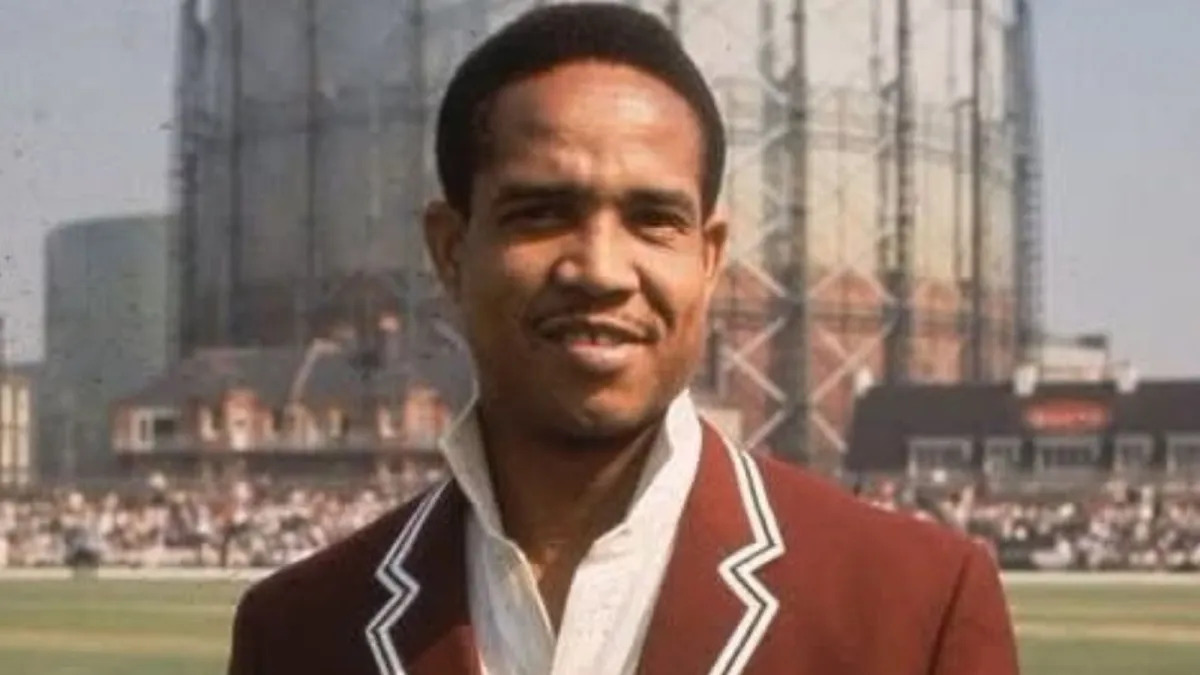
What did Sir Garfield St Aubrun Sobers represent? His passing, which has plunged the entire cricketing world into mourning, is more than the loss of the sport’s greatest all-rounder. We have lost arguably the last living embodiment of cricket as a source of freedom: A man who made an old, stodgy colonial sport more joyous and more human than the empire that created it.
If Don Bradman perfected a colonial sport organised around Britain and its dominions, then Sobers must be remembered for bringing together the Commonwealth of Cricket. From his native Barbados, Sobers travelled throughout a dying empire, becoming equally at home in Kingston and Calcutta, Manchester and Melbourne. Wherever he played, he changed the way cricketing excellence was understood.

The numbers describe several great cricketers compressed into a single body: 8,032 Test runs at 57.78, 235 wickets delivered through pace, swing, orthodox spin and wrist-spin, and 109 catches. Yet those numbers understate. Abundance was Sobers’ gift. His peers knew that he could alter the course of any match without making cricket appear laborious.
Before him, Learie Constantine had shown that a Black West Indian could be an extraordinary athlete with intelligence and charisma. George Headley, the “Black Bradman,” freed batsmanship from old racial prejudices. Frank Worrell added statesmanship, turning a fractured archipelago into a world-class team. Sobers was the culmination of their efforts. He showed that a Black man could not only bat, bowl and field as well as anyone else, but better.
Sobers played his first Test as a left-arm spinner at 17 against England in Kingston in 1954. His first overseas tour to New Zealand two years later yielded only 81 runs in four Tests on unfamiliar green pitches. Yet a boy from Barbados had begun mastering cricket’s dispersed world. Pakistan soon revealed what he might become. At 21, Sobers turned his maiden Test century into 365 not out at Kingston, breaking Len Hutton’s world record. His 824 runs announced a colonial subject taking possession of cricket’s record books.
India was woven into Sobers’ career from the beginning. At 16, he took seven wickets on his first-class debut for Barbados against the touring Indians, prompting captain Vijay Hazare to speak of future greatness. Six years later, Sobers arrived in India as the finest young batsman in the world. He scored 557 runs at 92.83, with three centuries, as West Indies won 3–0. He returned in 1966-67 as captain, scoring 342 runs at an average of 114, and leading his team to a 2–0 win. Across two home series and two away against India, Sobers made an astounding 1,920 Test runs at 83.47. Indian spectators responded by elevating him to the pantheon of cricketing greats.
In England, the old imperial game encountered Sobers first as a colonial prodigy, then as its master. Against them at home in 1959-60, he amassed 709 runs, including three centuries, establishing himself as the era’s leading batsman. In 1966 as captain, he produced perhaps the most complete series any cricketer has played: 722 runs at 103.14, 20 wickets, and 10 catches as West Indies won 3–1. He was, at once, his team’s premier batsman, opening bowler, spinner, close fielder, and towering leader. His years at Nottinghamshire deepened the bond. In 1968, his six sixes in an over at Swansea entered folklore. English spectators embraced him as one of their own cricketing heroes. Not only did Sobers conquer the old imperial centre, he showed what cricket after empire could be.
Australia, however, was where Sobers made his deepest impression. His 132 in the tied Test at Brisbane in 1960 announced him to a cricketing public that prized audacity. West Indies lost narrowly, but Australians embraced Worrell’s team with an affection that unsettled the racial assumptions of the White Australia era. Five years later, Sobers captained West Indies to their first Test series victory over Australia, confirming that Caribbean brilliance had become cricketing supremacy. Three seasons with South Australia drew crowds, inspired youngsters such as Ian Chappell, and culminated in Sheffield Shield glory in 1963-64. His 254 at Melbourne in 1972 led a World XI to victory and prompted Bradman to describe it as the greatest exhibition of batting ever witnessed in Australia. Sobers’s peculiar greatness lay in that, even in defeat, Australia felt its sense of cricket enlarged. In turn, no country did more to affirm Sobers’ greatness.
Comparisons with Muhammad Ali illuminate as much as mislead. Ali became a prophet through resistance and refusal, his greatness forged amidst the confrontations of the American civil rights movement. Sobers worked differently. He was no political saint. His appearance in Rhodesia in 1970 was a serious error, for which he later expressed regret. Nor did he possess the political nous of Constantine or Worrell. His revolution occurred principally on the field of play. His inexhaustible talent asserted Black excellence until the sport’s old racial hierarchies looked ridiculous. Englishmen, Australians, Indians, and Pakistanis recognised and enjoyed the same genius. If Ali embodied rupture, Sobers practised another kind of postcolonial worldmaking: He remade an imperial inheritance as a shared arena of excellence built on freedom and joy.
This is what Sobers leaves behind and what the cricketing world mourns: A Commonwealth of Cricket held together by a certain joie de vivre. Yet it is also what cricket now risks taking for granted. Today, India supplies much of the game’s money and muscle. That ascendancy is itself part of cricket’s layered postcolonial history. But money did not make cricket global, and money alone will not preserve it. Sobers helped rescue the game from becoming curling or croquet: An obscure inheritance guarded by White men and sustained by nostalgia.
If Bradman showed how perfectly cricket could be played, Sobers showed how freely it could be imagined and how generously its joys could be shared. By elevating those around him, he elevated the sport in ways that future generations should never forget.
The writer teaches politics and history at Georgetown University, Qatar
