



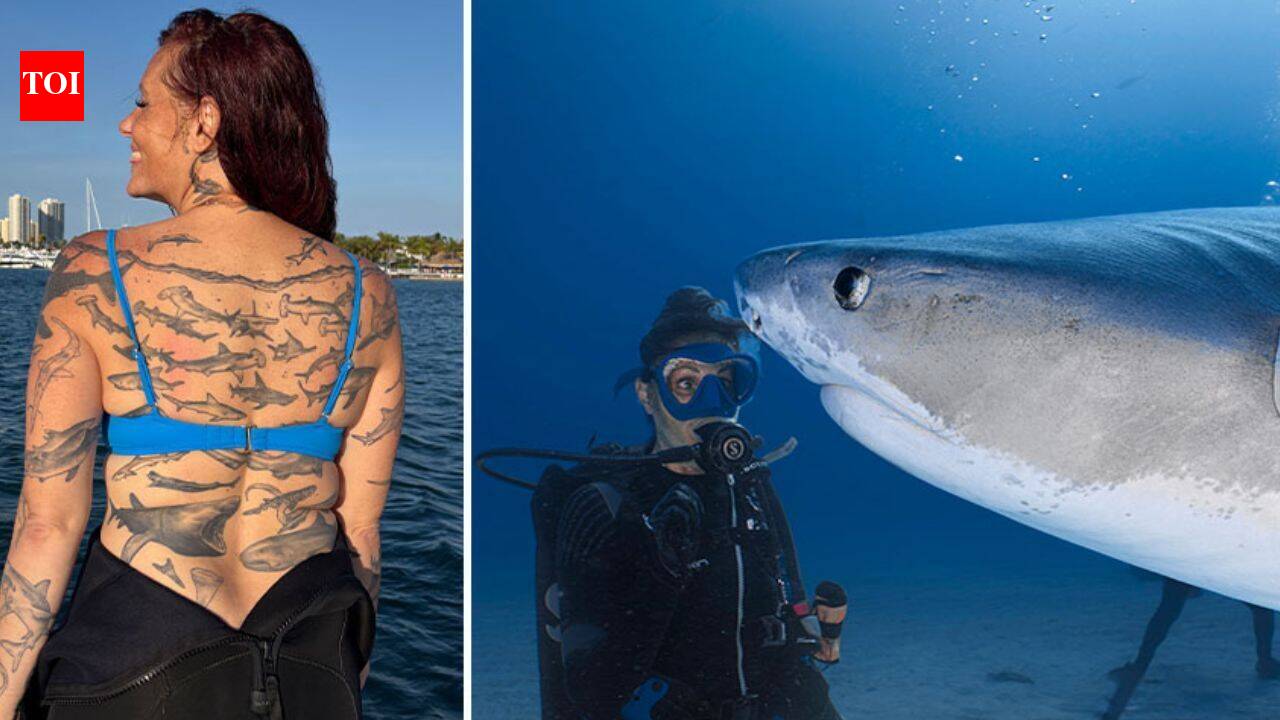
Shark is a unique animal that has survived five mass extinctions and swam in our oceans before trees existed. For many of us, the thought of a shark brings up the images of big, sharp teeth with terror. However, for one American marine biologist named ‘Emily Morrison,’ these marine predators are not just a source of fear, but a life-long obsession and a signature memory for her skin.On 29 May 2026, Emily officially secured her place in history by achieving a ‘Guinness World Record for the most sharks tattooed on the body.’ With 106 different designs stretching from her feet to her neck, her body has become an aquarium of sharks. This wonderful journey from childhood terror to world-renowned advocate highlights a growing movement where art and science come together to protect the ocean’s most vital and vulnerable residents.
Emily Morrison’s record-breaking 106 shark tattoos
Emily Morrison, an American marine biologist, is not an average scientist. Many researchers spend their time in labs, but Emily carries her research everywhere she goes. These tattoos are not random drawings, they represent 71 distinct species and 14 specific shark teeth that she has personally discovered during her dives.Her end goal is to have a display of all ‘58 existing shark families’ on her skin, and only seven families are left. For Emily, this body-diary is a testament to her deep love for the ocean and her commitment to these misunderstood marine creatures. She even runs a company called ‘Shark Lady Enterprises,’ which allows others to join her on diving missions to find fossilised teeth.
How did Emily’s childhood fear turned into a lifelong passion for Sharks
Emily’s obsession actually began with a deep-seated fear. At the age of eight, she was terrified after watching the classic film ‘Jaws.’ She was so scared that she even told her father that a shark would eventually eat her. So instead of letting her live in fear, her father gave her a clever challenge: he took her to the library and asked her to find a factual reason to hate sharks.While reading, she came upon a surprising fact. She learnt that sharks have been on Earth since before trees, and that a single shark can produce up to 35,000 teeth in its lifetime. This newfound curiosity quickly replaced her terror, and she turned this passion into a professional career. Her very first tattoo, at the age of 19, was actually a ‘nod’ to the very marine monster that started it all.
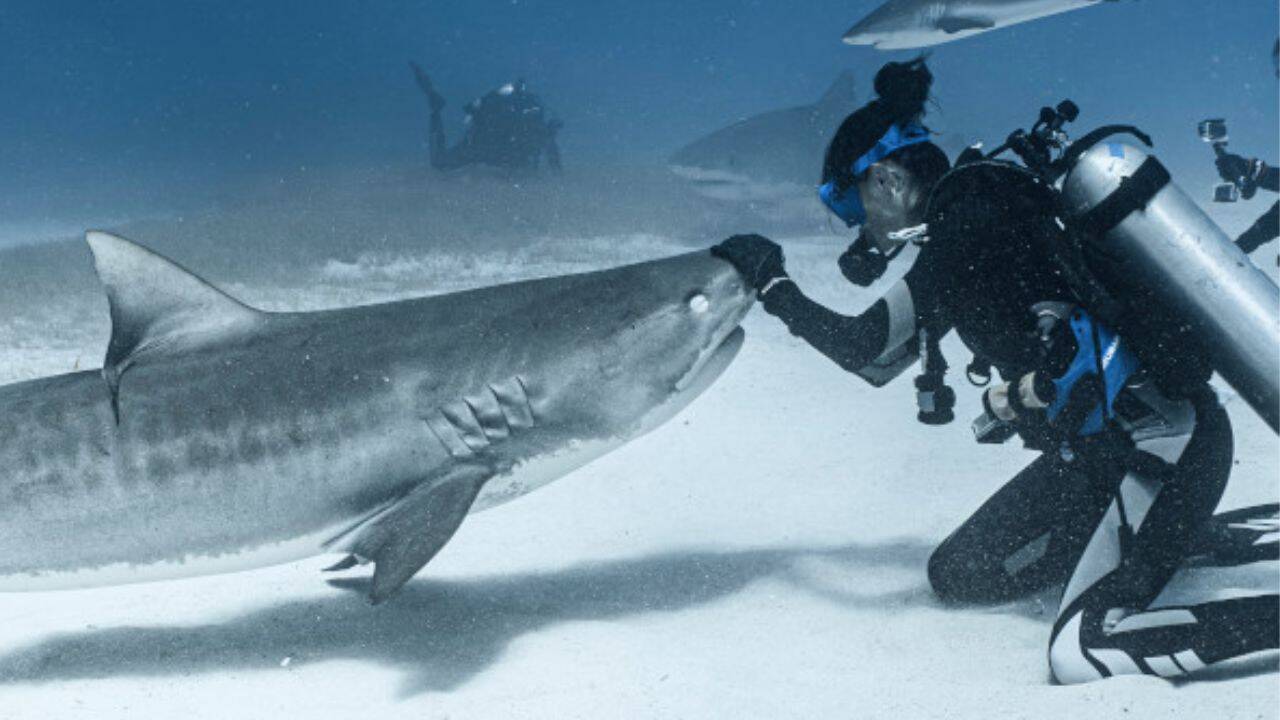
Image Credit: guinnessworldrecords.com
Why are sharks more than just a set of teeth
To understand why people like Emily and British artist ‘Francesca Page’ dedicate their lives to sharks, we must look at the vital role these animals play in our survival. Sharks are ancient beings that have survived for over 450 million years, making it through five mass extinctions. As apex predators, they sit at the very top of the marine food chain. Without them, the entire balance of the ocean would collapse.By controlling the numbers of other killer fish, they ensure that herbivores can grow and keep algae levels in check. This will protect the essential ecosystems like coral reefs and seagrass beds, which are vital in the fight against climate change. The ocean also provides more than half of the oxygen we breathe. If the sharks disappear, the health of the entire earth is at risk. Humans kill around 100 million sharks every year, while sharks only kill an average of five people annually.
Can art really change how we see these marine predators
Scientists are not the only ones using their creativity to help. Artist Francesca Page is on her ‘200 Sharks’ project to paint 200 different shark species, showcasing their beauty and intelligence. She believes that because humans are visual creatures, art can act as a powerful voice for nature.By adding art and interaction to aquariums, scientists can increase children’s awareness of the environment. Teachers can teach children about the history and development of these ocean animals through bright colours and engaging exhibits. When art and science come together, sharks can shed their bad reputation and replace it with compassion.Education and connection are the keys to saving our oceans. Right now, only 3% of our oceans are protected, but experts say we need to get at least 30% to have a healthy future for our planet. For Emily Morrison, her skin tells a story of respect and survival, but the future of sharks depends on the collective action from each and everyone of us.
