



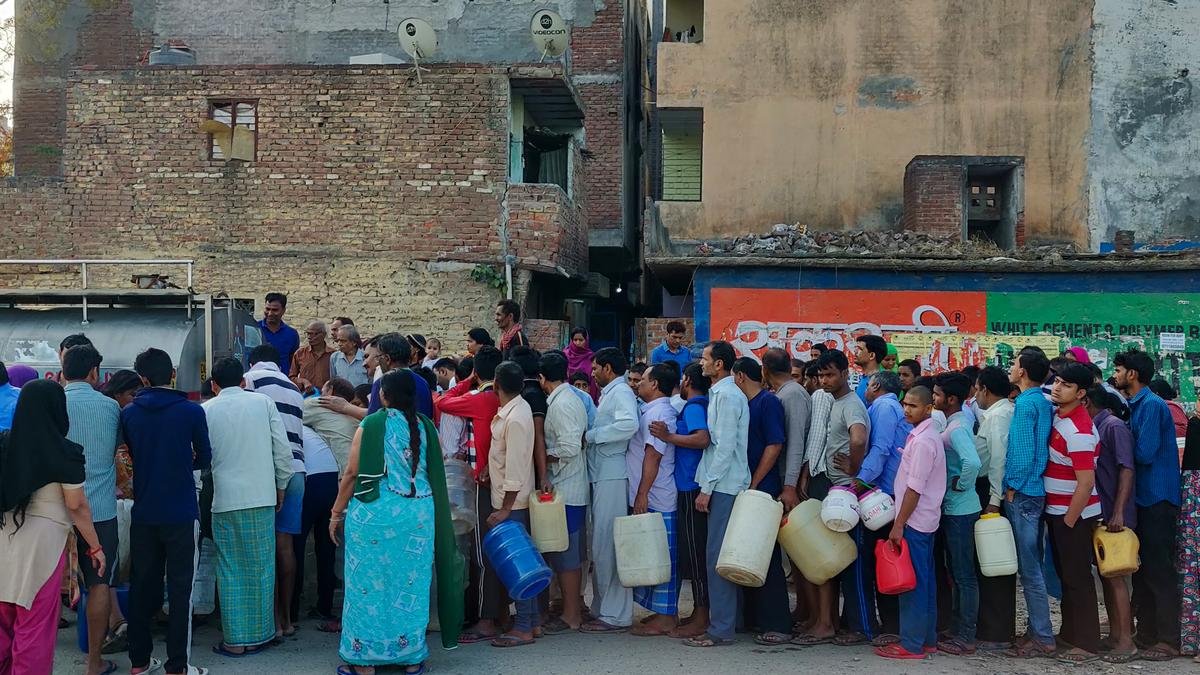
How much can realistically change within the span of a single political term? The answer matters because India’s wider growth and development ambitions now hinge on how its cities handle water.
Urban India is expected to drive the bulk of GDP growth this decade — yet many city water systems remain fragile. Utilities lose more than 30% of the water they produce before it reaches consumers or is billed, a measure known as non-revenue water.
Only around 27% of sewage is treated, leaving significant potential for reuse untapped. Many utilities also recover less than 55% of their operation and maintenance costs through user charges, limiting their ability to maintain networks and improve services.
In effect, India is trying to build a ‘Viksit Bharat’ on top of a leaky and crumbling urban water system.
Fortunately, a focused agenda for one political cycle can stabilise urban water services, especially for those who are currently worst-served. Such an agenda comes to light by answering four questions: Where does the water come from? How efficiently is it moved and used? Who receives what? And how is it paid for?

Where does the water come from?
Over the last few decades, Indian cities have steadily depended more and more on distant rivers and groundwater. This has rendered higher energy bills, political disputes over allocations, and greater vulnerability to drought and contamination. Within one political term, cities are unlikely to abandon these sources altogether but they can reduce their dependence.
This starts with a simple change in mindset: treating rainwater and treated wastewater as mainstream sources rather than as fringe add-ons. Most large cities receive enough rain on their roofs, roads, and open spaces to make a meaningful contribution to local demand if it is captured.
Similarly, a significant volume of wastewater can be treated to a standard suitable for non-drinking uses, such as industrial cooling, construction, landscaping, and flushing.
Practically, this means three kinds of policies over the next few years: stricter enforcement and incentivising of rainwater harvesting in large buildings and layouts; a clear plan to route treated wastewater to high-demand users who do not need drinking-quality water; and realistic targets to meet part of the city’s non-potable demand from these sources.
A city that meets even a quarter of these needs through rain and reuse will be less at the mercy of reservoirs and over-stressed aquifers.
How efficiently is water moved and used?
Many urban water providers are public utilities or departments that face familiar political, regulatory, and capacity constraints. They often operate with high non-revenue water, limited wastewater treatment and reuse, and weak revenue collection.
These are important reasons why supply is intermittent, pressure is low, and expansion into poorer neighbourhoods is delayed so often.
Over a single term, then, three steps are achievable to good effect. First, clarify responsibility. A clear mandate and support from the State government and formal coordination mechanisms with shared standards and joint planning can significantly improve service delivery.
Second, get serious about measuring and managing losses. In most Indian cities, a large share of water is lost before it ever reaches a tap, due to leaks or unbilled consumption. Over a four- or five-year horizon, utilities can map their networks into district metered areas, install bulk meters at key points, and run sustained leak reduction programmes in the worst-performing districts.
Third, modernise basic customer-facing services. This includes universal metering for larger consumers, better billing and collection systems, and accessible grievance redress mechanisms.
When people know how much they use, what they pay for, and where they can raise complaints, honest conversations about tariffs, service levels, and equity are easier to have. Better information also helps utilities manage operations and plan investments.
Who receives what?
Current approaches for coverage, delivery and affordability have not closed the equity gap. Free standposts and ad-hoc tankers are important safety nets but they often coexist with tariffs and subsidies that benefit those already connected to the network. The result is a pattern where poorer households may pay more per litre — through time, health and informal payments — than those receiving piped water at low, flat rates.
A one-term reform agenda can start to change this by making it smarter.
One strand is to rethink service benchmarks. National per-capita norms have their place but cities can use local data to prioritise a guaranteed minimum amount of safe water for every resident — regardless of neighbourhood or tenure. This may mean investing in last-mile connections, shared infrastructure, and better pressure management in low-income and informal areas, rather than only in network extensions to new real estate.
Another strand is to redesign tariffs and subsidies so that they protect basic needs while discouraging waste. This is often framed as a technical exercise but at heart it is a political choice: should scarce public support be spread thinly across all users or focused more on those who need it most?
Over a term, cities can pilot and refine tariff structures that combine lifeline blocks, cross-subsidies from higher consumption, and targeted support for the poor, backed by transparent communication about why these changes are being made.
Who pays for it?
A one-term agenda can also change how water investments are chosen and evaluated. Too often, decisions focus on construction costs while neglecting long-term operation, maintenance, and the broader benefits of good water management, including lower health costs and less flood damage.
Before approving major projects, cities should ask three questions. (i) Have all reasonable options for reducing demand or losses before adding new supply? (ii) Have the full lifetime costs, including energy, maintenance, and adaptation to climate risks been considered? (iii) Have environmental and social impacts of choices such as protecting wetlands versus piping water from afar valued?
Answering these questions does not require new laws. It requires better guidance, capacity-building, and a willingness to learn from successful examples. Over a term, States and cities can build these habits into appraisal processes, perhaps starting with a few ‘lighthouse’ projects that explicitly test and demonstrate better ways of planning and financing.
Towards a single system
None of these changes will be simple. There will be entrenched interests, capacity gaps, and the ever-present temptation to announce something big and visible rather than fix what already exists. Yet these reforms are not utopian. They fall squarely within what an aligned city-State combination can start and significantly advance within a single political cycle.
Overall, India must shift from counting connections to managing performance and resilience, treating water, energy, finance and institutions as a single system, and investing equally in operations and local capacity.
Manish Dubey is Dean & Rahul Bajaj Chair, School of Governance, Indian Institute for Human Settlements (IIHS). K V Santhosh Ragavan is Adjunct Faculty, IIHS.
