



4 min readJul 29, 2026 06:30 AM IST
First published on: Jul 29, 2026 at 06:30 AM IST
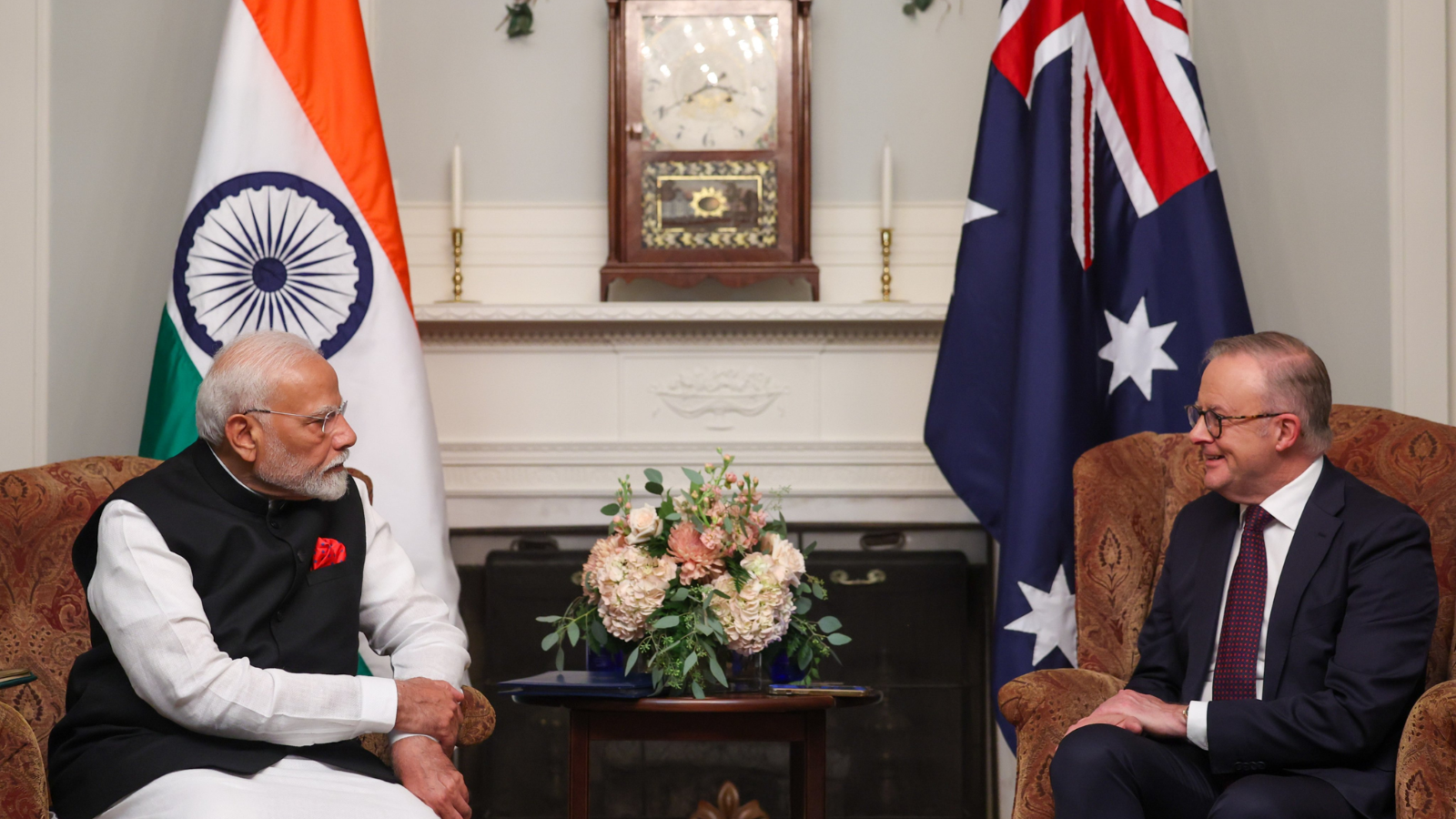
If you judged Prime Minister Narendra Modi’s recent visit to Australia solely by the images, you might conclude it was all about packed stadiums, enthusiastic supporters and the evident warmth between two leaders. That’s all true, but you would miss the bigger story. The real significance of the visit lies not in the diplomatic niceties, but in what it revealed about the trajectory of the Australia-India partnership. For much of the past two decades, our partnership was defined by potential. Today, it is increasingly defined by delivery. That shift matters. And nowhere is it more relevant than in western India.
Take investment. During the Prime Minister’s visit, AustralianSuper, Australia’s largest superannuation fund, announced a A$500 million investment in Mumbai-based National Investment and Infrastructure Fund, taking its overall holdings in India to A$3.3 billion. This investment is a vote of confidence in India’s economic future and the infrastructure transformation reshaping cities across much of western India.

Our economies are remarkably complementary. Two-way trade now exceeds A$50 billion, supported in large part by the Australia-India Economic Cooperation and Trade Agreement (ECTA). Since January, all Indian goods exports to Australia have become tariff-free, strengthening the competitiveness of Indian exporters in one of the world’s most open and stable markets. ECTA has helped drive strong growth in Indian service exports to Australia, increasing by 58 per cent since it entered into force.
Energy cooperation further demonstrates these complementarities. Our prime ministers issued a joint statement on Energy Security, strengthening cooperation on reliable energy supplies while opening the way for Australian uranium exports to India exclusively for peaceful purposes and under International Atomic Energy Agency safeguards. Australia holds almost one-third of the world’s known uranium resources and is a major supplier of critical minerals needed for the energy transition.
The same logic applies to education. Eight Australian universities have committed to establishing campuses in India. Of particular significance for western India, the University of Western Australia will establish its first Indian campus in Mumbai, complementing Deakin University and the University of Wollongong campuses in Gujarat’s GIFT City. This reflects confidence in India’s educational future and western India’s position as a leading centre of commerce, innovation and talent.Sport is another focus area. During the visit, our PMs agreed to a Sports Collaboration Roadmap covering sports science, major-event delivery and capability development. As India pursues major sporting events, such as the 2036 Olympics, opportunities for collaboration continue to grow. Later this year, G’Day-Namaste will showcase Australian business, culture and sport across India, culminating in an Australia-India Sports Summit in Mumbai.
Our cultural ties are also delivering. During his remarks at Melbourne’s Marvel Stadium, PM Modi recognised the Indian Film Festival of Melbourne’s contribution to promoting Indian cinema globally and strengthening cultural links. The announcement of Silkyara 41, a landmark collaboration between Aamir Khan Productions, Mind Blowing Films and Kabir Khan Films, further underscored our close cultural connections. Together, these developments highlight a partnership increasingly shaped by shared stories and foster further collaboration under our Co-Production Agreement.
People remain at the heart of our partnership. More than 1 million Australians now claim Indian heritage. In 2025, more than 140,000 Indian students studied in Australia — many of them from western India — and over 1 million trips were made between our countries. ECTA provided additional opportunities for skilled professionals to live and work across our two countries, further strengthening these links.
The outcomes from PM Modi’s visit matter because they capture a wider truth: Our partnership is increasingly focused on achieving the greatest impact bilaterally and for the Indo-Pacific region. We are trusted strategic partners, with complementary economies during a period of profound industrial transformation, and societies connected by deep and growing ties. That is why the significance of the Melbourne visit extends far beyond the headlines. It demonstrated a relationship with momentum, direction and purpose. For western India, that is good news. Many of the investments, partnerships and opportunities created by our partnership will be delivered here. From infrastructure and clean energy to education, sport and innovation, western India is where the next chapter of the Australia-India story will be written.
The writer is Australia’s consul-general in Mumbai
