



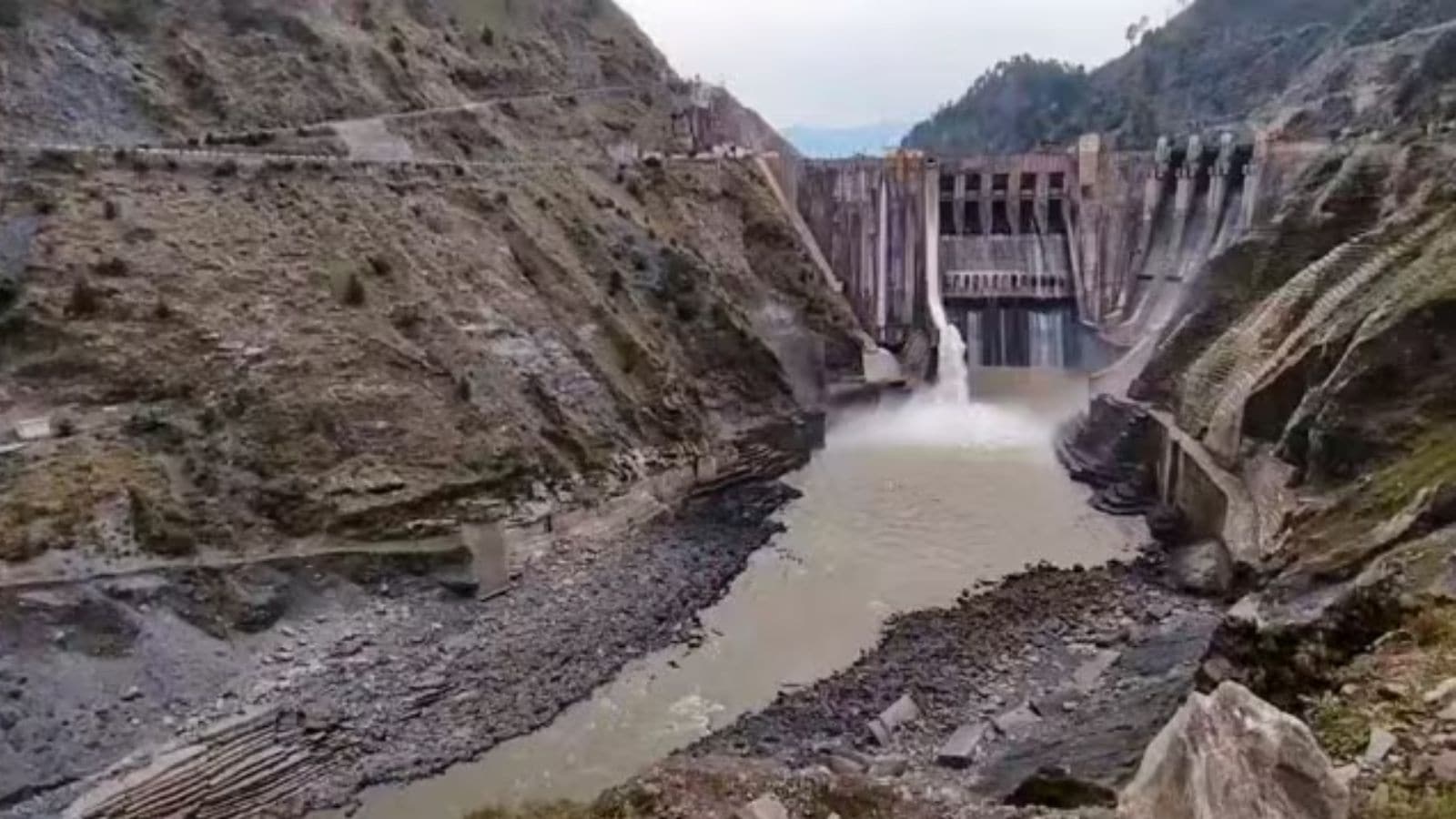
At a Pakistan-hosted Arria-Formula meeting of the UN Security Council on January 31, Pakistan’s Permanent Representative to the United Nations, Asim Iftikhar Ahmad, delivered a carefully constructed message. India’s suspension of the Indus Waters Treaty (IWT), he argued, is “not merely a bilateral concern” but a “test case for the international system”. If a binding treaty governing shared natural resources can be set aside unilaterally, he warned, then no agreement anywhere is safe from politics.
This was not a routine diplomatic remark. It was a calculated move, timed ahead of the UK and US presidencies of the UN Security Council, intended to pull the IWT out of its technical, bilateral setting and recast it as a question of global treaty sanctity.

Pakistan’s framing is astute, reading the international mood in the wake of India’s recent trade engagements with the EU and the US, and presenting the water-sharing issue in terms that invite diplomatic pressure far beyond the specifics of the treaty dispute. By this logic, India stands accused of weakening the very idea of the treaty-based international order.
The central flaw in Pakistan’s argument is that it treats treaties as sacred texts divorced from the conduct of the parties bound by them. After years of painstaking negotiations, the IWT was signed in 1960 as a practical arrangement meant to keep hostility away and allow both countries to use water for development. Peace never followed between India and Pakistan, yet the treaty survived the wars of 1965, 1971 and 1999, decades of tension, and cross-border terrorism because it relied on restraint and good-faith implementation, not political goodwill.
That assumption no longer holds. For more than a decade, Pakistan has systematically used the treaty’s dispute resolution mechanisms not as instruments of clarification, but as tools of obstruction. Every Indian hydroelectric project permitted under the treaty has been challenged. Neutral experts, courts of arbitration, and procedural appeals have been invoked in parallel and in sequence, turning what was meant to be a technical process into a permanent legal battlefield. This is the context that Pakistan carefully omits at the United Nations.
India’s case is not that treaties are optional. It is that an agreement frays when its own procedures are turned against its purpose. What Pakistan frames as protecting treaty sanctity has, in practice, meant using the treaty’s mechanisms to obstruct India from exercising rights it clearly provides. The real strain on a rules-based order comes not from efforts to correct such an imbalance, but from allowing an agreement to be used as leverage by one side while the other is expected to absorb the cost indefinitely.
Pakistan’s turn to the United Nations and often to the International Court of Justice is revealing. The IWT was conceived as a strictly bilateral framework where cooperative practice mattered as much as the written text. Its architects understood that once river management drifted into international arbitration, cooperation would erode. What Pakistan now casts as a “test case for the international system” was, by design, never meant to become one.
Moreover, treaties do not exist in isolation. They function within a broader environment of political conduct. For decades, India has upheld the treaty despite cross-border terrorism, military provocations, and hostile rhetoric. The world must ask how long the expectation of unilateral restraint can endure when the other side shows neither cooperative intent nor procedural moderation. Treaty sanctity cannot mean that one party can endlessly obstruct while the other passively complies.
Pakistan’s thrust at the UN meeting, emphasising promise, restraint, and collective responsibility, sounds compelling to an international audience. But it omits the most important ingredient of any treaty: Good faith. International agreements are implemented in the spirit in which they were made, and when that spirit is replaced by procedural sabotage, the agreement itself begins to hollow out. India’s actions must, therefore, be framed not as treaty abandonment, but as an attempt to restore the original balance of the treaty.
The international community should note that India has not withdrawn from the treaty but placed it in abeyance after the Pulwama terror attack by suspending routine cooperation, including the sharing of hydrological data and participation in arbitral processes. What India has questioned is the misuse of dispute mechanisms that obstruct projects fully permitted under the treaty. This is a crucial distinction.
Pakistan is portraying a legal and procedural disagreement as an existential threat to treaty order. India must insist that this is a dispute about how the treaty is being used, not whether it should exist.
This distinction matters because if Pakistan’s narrative is accepted, it creates a dangerous precedent. It suggests that any state can freeze the rights of another simply by perpetually activating legal procedures and then claiming the moral high ground in international forums when the other side resists. That would truly imperil the treaty-based system.
India must resist any impulse to sound defensive amid new trade alignments with the US and EU, and instead speak with quiet confidence about its record. The IWT survived wars and prolonged hostility because India consistently honoured its commitments. The present strain does not arise from politics intruding into the treaty, but from the gradual erosion of the trust, restraint, and cooperative conduct that once allowed it to function effectively. Treaties endure on mutual discipline. When one side abandons it, adjustment becomes inevitable.
India’s response must, therefore, be firm and unsentimental, returning the focus to the treaty’s strictly bilateral and technical foundations. Pakistan has tried to recast the treaty as a symbol of fragility. India should show that the true fragility arises when agreements are stretched beyond their spirit and used to obstruct rather than cooperate. River treaties may anchor peace, but their stability is not the responsibility of the upper riparian alone. It rests equally on the conduct of the lower riparian.
The writer is Senior Fellow at the Manohar Parrikar Institute for Defence Studies and Analyses, New Delhi

