



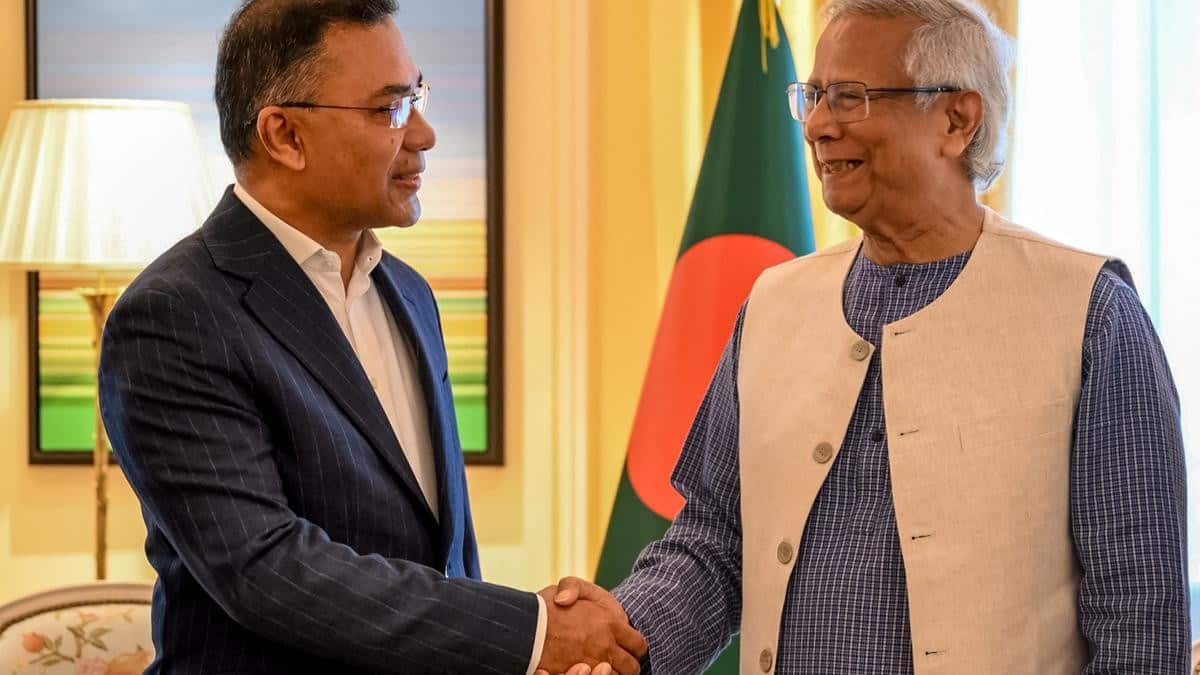
After Muhammad Yunus’s self-obsessed regime, until Tarique Rahman welcomes competition and criticism, he will be less the leader of a great nation and more the benefactor of a great fraud
On February 12, 2026, Bangladeshis delivered an overwhelming victory for the Bangladesh Nationalist Party (BNP) over the pro-Pakistan and Islamist Jamaat-e-Islami. The election purported to restore democracy to Bangladesh after the July and August 2024 protests that ousted Prime Minister Sheikh Hasina. It does not.
While the BNP’s two-thirds vote margin ends the pretension of both Jamaat-e-Islami and its Pakistani backers that they can revert Bangladesh to pre-1971 subordination, the damage wrought by Chief Administrator Muhammad Yunus and his interim government to Bangladesh’s economy, security, and democracy remains severe.
Yunus presided over a reign of terror that saw journalists charged with capital crimes for refusing to toe his government’s line. He revoked 184 journalists’ accreditation, implicated or charged 354 journalists in criminal cases that appear to be politically motivated fabrications, and arrested 18 journalists on false murder charges. He persecuted freedom of thought, dismissing 45 university professors, suspending 200 others, and sanctioning 2,000 other faculty. Yunus’ short tenure marks a permanent loss for students, with more than 200,000 students losing their prospects due to expulsion or inability to take exams.
Ironically, for a man embraced by the Norwegian Nobel Committee and the Clinton Foundation for his role in the Grameen Bank, his short tenure crippled Bangladesh’s economy. Bangladesh’s economy boomed under Sheikh Hasina, with the country’s gross domestic product more than quintupling to $478 billion. Many economists placed Bangladesh on track to reach a trillion-dollar economy within five years and crack through the top 25 world economies. The country’s gross domestic product growth rate had averaged 6.6 per cent over 15 years, making it one of the world’s best-performing economies. Poverty plunged.
After the 2024 unrest and coup against Sheikh Hasina, growth halved to 3.3 per cent, and both extreme poverty and poverty grew. The stock market collapsed, and banks are teetering on bankruptcy. While the world celebrates the image Yunus carefully cultivated, he essentially did to the country what he did to the Grameen Bank, where an earlier Awami League investigation of his own corruption schemes sparked his antipathy toward Sheikh Hasina. As agriculture and the ready-made garment industries retracted, only remittances kept Bangladesh’s economy afloat. Public debt has ballooned, as has inflation.
In short, Muhammad Yunus’ ego, rivalry, and obsession with himself have cost Bangladesh tens of billions of dollars and millions of Bangladeshis their livelihoods.
Beyond the financial hit, Muhammad Yunus has done permanent damage to society by releasing militant Islamists and terrorists from prison. Unlike the journalists, teachers, and professors whom Yunus imprisoned, the Ansarullah Bangla Team, Hefazat-e-Islam, Hizb ut-Tahrir, Khelafat-e-Majlis, and Jamaat-e-Islami militant terrorists whom Yunus released or allowed to operate openly were guilty of real crimes. Terrorists do not abandon their ideology when denied a majority at the ballot box; they simply seek to win with bombs and bullets what they cannot win in an election. Western investors and insurance companies should be wary, because they will be targets in Bangladesh. Nor will minorities ever be safe so long as those who equate religious freedom with blasphemy roam the streets.
Tarique Rahman may celebrate his ascension to the premiership, but so long as the Awami League remains banned, he will always have an asterisk over his legitimacy. If he is truly committed to Bangladeshi democracy rather than merely the consolidation of personal power, he should immediately reverse the ban on the Awami League, restore its property, and release its acolytes from prison. He should welcome their competition and criticism.
The Awami League made mistakes; Sheikh Hasina’s failure to nurture a clear successor chief among them. They should be allowed to rebuild.
The damage Yunus has wrought is far greater than that which he accused Sheikh Hasina of. Rahman can prove his commitment to democracy and Bangladesh’s future by holding Yunus to account under the law, even if it means he spends his last years in prison. He should return terrorists to prison and return the cheerleaders and war criminals behind the 1971 genocide to their pariah status. Further, he should order investigations both into Pakistani subsidies to the National Citizen Party ahead of the current elections and into Jamaat-e-Islami’s complicity in the violence that led to the deaths of upwards of 1,000 people in July and August 2024. Until he does so, he will be less the leader of a great nation and more the benefactor of a great fraud.
(Michael Rubin is director of policy analysis at the Middle East Forum and a senior fellow at the American Enterprise Institute. Views expressed are personal and solely those of the author. They do not necessarily reflect Firstpost’s views.)
End of Article

