




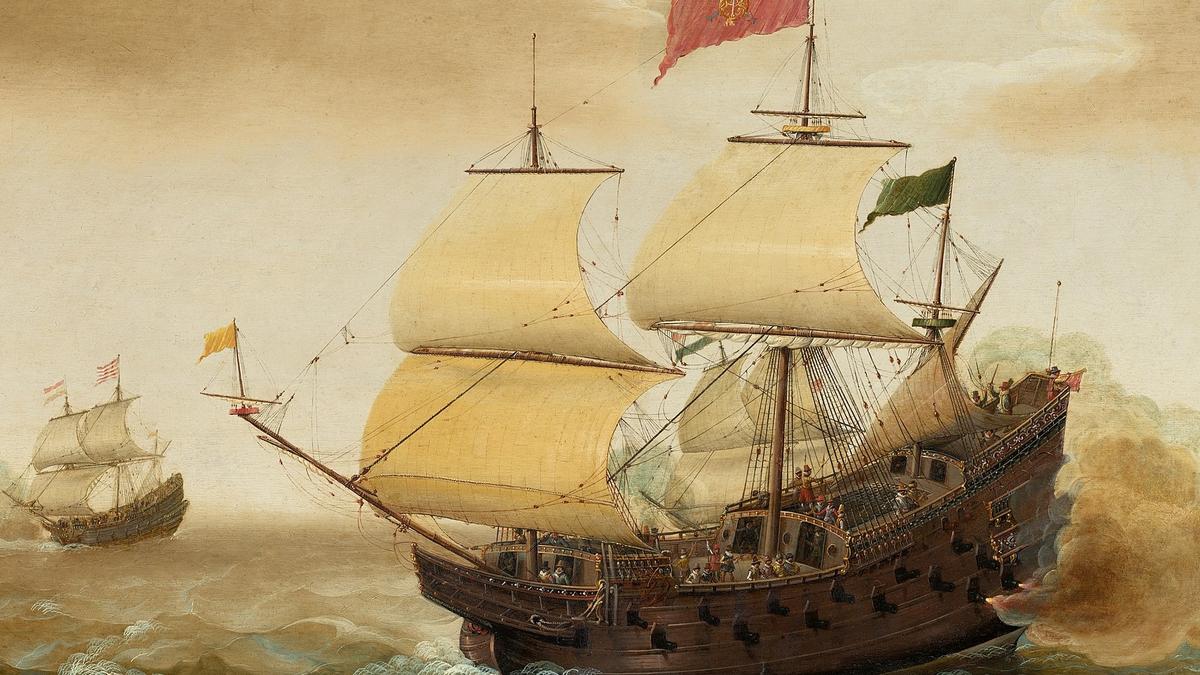
A Spanish galleon (right, foreground) might carry dozens of animals to provide fresh eggs, milk, and meat for the first few weeks of a voyage.
| Photo Credit: Public domain
— Prabhakar Jonnalagadda
A: To preserve a food item meant to remove moisture, increase acidity and/or to use natural preservatives. Meats and fish would be hung over fires before departure as the smoke deposited antimicrobial compounds into the flesh. Then, sailors would pack meat in wooden barrels with dry salt. Fish, especially cod, was dried on wooden racks in open air until stiff.
Vegetables were stored in vinegar or salt brine. Sauerkraut was a staple on long voyages and its high acidity preserved it and provided vitamin C, helping prevent scurvy. Dried peas, beans, and lentils stored well without any treatment and were a staple of hot meals.
Ships also carried live chickens, pigs, goats, and sometimes cows penned on deck that provided fresh eggs, milk, and meat in the early weeks of a voyage before being slaughtered one by one.
Hard cheeses fared better than soft ones at sea. Butter was heavily salted before being packed into sealed crocks.
All said, scurvy, caused by vitamin C deficiency, killed more sailors than storms and battles combined as these methods didn’t work for fresh produce.
Published – April 01, 2026 08:30 am IST

