



5 min readMar 17, 2026 04:32 PM IST
First published on: Mar 17, 2026 at 04:32 PM IST
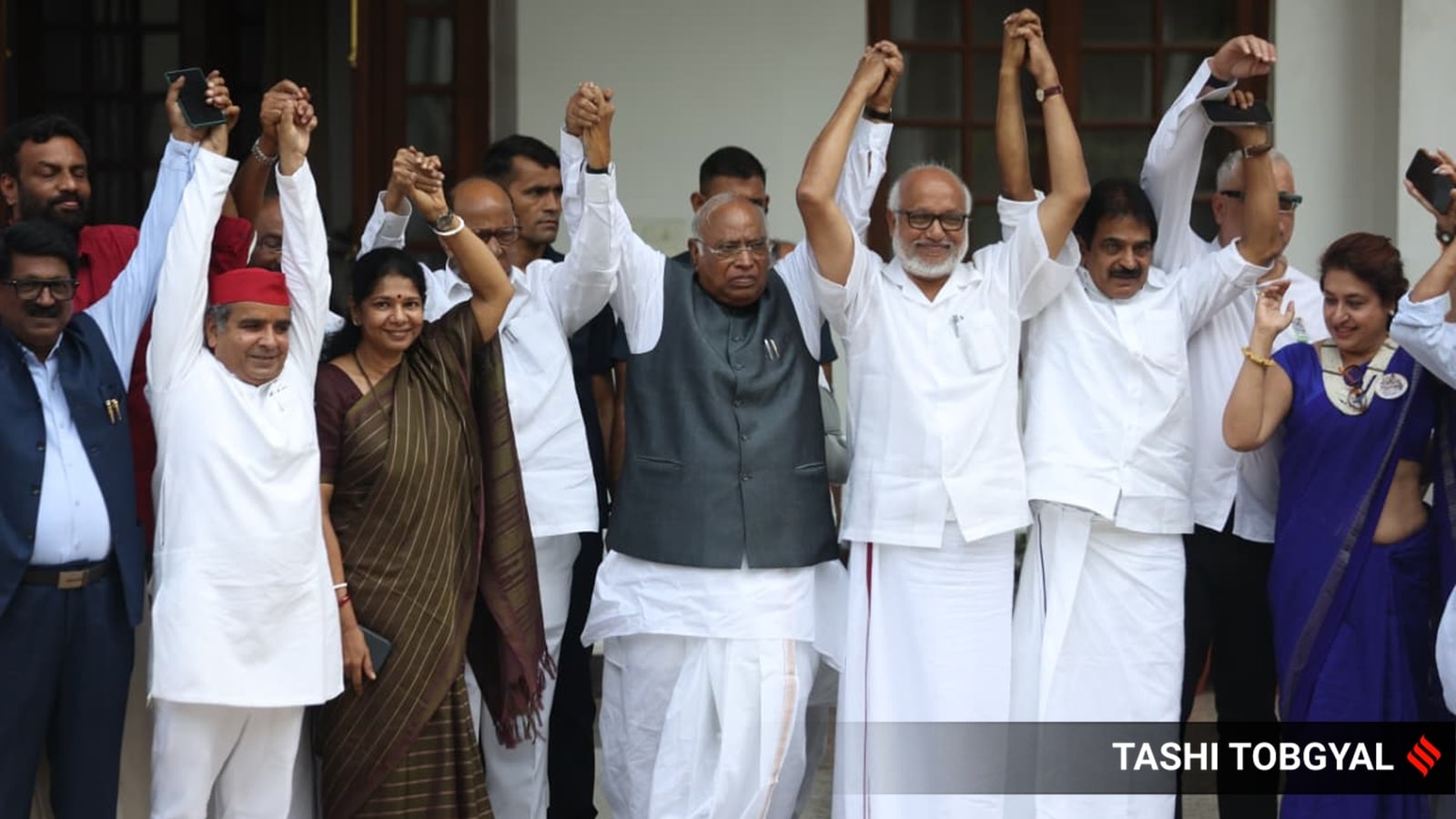
At a recent public event, AICC General Secretary KC Venugopal declared that the INDIA alliance would be forming the government in 2029. It was a confident claim, the kind that makes for a good spectacle and energises party workers. But 2029 is still three years away, and before that claim can be taken seriously, Congress must honestly ask itself a harder question: Has it actually placed itself in a position to make a credible stake for power?
To those following Congress’s performance in national elections since 2014, one thing is abundantly clear. The party has consistently failed to present a comprehensive alternative to the BJP’s political agenda. It has lost not merely because of organisational weakness, or because the Election Commission is compromised, or because state institutions have been weaponised. Congress alleges all of this, and many of these charges may well be valid. However, it has lost, in significant measure, because opposition to something is not the same as a vision for something.

Congress has become, in the public imagination, a party of criticism.
Criticism of the government is a legitimate and necessary function of any opposition. The BJP’s democratic record offers much to criticise: The Speaker has presided over proceedings in ways that raise questions about institutional neutrality, Parliament has been marginalised as a site of meaningful deliberation, and agencies like the CBI and ED have allegedly been deployed in ways that invite scrutiny. These are serious concerns, and they deserve to be raised.
But if the sum total of a political party’s offering is a catalogue of the ruling party’s failures, it can’t win elections, particularly against a media-savvy populist party. Criticism alone only reminds voters of what they are against. In the absence of a compelling alternative, many seem to stay with the familiar incumbent.
This is the real TINA, the real “There Is No Alternative”, that haunts the INDIA alliance. It is not about the absence of an agreeable prime ministerial face. It is about the absence of a comprehensive, sustained, and specific alternative agenda.
Manifestos are released. But they arrive in a rush, days before polling, and vanish almost as quickly. There is no sustained national conversation around them, no consistent policy articulation between election cycles, no sense that Congress has spent its years in opposition building a serious programme for governance. In parliamentary theory, the opposition is called the “government in waiting” for a reason. Its job is not only to criticise the government of the day but to demonstrate, continuously, that it is prepared to govern differently and better.
The BJP understands this terrain well. When Congress speaks in broad terms about addressing income inequality, the BJP responds with surgical precision, accusing it of planning to impose a wealth tax, redistribute property, and threaten the savings of ordinary families. These charges are often wildly exaggerated, but they work precisely because they fill the vacuum that Congress leaves behind. General promises are easily outmanoeuvred by specific fears.
What Congress must do is match specificity with specificity. If it opposed the farm laws — and it did, loudly — what exactly does it propose for the agricultural sector? What is its model for supporting farmers’ incomes without distorting markets or burdening the exchequer? If it is uncomfortable with the direction of India’s trade negotiations with the United States, what would it do differently? On unemployment, legal reform, financial markets, and the concentration of corporate power, where does Congress actually stand, in detail, and not merely in contrast to the BJP? People vote for visions and for the ambitions that the next government could deliver. The answer cannot wait until the next manifesto.
The politics of criticism also sit uneasily with the politics of love that Rahul Gandhi has spent years attempting to build. There is something incoherent about claiming to run a mohabbat ki dukaan in the middle of a nafrat ka bazaar while spending most of one’s political energy on attack. Love, as a political idiom, requires an affirmative programme. It must offer something to move towards, not merely something to move away from.
The degradation of Indian politics into a mutual exchange of accusations, the BJP relitigating Nehru and Congress indicting the present dispensation, serves neither democracy nor the citizens. Breaking this cycle cannot be demanded of a ruling party that has every incentive to keep the opposition on the defensive. That responsibility falls squarely on the opposition itself.
The general election of 2029 may be three years away. But the work of becoming an alternative must begin now. If it is serious, Congress urgently needs to shed its identity as a party of criticism and build one as a visible alternative. It’s time to embrace the politics of ideas.
The writer is an Honorary Senior Fellow at Melbourne Law School. Views are personal

