



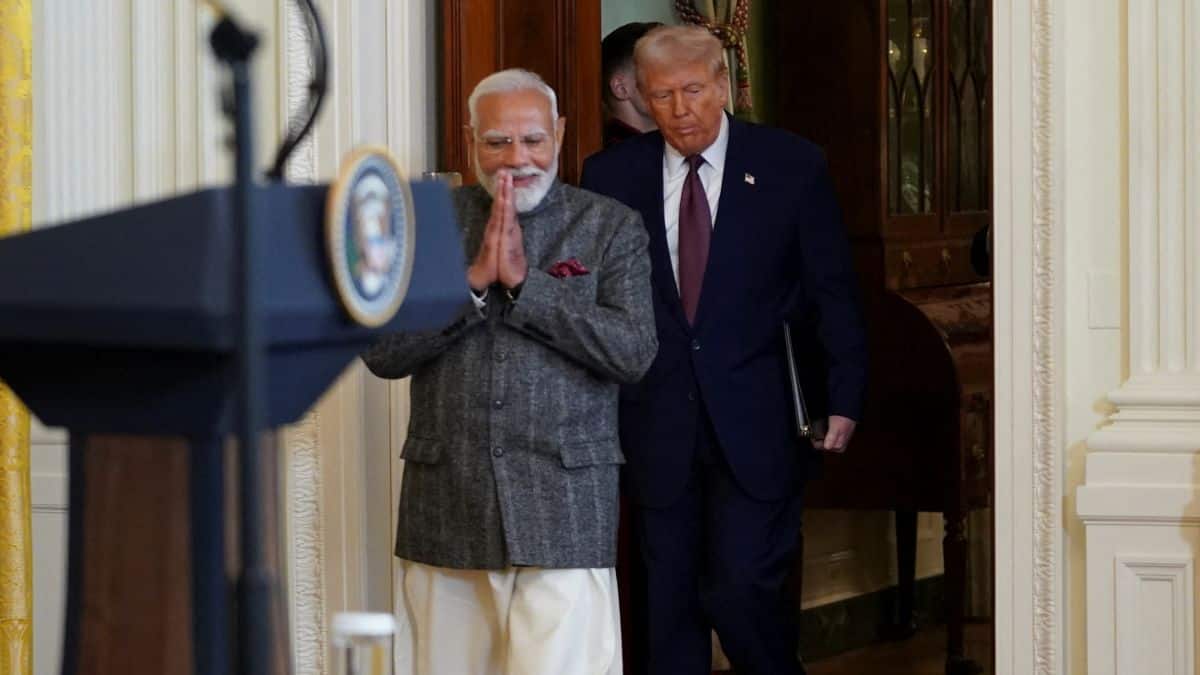
What explains Washington’s blow hot, blow cold relationship with India? It’s not a new phenomenon under Donald Trump’s erratic presidency. The US has played fast and loose with India since Independence in 1947.
Successive US presidents have used Pakistan and economic sanctions to keep India off-balance. Washington made Pakistan a non-NATO ally, sold it lethal weaponry including F-16 fighter jets, and cosied up with Pakistan’s military dictators. Trump does this openly. His predecessors did it behind closed doors.
The US was never comfortable with India’s leading role in the non-aligned movement (NAM) along with former Yugoslavia and Egypt. India’s close ties with the Soviet Union during the Cold War grated on the Washington establishment. Pakistan in contrast slipped quietly into the US orbit, serving as a rentier state, willing to do America’s “dirty work”.
US hostility towards India peaked during the 1971 Bangladesh liberation war under President Richard Nixon and again in 1998 following India’s Pokhran nuclear test when President Bill Clinton slapped the country with sweeping sanctions.
But by 2020, farsighted US think tanks and thoughtful mandarins in the US State Department began to realise that India was likely to soon become the world’s third largest economy. It therefore had to be removed from China’s orbit as a matter of urgency. Washington knew that a modus vivendi or a pas de deux, a ballet of two between China and India as China’s Foreign Minister Wang Yi publicly suggested, would pit the world’s second and third largest economies against the US.
The optics of three summits between Prime Minister Narendra Modi and Chinese President Xi Jinping in Ahmedabad, Wuhan and Mahabalipuram between 2014 and 2019 had startled US policymakers. They were delighted when the India-China relationship nose-dived after the Galwan Valley clash.
The Trump presidency has since upended US foreign policy. No longer do farsighted American policymakers regard India as purely a democratic ally in a disorderly world. India is seen as a future rival to be periodically cut down to size.
Sergio Gor, the new US ambassador and Trump confidant, is here to balance this curious turn the India-US relationship has taken. On the one hand, India is now between the largest and third largest producer in the world in dozens of industries and categories, ranging from steel, cement and passenger cars to mobile phones, food and pharmaceuticals.
With an aspirational middle-class which is already 600 million strong — as large as the US and EU markets put together — no global company can ignore India. This poses an awkward dilemma for Washington. It could target the Soviet Union then, and China now, on ideological grounds: communism versus free markets. That line of attack fails with India which is as noisy and diverse a democracy as the US.
What David Rubenstein, co-founder of the Carlyle Group, one of the world’s largest private equity firms with $474 billion in assets under management, declared at the World Economic Forum (WEF) in Davos last week would have sent a chill down American spines. This is what Rubenstein said: “In 20 to 30 years, India could be the biggest economy in the world.”
India is currently the world’s fourth largest economy but still one-seventh the size of America’s economy That causes few concerns in China-focused Washington. But if what Rubenstein said in Davos holds — and his opinion is backed by a growing number of others — India, not China, could be America’s principal competitor in the second half of this century.
The US has been used to being the world’s largest economy since the 1920s when it overtook the combined economy of the British Empire. In the 2010s, US policymakers saw China as the only potential threat to its century-long status as the world’s biggest economy.
Those fears have faded in recent years as China’s annual growth rate has slowed to just over 4.5 per cent and is forecast to fall to 3 per cent or lower this decade, narrowing the gap with America’s long-term projected growth rate of 2.5 per cent. The slender gap will ensure the Chinese economy does not overtake the US economy which at $30 trillion is currently 50 per cent larger than China’s.
With its population shrinking and ageing, China is no longer the looming threat to the US it was ten years ago. Despite that, the US still regards China as its principal technological adversary. China’s military, however, has been thrown into disarray by the recent sacking of its senior-most army Generals, Zhang Youxia and Liu Zhenli, signalling a major purge in the PLA.
China’s faultlines
The ban on exporting high-end chips to China is aimed at restricting the growth of China’s advanced tech ecosystem. But it is China’s own structural economic faultlines that will achieve what the US cannot. China will eventually overtake the US in artificial intelligence (AI) as it has in electric vehicles (EVs) but its structural faultlines will stall its economic ascent. Xi Jinping’s growing authoritarianism could, with hindsight, prove China’s nemesis.
For US policymakers, the next few years will determine the shape of the world order for the rest of the century. If what David Rubenstein said at Davos comes to pass — and empirical evidence supports his hypothesis — not only will India in the 2050s be the world’s largest democracy but also the world’s largest economy.
For the US, that is the moment of truth which will guide its post-Trump relationship with India as both ally and adversary.
(The writer is an editor, author and publisher. Views expressed in the above piece are personal and solely those of the author. They do not necessarily reflect Firstpost’s views.)

