



Bareilly was once the focal point of the kingdom of Uttara Panchala, one of the most significant places in the Mahabharat story. It was said to be ruled by Draupad, father of Draupadi, who was also called Panchali
Religious tourism is at an all-time high in the state of Uttar Pradesh. Beyond Ayodhya, Prayagraj and Varanasi, even Bareilly seems to be drawing in visitors. In 2025, over 1 crore visitors from within India and even some from abroad visited the city as tourists.
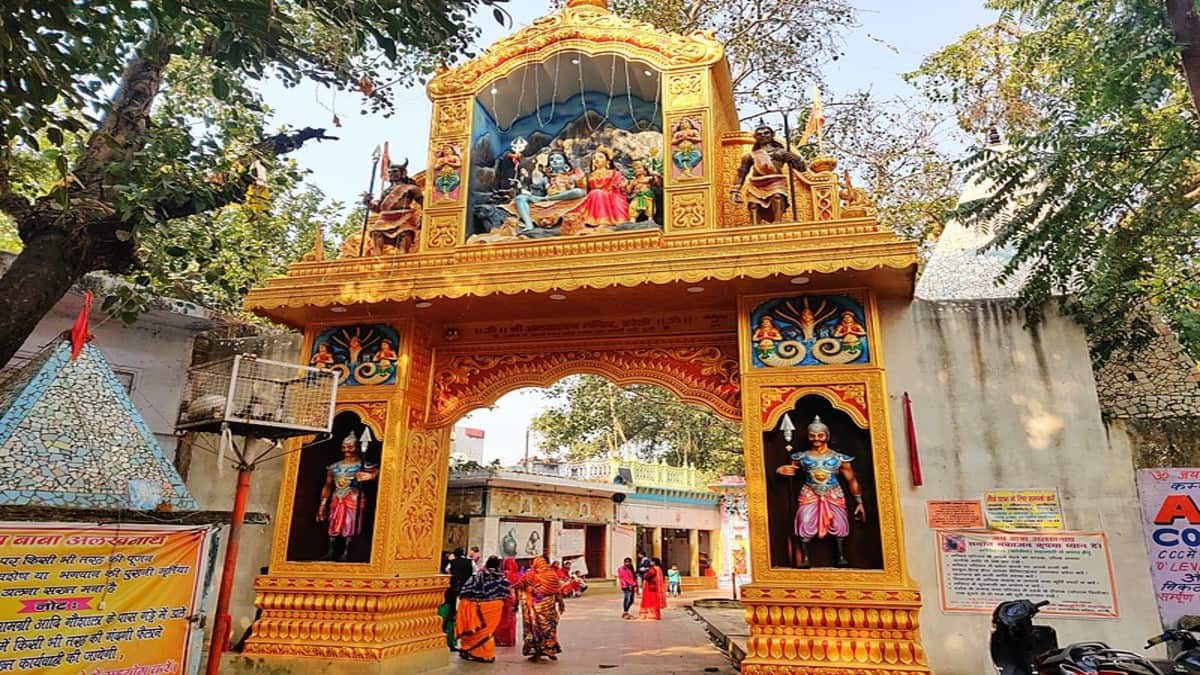
Interestingly, the destination for a large slice of these travellers was not the headquarters of the Sunni Revivalist Barelvis, but the Alakhnath Temple. This shrine, dedicated to Shiva, is said to date to the 12th century CE, though the present structure is much more recent. It is currently witnessing the development of a Rs 230 crore temple corridor following the template that has been used in Ayodhya and Varanasi. This corridor will link seven Nath shrines in the city. No surprise that visitors are pouring in.
Some faithful also associate the temple with the Mahabharat epic. While that is debatable, what is interesting within the shrine complex is the presence of a black stone which floats at the surface of the temple tank. Perhaps this phenomenon is because the stone displaces more water than its weight, but it does seem incredible. Apparently, two such stones were brought here in 1981 from Rameshwaram, of which one was stolen in 2021.
But beyond the miracle stones of the temple or the Nath corridor of the city, the Bareilly region has a more ancient past. A past whose signs lie outside the current city today. An hour west of Bareilly lies the excavated site of Ahichchhatra. The principal site is marked by a high pyramid-like structure surrounded by fields, interspersed by small groves of trees. The trees are rapidly reducing even as agricultural spaces grow and roads are improved, leaving the occasional Nilgai that strays into the site startled by the increased contact with human beings.
This site was once the focal point of the kingdom of Uttara Panchala, one of the most significant places in the Mahabharat story. It was said to be ruled by Draupad, father of Draupadi, who was also called Panchali. In the epic, the kingdom was considered a powerful one, and the marital alliance stood the Pandavas in good stead in the Kurukshetra war, with the prince of the Panchal kingdom being commander of their army.
Coming to more factual and historical accounts, Ahichchhatra was one of the 16 Mahajanapadas that existed between the 6th and 4th centuries BCE, with ‘Parichakra’ as its original name. Multiple excavations have been done here, revealing a pattern of near-unbroken habitation of the area till the 11th century. After the Panchalas, the region became part of larger empires – from Magadha during the time of the Mauryas to later being part of the Kushan and Gupta empires. Digs have thrown up remains of temples and a fort, along with pottery from across eras – ranging from ochre-coloured pottery of the second millennium BCE to red & black pieces to painted grey ware of around 1000 BCE. In fact, this was the first ever site to reveal painted grey ware – a key feature of the arrival of the early Iron Age.
From the Gupta period have come numerous terracotta remains. A survey using Ground Penetrating Radar (GPR) has helped find a variety of structures over an immense area. These include slumped and displaced walls, warped surfaces, buried pavements and ruins of various foundations that spread over a wide range of areas.
The site is also of great importance to the Jain faith. As per Jain accounts, this was a sacred place visited by all 24 Tirthankaras. Not just that, this was the location where Parshvanatha, the 23rd Tirthankara, attained omniscience. Jain epics hold that while Parshvanatha was praying immersed in water up to his neck, a serpent god held a canopy of a thousand hoods as a protective cover over his head while a serpent goddess coiled herself around his body. This is how the place came to be called Ahichchhatra, or the ‘serpent canopy’. Evidence has been found here of Jain shrines dating to the 2nd century CE. However, no trace remains of them now, their place taken by modern Jain shrines that draw in devotees by the thousands.
The Buddha is also said to have preached sermons here, and Buddhists claim that the account of the serpent giving a protective cover was for the Buddha. When the Chinese traveller Hiuen Tsang passed through in the 7th century, he mentioned the presence of Buddhist monasteries coexisting with several Hindu shrines here. By the time Alexander Cunningham of the Archaeological Survey of India (ASI) began exploring the site in the latter half of the 19th century, he found remains of only the Hindu shrines. Today, it is the Jain temples that hold centre stage.
To reach the main site today, a visitor walks past fields. The pyramid-shaped structure is truly gigantic; while it is said to be a temple, the physical resemblance is closer to a stupa. At the top, an obelisk-like object stands upright. Visually, it is not unlike a Shiva linga, and it is this that perhaps makes historians call this a Shiva temple. Sadly, folks lacking other artistic outlets have scribbled graffiti on the object.
Bharat is today witnessing a growing trend of domestic tourists visiting more heritage sites, even excavated ones. There is more appreciation of the past than earlier, and if the trend holds, sites such as Ahichchhatra will see more visitors and maybe even a degree of restoration. It has also appeared on the tentative list for Unesco World Heritage status as part of the string of historic sites on the Uttara Patha that traverses north India. Until that tentative status is confirmed, we shall have to be content with the Nath corridor of Bareilly.
(The author is a heritage explorer with a penchant for seeking obscure sites. A brand consultant by profession, he tweets @HiddenHeritage. Views expressed in the above piece are personal and solely those of the author. They do not necessarily reflect Firstpost’s views.)
End of Article

