



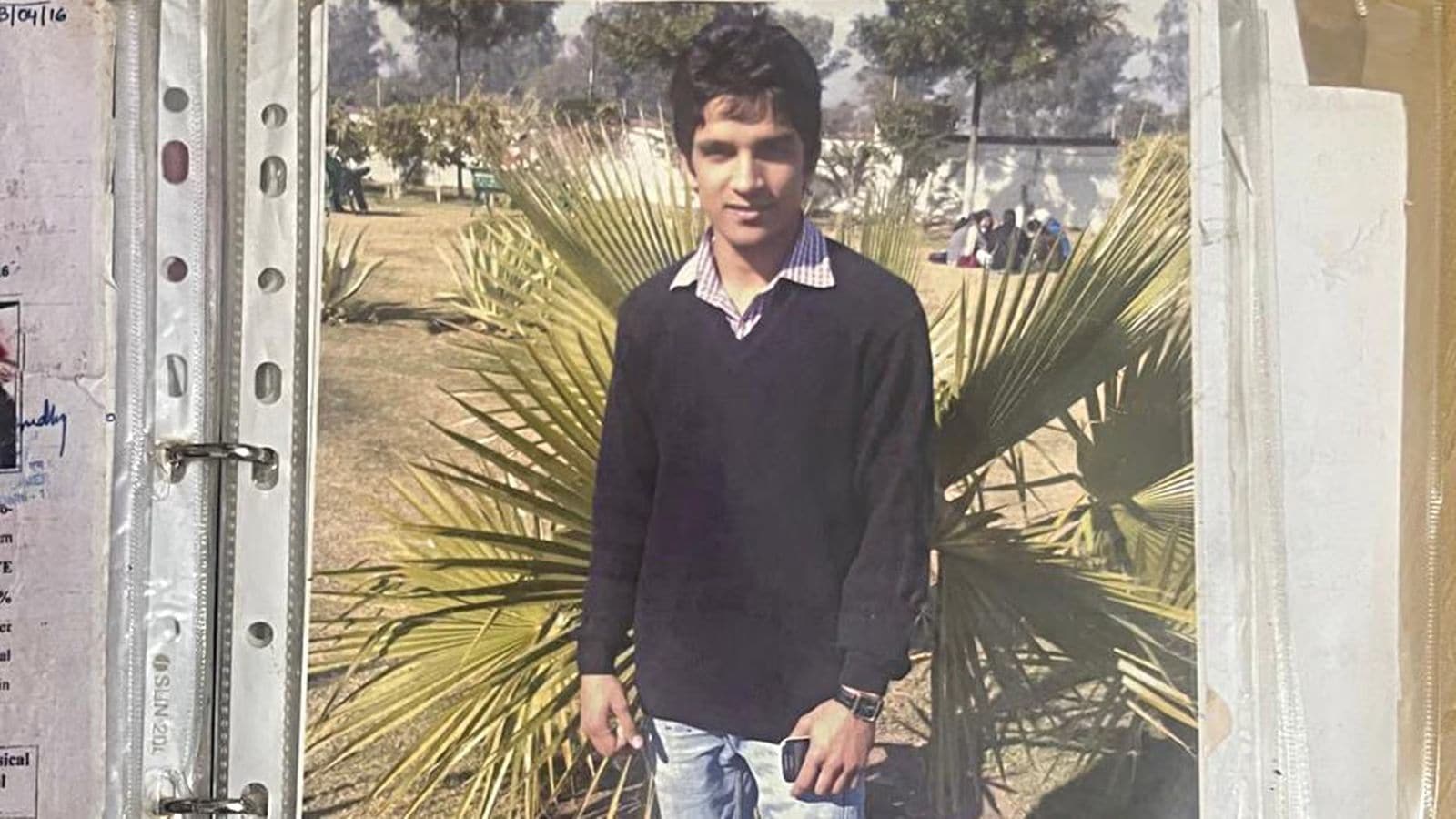
Harish Rana is no more. Thirteen years into an unresponsive vegetative state, his life kept alive by medical care and the gradually fading hope of salvation, life support was discontinued pursuant to a Supreme Court ruling. This death raises a question that has remained open over decades: Why does India still have no coherent legal framework regulating end-of-life care?

The judgment states that “there are moments when the legislative inaction speaks more loudly than the legislative action,” and end-of-life care is one such area. Although the constitutional, ethical and medical issues are deeply thought-provoking, this area is largely unregulated, forcing the judicial system to intervene not out of institutional choice, but due to the constitutional importance placed on protecting the right to life with dignity.
This intervention is not discontinuous. It is the final point of a long and unfinished institutional process. As far back as 2006, the Law Commission of India in its 196th Report recognised that criminal liability should not be imposed on the withdrawal of life-sustaining treatment of the terminally ill patient in a case where it serves the best interests of the patient, appending a draft bill to facilitate concrete action. Yet, no legislation followed. In Aruna Shanbaug v. Union of India, the Supreme Court had no choice but to fill this vacuum by allowing passive euthanasia under judicial supervision, although it stressed that its recommendations would be temporary. This stance was reiterated by the 241st Law Commission Report, although nothing materialised as a consequence. Later draft bills and guidelines, such as the 2016 Medical Treatment of Terminally-Ill Patients Bill and 2024 Draft Guidelines on Withdrawal of Life Support, did not move beyond the consultative stage.
The Supreme Court in Common Cause (2018) was confronted with this inaction and formulated guidelines exercising its powers under Article 142. As a result, the right to die with dignity became constitutional. But there, too, Justice A K Sikri expressed a “pious hope” that Parliament will intervene. But almost eight years later, as Harish Rana’s case brought out, the inaction continued.
It is here that the current decision should be perceived not as a case of passive euthanasia, but as an expression of a larger constitutional trend. It can be compared with the Vishaka v. State of Rajasthan, in which the judiciary imposed binding guidelines regarding sexual harassment in the workplace in the absence of a legislative framework, pending the POSH Act. But Vishaka is not unique. In the various fields, the Court has time and again participated in what can be termed “gap-filling constitutionalism.”
Justice K S Puttaswamy v. Union of India (2017) realised the right to privacy before there was a framework governing data protection. Prakash Singh v. Union of India (2006) established legislative stagnation and then laid down structural policing reforms. NALSA v. Union of India (2014) articulated gender identity rights and issued directions ahead of statutory recognition. In these cases, the Court did not displace Parliament, but rather made sure that basic rights were not merely theorised in the context of a regulatory vacuum.
Harish Rana is a perfect representative of this tradition. It shares the same characteristic, the enactment of rights before a regulatory framework exists, the establishment of the intermediate institutional structures and a conscious recognition of the judicial constraints. Most significantly, the Court has redefined passive euthanasia as a medical and institutional procedure, which is focused on clinical judgment and guarded by a two-level system of medical board, thus minimising the necessity of judicial action.
The decision, however, also carries its own weight in the issues that it brings up. The Court cautions that the inaction of the legislature is not a condition of neutrality, but has actual and even worrying ramifications. Without a clear statutory framework, the end-of-life choice may be subject to extraneous factors that may be related to economic distress and vulnerability to socio-economic factors, thus necessitating doctrinal clarity.
It is this observation that makes end-of-life jurisprudence different to other judicial gap-filling. Even though the situations with Vishaka or Prakash Singh involve failures in the structures or institutions, the interests, in this case, are more personal and immediate. They shouldn’t be transported to abstract constitutionality, but to the hospital bed, to the protracted suffering, to the silent ordeal of families having to make difficult choices. Until then, the right will continue to exist in a liminal space, a promise half-kept, awaiting its legislative consummation.
Patil is Vice Chancellor, National University of Study and Research in Law, Ranchi and Singh is Research Assistant at the National University of Study and Research in Law, Ranchi

