



4 min readMar 19, 2026 06:12 AM IST
First published on: Mar 19, 2026 at 06:12 AM IST
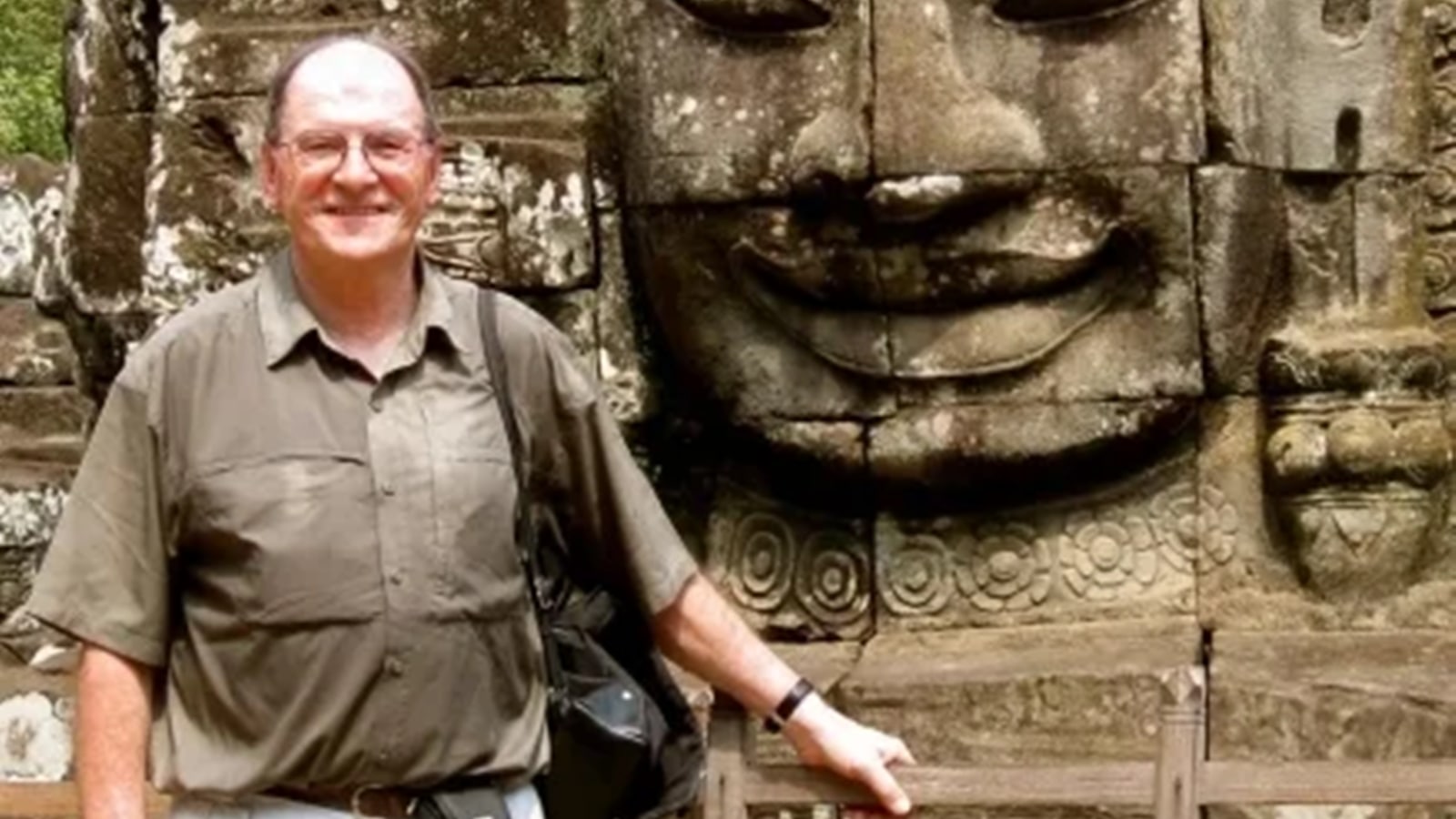
A budding German scholar, barely 23, came to a Buddhist monastery in Sri Lanka as a tutorial assistant for two months in 1959. He then undertook an exceptional train journey from the south of India, through the Deccan and the northern plains up to Amritsar and Lahore, and then hitch-hiked across the Khyber Pass. His journeys across South Asia would have pleased Xuanzang (the 7th-century CE Chinese Buddhist pilgrim). He visited several historic and sacred sites (including Thanjavur, Badami, Ajanta, Sanchi, Varanasi and Agra) and remembered the travels as his tirtha-yatra. It would be the beginning of his six-decade-long association with India. The scholar was Professor Hermann Kulke, one of the most respected German experts on South Asian History, who passed away on March 10.
Kulke began by studying German History, Sociology and Political Science, but soon felt drawn to South Asian History by reading Heinrich Zimmer and Wilhelm Rau. He turned to Indology at the University of Freiburg as a doctoral scholar. Although he received rigorous training in German Indology, Kulke was never enamoured of the Aryan question, which, as he pointed out, was “a major ideological prop of German Fascism”. A close reading of Max Weber aroused in Kulke a deep interest in Indic systems. The result was his groundbreaking doctoral dissertation on the sacred centre of Chidambaram. It involved a critical analysis of the Chidambaram-mahatmyam, which enabled new perspectives on the Cholas.

The growing appeal of the Bhakti cults from 600 CE onwards, emerging first in South India and then proliferating on a pan-India scale, coincided with the rise of numerous political powers at local and supra-local levels. These emergent polities often sought legitimation through sacred ideologies and rituals. Kulke delved deep into the formation of regional states with his research on the history of the Jagannath cult and the polity of Odisha under the Eastern Gangas and the Gajapatis (twice leading the Orissa Research Project of the German Academic Council). These forays brought the premodern polities of Odisha to global attention. Besides publications on the Jagannath cult, his Kings and Cults (1993) revealed the interactions between kshatra (power) and kshetra (sacred centres) in Odisha and South India. It also set the stage for his seminal contributions to pre-modern political processes — The State in India 1000-1700 and the books he co-edited with B P Sahu, Interrogating Political Systems: Integrative Processes and States in Pre-modern India, The Routledge Handbook of the State in Premodern India and History of Precolonial India: Issues and Debates. These works highlighted the process of state-making “from within” at local and regional levels.
Along with Sahu and another close friend, B D Chattopadhyaya, Kulke critiqued nationalist historians’ thrust on centralised and unitary polity, the Marxist perception of the decentralised polity under feudalism, and the segmented polity model. They presented, with empirical richness and conceptual strength, the alternative process of “integrative polity” that gave centrality to the regional profiles of powers.
Kulke was equally at home with South Asian and Southeast Asian pasts. His contributions to the study of the Angkor state in Cambodia, the Javanese polity and the Chola overseas campaigns in Southeast Asia and Sri Lanka have brought about lasting historiographical shifts. He did not subscribe to R C Majumdar’s claim of the Hindu colonies in the Far East or George Coedes’ perception of the indianised states of South East Asia. Instead, he demonstrated the cultural convergence on both sides of the Bay of Bengal that resulted in socio-economic, political and cultural interactions between South and Southeast Asia. Sahu and Chattopadyaya passed away in 2022. The passing away of the remaining member of the trio will leave a deep void in Indian historiography
Generous and helpful to the fault, especially to young scholars, Kulke was an admirer of India and Indians. His many students, both in Germany and in India, will not only fondly remember him, but will surely further enrich the fields Kulke opened up.
The writer is a historian

