



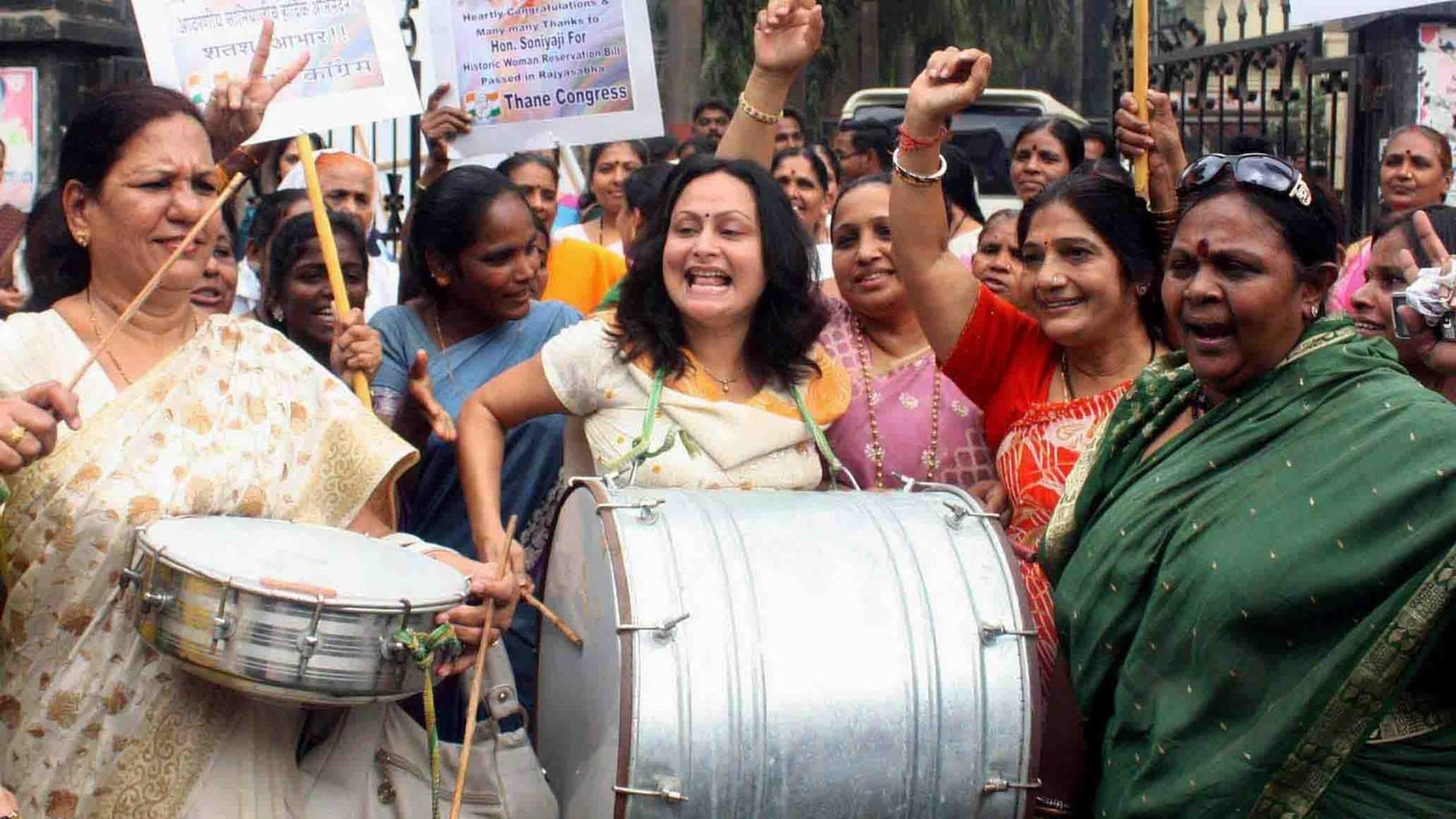
This week, Parliament will reconvene for a special three-day session to take up amendment bills that could finally give teeth to the Nari Shakti Vandan Adhiniyam for urgent implementation. In 2023, when the women’s reservation bill was passed in Lok Sabha, it had marked an important step forward in — as the Prime Minister had put it in Parliament — “desh ki vikas yatra”, even if it was contingent on the Census and a delimitation exercise.

For a nation which had granted universal adult suffrage to all citizens from the beginning of its life as a republic, the demand for women’s representation in Parliament has had a long, frequently thwarted history. Bills to reserve seats for women in Parliament and state assemblies were introduced in 1996, 1998, 1999, and 2008. Each one lapsed. Progress, when it came, arrived first at the local level. The 73rd and 74th constitutional amendments of 1992 and 1993 reserved seats for women in panchayats and municipalities, a transformative effort despite attempts to reduce them to proxies by male relations.
There is no doubt that women’s reservation is long overdue. Yet, that this Bill was first passed on the eve of the 2024 general elections, and that the mechanics of its implementation are now intended for discussion in the middle of state assembly elections, has renewed questions about timing and electoral calculations.
The urgency is its own kind of signal and bind: No party is likely to risk being on the wrong side of this, regardless of what it might think about the manner or timeline of implementation. But beneath these obvious tensions, there is also the deeper asymmetry in how power is accessed and experienced. Power, for men, often works as a noun. It is inherited, assumed; it flows toward them through party networks, family dynasties, and the well-fed machinery of incumbency. For women, power is a verb. It is something they must do, actively and repeatedly — powering through structures that were not built for them, past gatekeepers who did not expect them, over thresholds that keep being reset. A system that requires twice the effort for half the recognition is not an equal playing field. Women are admitted to the conversation, but the terms of admission are negotiated by those already inside the room.
Consider the mathematics of the Bill itself. To fasttrack the implementation of the Nari Shakti Vandan Adhiniyam — a demand made by several Opposition parties in 2023 and dismissed at the time — multiple bills, including a Delimitation Bill reportedly proposing a 50 per cent increase in the number of seats in the Lok Sabha and state assemblies, will have to be passed, delinking it from the ongoing Census, and using the 2011 data instead. Lok Sabha seats are likely to increase from 543 to 816, with 273 reserved for women. A third of the seats is a floor, but in the absence of greater clarity — on how the rotation of reserved constituencies will be implemented, for instance, and its impact on political continuity and accountability, or how it will represent those who face the compound exclusions of gender, caste, and community — it is a number calibrated for palatability and potential electoral gain. It also ensures that no man need feel the discomfort of displacement.
And yet, women have not been waiting. Across panchayats, protests, and Parliament, women have been making themselves ungovernable on the terms offered to them. From farmers’ unions to climate movements to the revolutions inside local self-governance bodies, women show up not as tokens of diversity but as agents of dissent, claiming their place and their voice. Female turnouts at elections have increased, closing the gap with male turnouts, even outnumbering them sometimes. Women’s enrolment in higher education has reached near-parity. Representation is no longer a top-down munificence. Instead, the language of empowerment has to acknowledge the fact that the labharthi is an adhikar-dhari.
That is what makes the Bill so momentous. The women’s reservation bill is best understood not just as the state extending rights but as the state recognising — however belatedly, however imperfectly — a momentum it can no longer ignore. In that sense, the bill acknowledges the fact that women have already been powering through, and that any political formation that pretends otherwise will eventually find itself on the wrong side of a very large and increasingly mobilised constituency.
That recognition is not a small thing. Representation matters; visibility matters; the slow accumulation of presence matters. But it must be read as an opening move in a much longer negotiation. What genuine transformation requires is not just new faces in old chambers but a reckoning with the informal hierarchies that a formal bill does not touch. We have spent too long asking how to fit women into power, and not long enough asking what power, reimagined by those who had to fight for it, might look like. The women who power their way into Parliament under this Bill will carry that question — and that responsibility of reimagination — with them.
Stay well,
Paromita

