



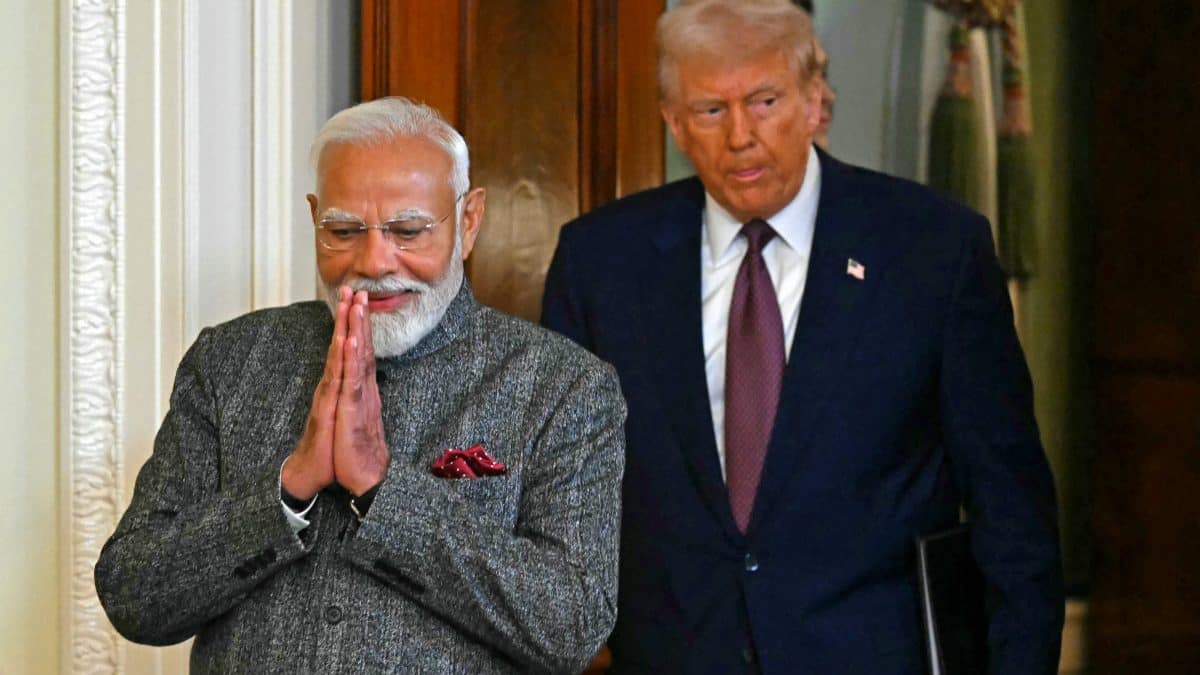
The recent India-US economic understanding has arrived at a moment when nerves were beginning to fray — quietly, not publicly. Growth remained resilient, markets fundamentally sound, yet the global environment was turning inhospitable. Geopolitically, India appeared to be facing pressure from multiple directions at once: an unsettled Europe, a grinding war in Ukraine, turbulence in West Asia, sharpening US-China competition, and a transactional turn in global diplomacy where leverage often preceded trust. India was perhaps perceiving a downslide in its strategic significance. In such circumstances, many countries panic, posture, or overreact. Fortunately, we did none of these. What India demonstrated instead was strategic maturity — calm and patient, while remaining largely understated.
The most striking aspect of India’s recent conduct has been its refusal to be hurried. There was no rush to issue dramatic statements, no public bargaining through the media, and no visible anxiety when economic sentiment briefly appeared to soften. Indian leadership seemed to recognise that the moment demanded equilibrium rather than exuberance. In an era where diplomacy increasingly resembles theatre, India chose to stay off stage and work behind the curtains. It appears to have paid off, although it may yet be too early to surmise that.
For a period, geopolitically, India did appear to be under pressure. Relations with Washington had lost some momentum, economic uncertainty crept into commentary, and there were visible attempts by others to frame India as having limited choices — particularly on energy, trade, and strategic alignment. Yet India resisted the temptation to react defensively. Instead, it focused on preserving what had been painstakingly gained since the end of the Cold War: strategic autonomy, diversified partnerships, economic credibility, and diplomatic respect across regions. These gains were not surrendered to chase short-term reassurance.
The India-US economic understanding, therefore, should be seen not as a dramatic turnaround but as a stabilisation — almost a normalisation — after a phase of friction. It is a settlement reached through careful tip-toeing around fractious issues, not a grand reconciliation driven by sentiment. Trade volumes, investment flows, and long-term economic interdependence — figures that run into hundreds of billions of dollars — have a sobering effect on diplomacy and relations. They do not eliminate disagreements, but they make rupture irrational. That is precisely what has happened. The relationship has been pulled back from the edge but not propelled into a euphoric embrace.
Importantly, this has been achieved without India appearing bowled over, deferential, or triumphalist. There has been no attempt to project the outcome as a diplomatic coup, nor any public criticism of those who read it more sceptically. That restraint is important; it matters. Mature powers do not announce every gain, nor do they over-explain their intent. They let outcomes speak over time.
Equally significant is the fact that India has not abandoned loyalty to old partners while managing new realities. Much has been said about the implications for Russia, but the fundamentals of that relationship remain intact. It appears quite evident that some very mature discussions would have emanated between Indian and Russian leaderships on the commonality of interests and limits of adjustment. India has not indulged in public distancing or rhetorical signalling designed to please others. Defence cooperation, supply chains, and long-standing habits of engagement continue. Adjustments, where made, have been quiet and pragmatic, reflecting India’s interests rather than external pressure. This is loyalty without rigidity — precisely the balance required in a fractured world.
At the same time, India has begun, carefully, to build bridges with at least some adversaries. This is not appeasement; it is hedging. Strategic autonomy does not mean freezing relationships in ideological amber. It means keeping channels open, reducing miscalculation, and ensuring that no single relationship becomes existential. India’s approach to West Asia, its refusal to rush into contested initiatives, and its willingness to remain accessible to all sides reflect this thinking. Silence here has been our strength.
What stands out is that India has played its cards without laying them all on the table. Some issues have deliberately been kept close to the chest — energy transitions, defence supply diversification, future security alignments. This is as it should be. The compulsion to advertise intent is a weakness in contemporary diplomacy. India has resisted it. Strategic maturity lies in knowing what to reveal, when to reveal it, and what never to reveal at all.
The question now is whether this moment represents a plateau or a platform. Good things have undoubtedly happened. Economic confidence has stabilised, diplomatic space has widened, and India’s relevance has been reaffirmed. But none of this is irreversible. The global order remains transactional, volatile, and prone to sudden shifts. Equilibrium, once achieved, must be actively maintained. Autonomy, once preserved, must be constantly defended through capability, growth, and credibility. In other words, this is the beginning of a serious ‘work in progress’ phase, where India needs to take strength from its success and cement it for further impact.
Our challenge going forward is not to trumpet success but to deepen it. That means continuing economic reform without complacency, strengthening strategic partnerships without converting them into dependencies, and sustaining dialogue with rivals without diluting resolve. It also means accepting that prominence today is earned less through declarations and more through reliability — being the country others can work with even when they disagree.
Geopolitically, India’s retrieval of space has been quiet but smart. It has not tried to dominate narratives or force recognition. Instead, it has allowed others to recalibrate their expectations. That recalibration — slow, almost reluctant — is often the most durable kind. Countries adjust not because they are persuaded by speeches, but because they recognise that ignoring India carries costs.
This is not a moment for self-congratulation, nor for excessive caution. It is a moment for steady continuation. Strategic autonomy, equilibrium, and discretion are not end states; they are practices. India has shown, over the past year, that it can practise them under pressure. The task now is to do so consistently, without drama, and without losing sight of the larger objective: to emerge as a consequential power whose presence shapes outcomes even when it does not dominate headlines.
In that sense, India’s recent conduct offers a quiet lesson in statecraft. When pushed, it did not lunge. When uncertain, it did not freeze. It absorbed pressure, adjusted where necessary, protected core interests, and waited. That patience has begun to pay dividends. The challenge ahead is to ensure that patience does not slip into inertia — and that success, when it comes, is worn lightly to allow more, beyond.
(The writer is the former Commander of India’s Srinagar-based Chinar Corps. Currently he is the Chancellor of the Central University of Kashmir and a member of the National Disaster Management Authority. Views expressed in the above piece are personal and solely those of the author. They do not necessarily reflect Firstpost’s views.)
End of Article

