



The sweeping victory of the Bangladesh Nationalist Party (BNP) in the February 2026 parliamentary elections, with over 200 seats and Tarique Rahman poised to become prime minister, has been viewed in New Delhi as a welcome return to relative pragmatism. After the 2024 upheaval that ousted Sheikh Hasina’s Awami League government and the interim period under Chief Adviser Mohammed Yunus, the BNP—comparatively more moderate and secular-leaning than its main rival—offers a partner for stabilising bilateral ties on trade, connectivity and counter-terrorism at the national level. Relations had deteriorated sharply under Yunus, with accusations of sheltering anti-India elements and strained border management.
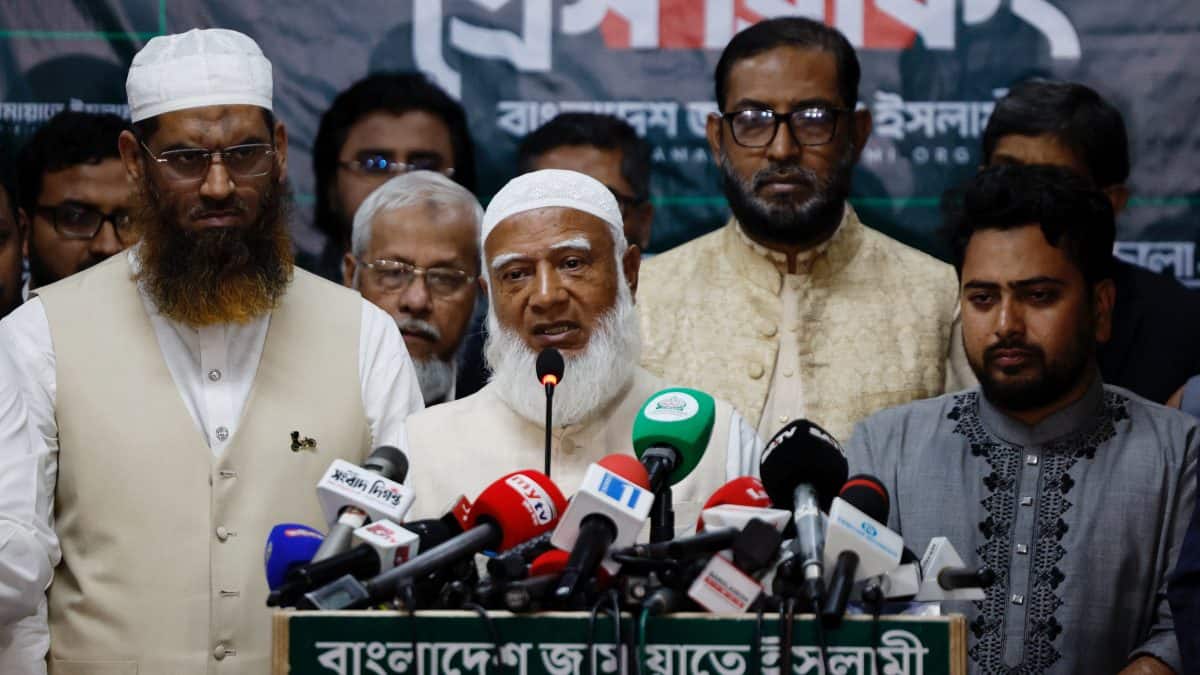
Yet this national relief does not extend to India’s eastern frontier. While the BNP dominated most of the country, the Jamaat-e-Islami and its allies secured 68 seats—their highest tally in decades—with a striking concentration in constituencies directly abutting West Bengal and Assam. Jamaat swept all four seats in Satkhira district, took three of four in Kushtia, and registered strong wins across Rangpur, Kurigram, Gaibandha, Chapainawabganj, Naogaon, Rajshahi and parts of Khulna and Mymensingh. These victories form a near-contiguous arc of influence facing West Bengal’s districts of South and North 24 Parganas, Nadia, Murshidabad, Malda and Alipurduar, as well as Assam’s border areas near Sylhet and the Siliguri Corridor. Of the 68 seats, roughly 51 lie in border districts. This localised dominance has quietly transformed the security landscape along the porous 4,096-kilometre border, where smuggling, infiltration and radicalisation have long been chronic vulnerabilities.
Political Control Over Border Districts
Jamaat-e-Islami MPs now represent a belt of constituencies that sit astride the very frontier with India. Elected representatives wield influence over local administration, police postings, development funds and community mobilisation. In districts where the party has historically maintained strong organisational networks through mosques, madrasas and student wings, this political legitimacy provides cover for cross-border movement. Intelligence reports have long flagged these same areas—Satkhira, Kushtia, Rangpur—for facilitating cattle smuggling, fake currency circulation and the passage of radicalised individuals.
With Jamaat legislators in place, coordination between Bangladeshi border forces and Indian counterparts on fencing gaps, riverine patrols and intelligence sharing becomes more complicated. Local political pressure can slow or dilute enforcement actions. The result is not immediate invasion but a steady erosion of border sovereignty, allowing networks to operate with reduced fear of crackdowns.
Legitimised Networks, Madrasas and Funding
Jamaat-e-Islami does not openly advocate violence, yet its ideological ecosystem has repeatedly overlapped with extremist elements. The party’s student wing, Islami Chhatra Shibir, has supplied cadres to banned outfits. Political victory in border seats grants access to state resources that can be channelled—directly or indirectly—into madrasa networks, charitable fronts and community organisations. These institutions have historically served as recruitment and radicalisation pipelines.
In West Bengal, security agencies have documented the use of certain madrasas near the border for propagating ideologies aligned with groups like Jamaat-ul-Mujahideen Bangladesh (JMB). With Jamaat now holding elected power opposite these zones, underground sympathisers on both sides gain political protection, logistical support and potential funding channels. Cross-border family and kinship ties further amplify the reach, turning villages into safe conduits for propaganda, small arms and trained operatives.
Proven Terror Plots and Recent Arrests in West Bengal
The threat is not theoretical. West Bengal has repeatedly uncovered Bangladesh-linked terror modules. In October 2014, an accidental explosion in Khagragarh, Burdwan, exposed a JMB safehouse stocked with 55 improvised explosive devices, RDX, timers and propaganda material. Two people died; investigations revealed Bangladesh nationals and Indian facilitators planning attacks on Indian soil. Multiple JMB operatives were later convicted in NIA trials.
In 2018, Kolkata Police foiled a sabotage plot tied to JMB leadership, including the notorious “Boma Mizan”; one suspect received an eight-year sentence in February 2026 on explosives and UAPA charges. As recently as May 2025, the West Bengal Special Task Force arrested several JMB suspects: two in Birbhum (Pakistan-trained with Lashkar-e-Taiba links) and another in Diamond Harbour, all accused of planning strikes threatening India’s sovereignty. These cases demonstrate active sleeper cells, recruitment of Indian nationals and cross-border facilitation. A politically empowered Jamaat on the Bangladeshi side can only strengthen the ecosystem that sustains such modules.
Ideological Bridge to Hefazat, JMB and Transnational Extremism
Jamaat-e-Islami’s influence extends beyond electoral politics into a broader radical spectrum. The party maintains ideological and organisational overlap with Hefazat-e-Islam, the hardline coalition of Qawmi madrasa teachers and students that has demanded blasphemy laws, restrictions on women and the rollback of secular policies. Hefazat has frequently served as a street-level mobiliser when Jamaat faced restrictions, functioning almost as a pressure valve or front.
Meanwhile, JMB—responsible for the 2005 nationwide bombings and later attacks—drew many early members from Jamaat’s student wing. Factions of JMB have pledged allegiance to ISIS, while others maintain ties to al-Qaeda-inspired groups. In the post-2024 period, reports emerged of renewed coordination attempts among JMB remnants, Hefazat elements and Jamaat networks.
With Jamaat now holding 68 parliamentary seats and dominating the border, these connections gain institutional breathing space. The party’s historical opposition to Bangladesh’s 1971 independence and its past alliances with Pakistan add a geopolitical layer: external patrons may find renewed utility in a border-focused Islamist bloc.
The BNP government in Dhaka can and should be engaged on trade, water sharing and the extradition of Sheikh Hasina. Yet New Delhi must simultaneously treat the eastern frontier as a distinct and heightened threat zone.
Enhanced fencing in unfenced riverine stretches, intensified intelligence cooperation focused on specific districts, stricter monitoring of madrasa funding and community-level deradicalisation programmes in West Bengal and Assam are urgent. The 2026 election has delivered a national partner in Tarique Rahman’s BNP, but it has also entrenched a hardened ideological adversary directly across the border from India’s most sensitive states. Ignoring the Jamaat arc in Satkhira, Kushtia and Rangpur would be a strategic error with consequences far beyond diplomatic niceties.
(Sayantan Ghosh is the author of ‘The Aam Aadmi Party: The Untold Story of a Political Uprising and Its Undoing’. He is on X as @sayantan_gh. Views expressed are personal and solely those of the author. They do not necessarily reflect Firstpost’s views.)
End of Article

