



3 min readFeb 12, 2026 12:27 PM IST
First published on: Feb 12, 2026 at 06:47 AM IST
A confession to begin. I have been both the sanctimonious lark who quoted “early to bed and early to rise” and the defiant owl who bragged that real thinking only begins after midnight. Both versions believed they were virtuous. Both were wrong.
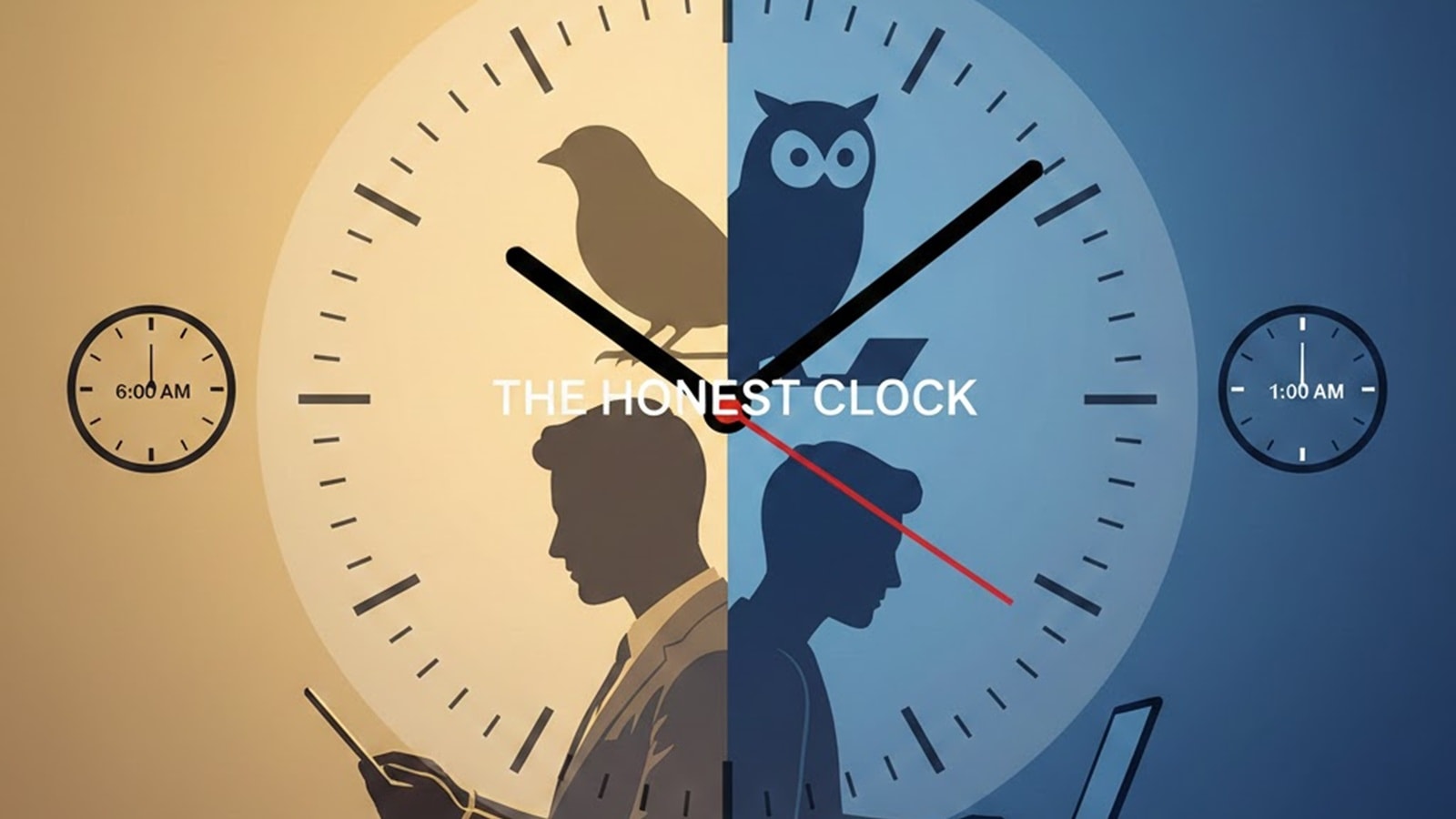
India loves binaries — science versus arts, vegetarian versus non-vegetarian, “morning person” versus “lazy owl”. We turn a neutral biological difference called chronotype — the body’s preferred sleep-wake pattern — into a moral referendum. In truth, what matters is not when you work, but whether your work, relationships and health are aligned with the clock inside your body.

As a retired psychiatrist who has listened to people in distress, and as a citizen who has watched children yawn through assembly, I have learnt what our public debate resists: Your circadian rhythm is a temperament of time, not a badge of character.
Look around. Our cities run on staggered tides of effort. Mumbai’s dabbawalas move like clockwork in the late morning. Call-centre workers in Gurugram answer queries from customers who will never know their “good evening” is being spoken at 3 am. Nurses keep vigil while the rest of us sleep. Society needs different kinds of bodies to stay awake at different times.
The trouble begins when a single timetable is treated as sacred. Schools that insist every teenager must sparkle at 8 am are fighting adolescent biology, not building character. Offices that reward being seen at a desk at nine, regardless of productivity, confuse “face time” with performance. Families that shame the late riser forget that this late riser may have sat up with a sick child till dawn.
There is a spiritual argument, too. We are stewards, not owners, of the small patch of creation that is our body. Good stewardship includes listening to the rhythms written into our flesh. Prudence asks: “Am I living in a way that respects my honest clock?” Compassion adds a second question: “Does my community make room for bodies unlike mine?” Those questions belong together. In the best Indian tradition, they are matters of dharma.
What would a chronotype-friendly India look like? Schools that start slightly later for adolescents, or at least offer some flexibility. Workplaces that judge staff by output. Courts, hospitals and public offices that keep staggered windows so citizens who cannot manage mornings are not locked out of justice or care. A public-health message that drops the moral tone: Not “wake at five or fail”, but “sleep enough and align your effort with your peaks”.
The payoff would be large. Better-rested students learn more. Workers trusted to manage their energy give more. Partners who respect each other’s rhythms quarrel less and love more. A nation that prides itself on being truly awake might discover that wisdom is not about when we open our eyes, but how wisely we use them.
So which life wins: The owl’s or the lark’s? The wrong question. The real victory is when your inner clock and outer timetable meet. May you discover your honest clock. May your loved ones honour it. And may India — restless, ambitious India — learn to make enough room in time that larks, owls and the vast, drowsy middle can all play in tune.
The writer is a retired psychiatrist

