



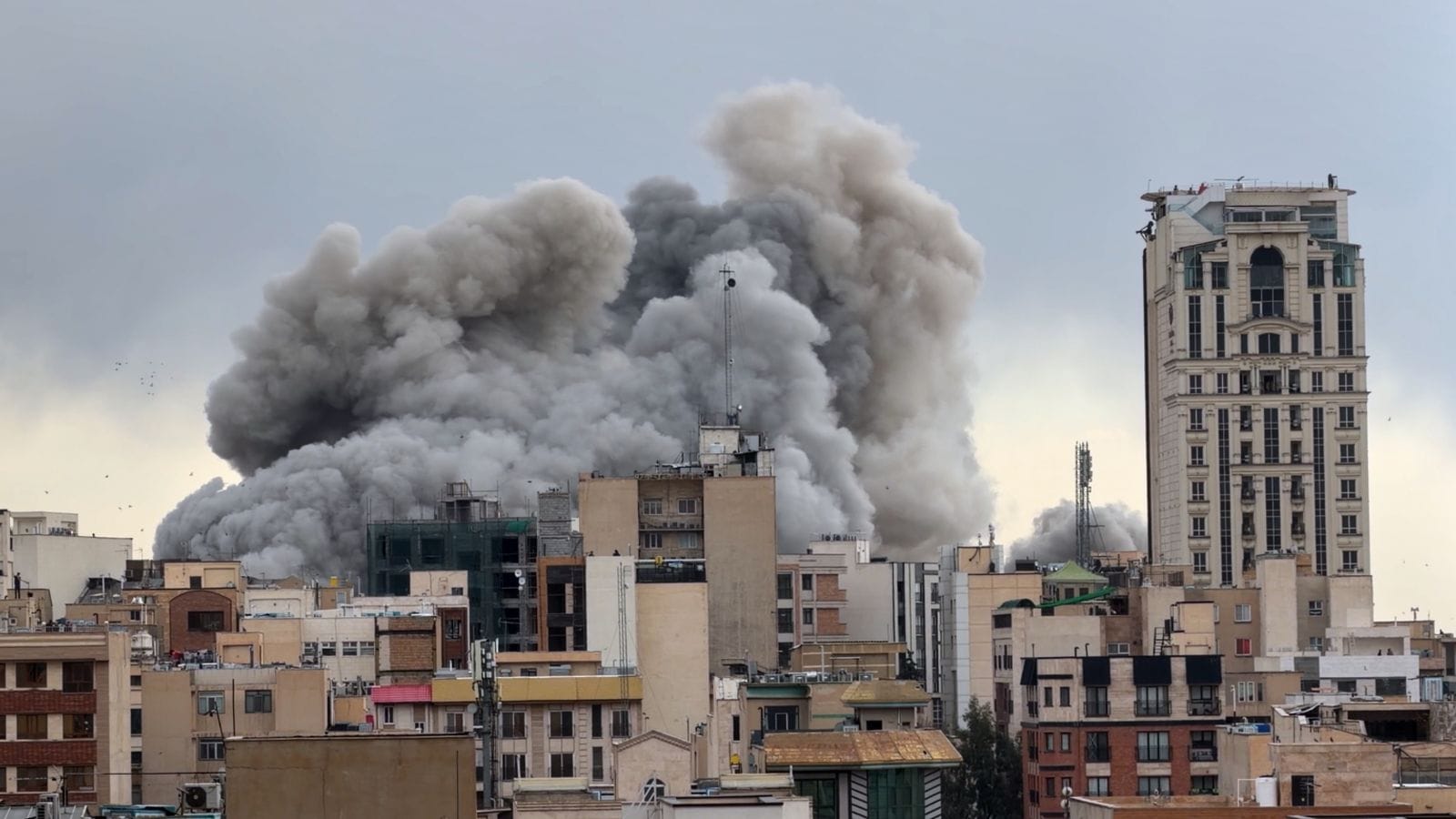
Two things can be true at the same time.
The Islamic regime in Iran, led by the now-dead Ayatollah Ali Khamenei for over three decades, was and will continue to be brutal and repressive. The crackdown in January, which reportedly killed at least 6,500 people, is just one example of the revolutionary state’s excesses since it was established in 1979. Few would deny this reality, and few are likely to shed a tear for Khamenei or for other senior leaders killed in the joint US-Israeli operation that began on Saturday.

But acknowledging this reality should not necessarily mean cheering a blatantly illegal act of aggression. If the war against Saddam Hussein’s Iraq in 2003 was launched on the basis of a fabricated threat of “weapons of mass destruction”, then the US and Israel’s operations, Epic Fury and Roaring Lion, appear to rely not only on a false threat but also on deliberate misrepresentations about how and when Iran might have been able to implement such a threat.
The principal threat being cited as the casus belli is Iran’s nuclear weapons programme. In his first speech following the initial wave of strikes, President Donald Trump said that the US had no choice but to attack because Tehran was not willing to cut a deal. Steve Witkoff, lead negotiator in the talks with the Iranians, went even further and claimed that Iran was “probably a week away from having industrial-grade bomb-making material”.
Set aside, for a moment, the fact that after Operation Midnight Hammer last year, Trump had boasted that Iran’s nuclear facilities had been “obliterated”. Even if we assume that he was exaggerating to win political points, international monitoring bodies and US intelligence agencies have consistently concluded that there is no evidence Iran has resumed active efforts to build a bomb.
In fact, hours before the attacks began, Badr bin Hamad Al Busaidi, Oman’s foreign minister and chief mediator, told CNN that Iran had agreed “never to stockpile material that will create a bomb”. In his words: “A peace deal is within our reach … if we just allow diplomacy the space it needs to get there.” Instead, like the 12-day war in June last year, Iran was attacked while it was at the negotiating table, the only difference being that in the previous occasion, the Israelis had gone at it alone before the US dropped the bunker buster bombs on Fordow, Natanz and Isfahan.
Beyond nuclear weapons, the Americans have claimed that they were under threat of an imminent Iranian attack. Yet on March 1 — the second day of the war — the Pentagon acknowledged in closed-door briefings to congressional staff that there was no intelligence indicating Iran was preparing to strike the US first.
Trump further warned that Iran was developing missiles that would soon be capable of hitting the US mainland, a claim he repeated on Monday, day three of the war, that Iran would “soon” be able to hit targets inside America with ballistic missiles.
Again, his own administration’s reports contradict his claims. A May 2025 assessment by the US Defence Intelligence Agency concluded that Iran could potentially develop long-range missiles that could reach the US only by 2035 — if it chose to pursue such a capability in the first place. The logic of a “pre-emptive war” therefore collapses as well.
Then there is the moral justification for the war: That it is morally defensible because of the brutality of the Iranian leadership. But the premise of repression by a nation’s government does not grant another nation the right to invade it. Brutal autocracies exist across the globe, in Russia, China, North Korea, Myanmar, and Saudi Arabia, among others. One of these is a major US ally, and with another, Trump has actively sought to reset ties despite its authoritarian leader starting a war that has caused more than a million casualties.
Even on the grounds of the ethical theory called consequentialism — that outcomes, more than intentions, determine the morality of an act — few Iran watchers have suggested that air strikes alone will produce regime change (if that is indeed still the goal, given US Secretary of War Pete Hegseth’s claims on Monday suggesting that it is not). The Islamic Revolutionary Guard Corps is deeply entrenched, and the revolutionary state was designed to withstand external pressure. As things stand, the consensus among experts is that US and Israeli military action is unlikely to undo the revolution and improve the lives of the Iranian people.
So why proceed with war? Trump and Israeli Prime Minister Benjamin Netanyahu have obviously calculated that Iran’s leadership was at its weakest in years. Its regional proxies — Hamas in Gaza, Hezbollah in Lebanon, and the Houthis in Yemen — have been severely degraded following the Gaza war. Trump, meanwhile, miscalculated that the Iranians would surrender, and escalated his rhetoric to a point from which retreat would have appeared politically weak.
The only beneficiary appears to be Israel. Netanyahu has, for decades, viewed the destruction of the Iranian revolutionary state as his magnum opus. By drawing the US directly into conflict (take note of Marco Rubio’s claim that Israel “forced” the US to act against Iran), he has internationalised the war, with Iran now targeting US bases across West Asia. Whether the revolutionary regime ultimately falls is uncertain. What is certain is that the costs will be immense, a particularly bitter pill to swallow given that negotiations were available as a way out.
Benjamin Franklin’s warning comes back to haunt: There never was a good war or a bad peace.
The writer is deputy copy editor, The Indian Express
saptarishi.basak@indianexpress.com

