



The Islamic Republic of Iran cannot win the current war with Israel and the United States. It only wishes to survive it. This distinction, seemingly small, is in fact the key to understanding everything Tehran has done since the start of the war on February 28, and everything it is likely to do next. Survival is not a fallback position for the Islamic Republic; it is, and has been since the republic’s founding in 1979, the paramount objective around which all other decisions are organised. What looks from the outside like defiance or recklessness is, from the inside, the rational execution of a doctrine that has kept the regime in power for nearly half a century.
Ayatollah Ruhollah Khomeini built the survival imperative into the constitutional architecture of the state from the beginning. The Islamic Revolutionary Guard Corps (IRGC), established within months of the revolution, was given a mandate distinct from that of the conventional armed forces: Where the regular army was tasked with defending Iran’s borders, the IRGC was charged with preserving the revolution itself. This was a deliberate and consequential choice.

The Islamic Republic would always maintain a military force whose primary loyalty was to the political order, not the nation-state, and whose purpose was to guarantee that the system endured regardless of what the Iranian people, the clerical establishment, or the outside world demanded of it. Over four decades, that institutional purpose has calcified into something more than strategy. It has become the operating system of the Iranian state, absorbing protest, sanctions, proxy war, and now open military assault with the same essential response: Hold, repress, and outlast.
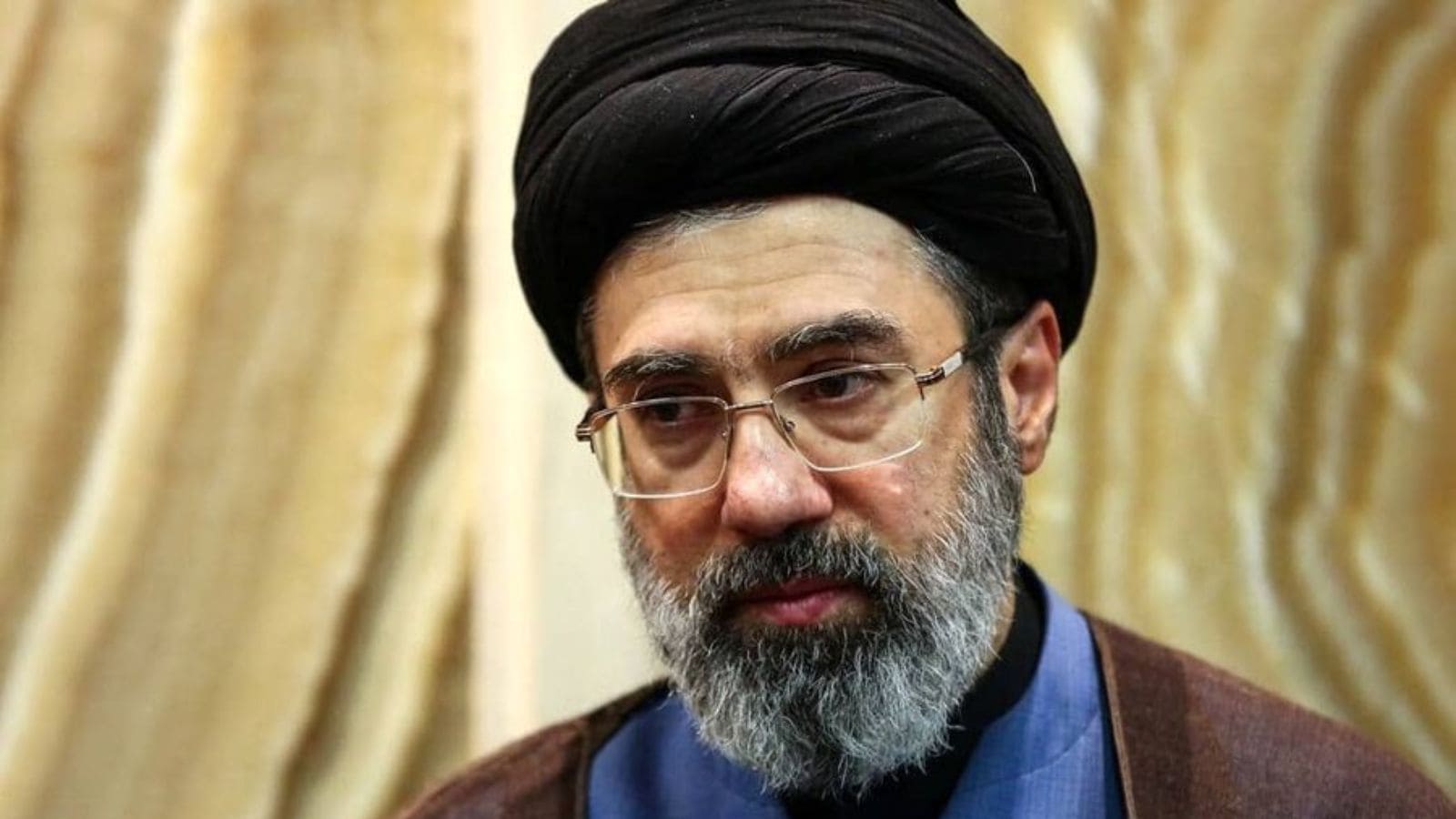
The succession of Mojtaba Khamenei as Supreme Leader is the clearest recent illustration of this logic. Within 10 days of his father’s killing, the Assembly of Experts named the 56-year-old as the republic’s third Supreme Leader. His principal qualification was his closeness to the IRGC and his capacity to maintain continuity within the hardline security establishment.
His appointment was an act of institutional self-preservation conducted at speed, under fire, and in explicit defiance of American objection. US President Donald Trump had said the choice would be unacceptable. Iran chose him anyway, and in doing so demonstrated that the Islamic Republic does not organise its most important decisions around what its enemies find acceptable. The decapitation strategy assumed the body would die when the head was removed. It did not.
Israel has always understood this. For Benjamin Netanyahu, the survival doctrine of the Islamic Republic is not an abstraction; it is the organising premise of three decades of Iranian policy toward Israel, expressed through Hezbollah, Hamas, the ballistic missile programme, and the relentless pursuit of nuclear capability. Netanyahu has spent those decades arguing, with increasing urgency, that Iran’s regime is an existential threat that cannot be managed or contained, only eliminated.
Netanyahu’s stated aim in this war is regime change: Not a degraded Iran, not a denuclearised Iran under new management, but the end of the Islamic Republic as a governing system. He addressed the Iranian people directly after the first strikes, calling on them to overthrow what he called “the regime of fear”. For Israel, this war is, at its core, a war about whether the Islamic Republic can be made to cease to exist. That is a coherent position, one that at least begins from an accurate reading of what the regime is and how it operates.
The Trump administration’s position has been something quite different and considerably less coherent. The president’s war aims have shifted repeatedly since the first strikes, oscillating between demands for unconditional surrender, offers of immunity to IRGC commanders willing to defect, suggestions that Trump himself would select Iran’s next leader, and signals that a nuclear deal with the new Supreme Leader might yet be possible.
Secretary of State Marco Rubio has acknowledged to Western counterparts that while the two allies are aligned on military objectives, there are “different nuances” on the question of regime change. That is a diplomatic understatement. Netanyahu wants the war to lay the foundation for the end of the Islamic Republic. The Trump administration, by the evidence of its own public statements, is less certain what it wants, and has shown signs of a desire to exit the conflict on terms it can describe as a victory, whether or not those terms constitute one.
This divergence is not a secondary tension within the alliance; it is the central strategic problem of the war. A campaign premised on regime change, and a campaign premised on nuclear disarmament are not the same campaign, and the gap between them is one the Islamic Republic is well-positioned to exploit. If Trump concludes that destroying Iran’s nuclear and missile infrastructure is sufficient for him to declare victory and disengage, the regime survives, the IRGC remains in place, and Iran retains the institutional capacity to reconstitute its programme over time. If, on the other hand, the alliance commits to regime change without a credible plan for what follows, it risks the kind of open-ended entanglement that neither country’s political circumstances can sustain.
Iran’s own conduct reflects this clarity. Rather than limiting its retaliation, Tehran has widened the circle of the war, launching missiles and drones at all six Gulf Cooperation Council states, restricting traffic through the Strait of Hormuz, and driving oil prices to their highest levels in years. These are the actions of a regime deploying the leverage it has accumulated over decades, not the desperate thrashing of a system on the verge of collapse. The Islamic Republic is not trying to win the war in any conventional sense. It is trying to raise the cost of the war high enough that its enemies conclude that removal of the regime is more expensive than its continued existence. In this, its strategy and its survival doctrine are one and the same.
The Islamic Republic’s founding injunction, that preserving the system is the highest duty, has outlasted reformists, moderates, economic ruin, sanctions, street protests, and now the killing of the Supreme Leader, who held power for 37 years. It will not be dissolved by a military campaign whose two principals cannot agree on what they are trying to achieve. A coherent strategy requires beginning from an accurate understanding of the adversary. Israel, for all its limitations, has that understanding. The United States, under the present administration, demonstrably does not. That asymmetry, more than any Iranian missile, is the greatest single obstacle to a war that resolves anything.
The writer is associate professor of International Studies at the Hamilton Lugar School of Global and International Studies, Indiana University, and the author of several books on Iran’s political development and US-Iran relations

