



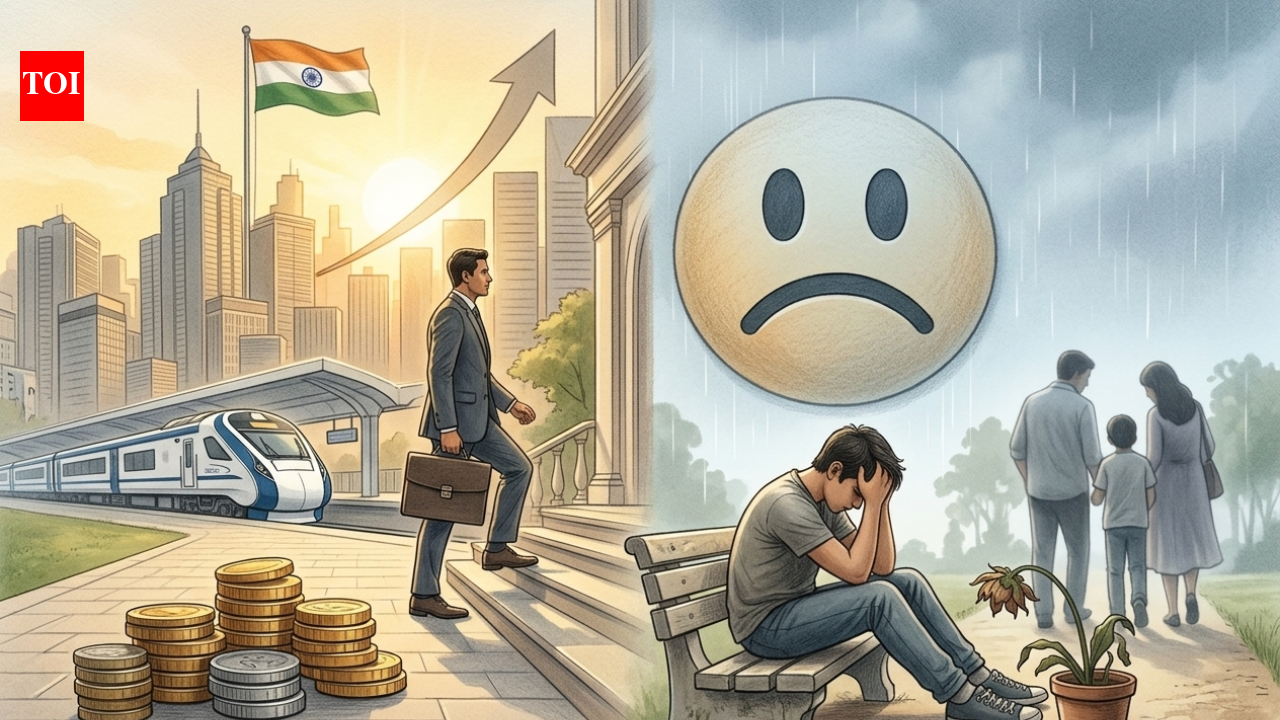
Every year, the World Happiness Report releases a global survey of how people feel about their lives, not just in terms of wealth or growth, but trust, social support, freedom and overall well-being. This year, the report has once again placed India far down the list, ranking the country 116th out of more than 140 nations. For a country that is among the world’s fastest-growing major economies and home to a young, aspirational population, the ranking raises a familiar but uncomfortable question: why are Indians not happier?The numbers present a striking contrast. India has made significant strides in economic growth, digital expansion and infrastructure development over the past decade. Cities are expanding, technology is reshaping daily life and millions are moving into the middle class. Yet the World Happiness Report indicates that material progress alone does not translate into a happier society.Neighbouring countries have often ranked higher in the report, adding another layer to the debate. Nations with smaller economies and fewer resources sometimes report greater levels of life satisfaction, pointing to factors beyond income that shape people’s sense of well-being and happiness. Experts say happiness in the report is less about momentary joy and more about how people evaluate their lives as a whole, whether they feel supported, secure and optimistic about the future.In India, the pressures of rapid urbanisation, rising living costs, job insecurity and widening inequality are often cited as reasons behind the relatively low ranking. Mental health concerns, particularly among young people navigating intense academic and professional competition, are also becoming more visible. At the same time, traditional social structures that once offered strong community support are evolving as families become smaller and more mobile.Yet the story is not entirely bleak. India’s diversity means that experiences of happiness vary widely across regions, communities and economic groups. For many, happiness remains closely tied to family bonds, cultural traditions and everyday resilience, factors that are not always fully captured by global surveys.The country’s ranking in the World Happiness Report, therefore, opens up a broader conversation about what well-being really means in a society as vast and complex as India. As policymakers focus on economic growth and development, the report serves as a reminder that progress is not measured by GDP alone, but also by how people experience their lives.
Climbing the Cantril Ladder: How happiness is measured
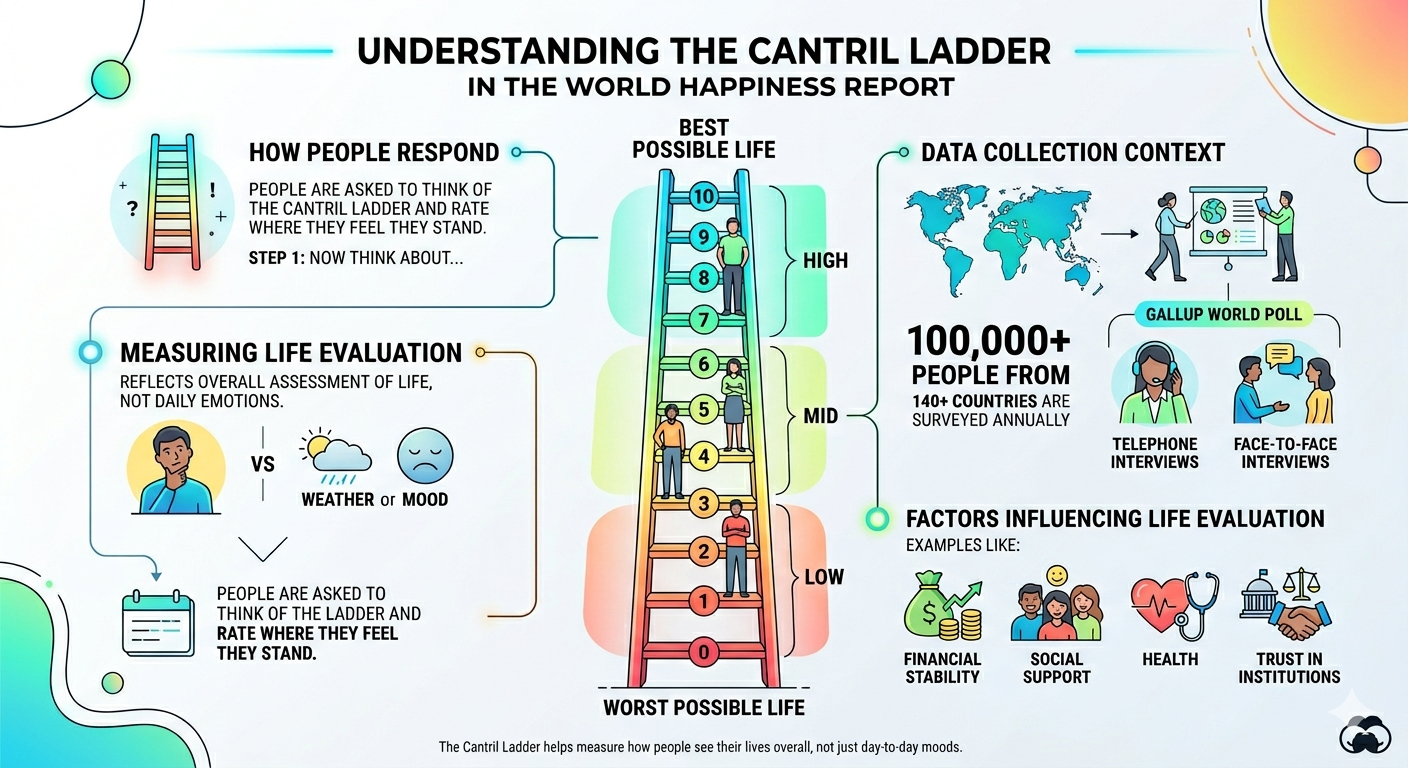
A key question that often follows the release of the World Happiness Report is how exactly countries are ranked. Unlike many global indices that combine multiple indicators, the report relies on a single, straightforward question that asks people to evaluate their own lives.Known as the Cantril Ladder, the question invites respondents to imagine a ladder with steps numbered from 0 to 10. The top of the ladder represents the best possible life they can imagine for themselves, while the bottom represents the worst possible life. People are then asked to choose the step that best reflects where they feel they stand at that moment in their lives.
AI generated image
The approach is rather simple. Instead of defining happiness through a fixed set of indicators, the method allows individuals to decide for themselves what matters most for them when it comes to judging their lives and where they stand. Because the question does not directly mention words such as happiness, satisfaction or well-being, it can be translated easily across languages and cultures without losing gravity.The responses are collected through the Gallup World Poll, which has been conducting these surveys across the globe since 2005. Every year, more than 100,000 people across roughly 140 countries and territories participate in the survey. In most countries, around 1,000 respondents are interviewed either through telephone calls or face-to-face interactions, providing a broad snapshot of how people perceive their lives.Researchers say the report focuses on life evaluations rather than day-to-day emotions for a reason. While emotions can fluctuate depending on daily experiences, a stressful day at work or a pleasant evening with friends, life evaluations tend to reflect broader circumstances such as financial stability, social support, health and trust in institutions.As a result, the rankings aim to capture how people feel about their lives as a whole, rather than how they feel on any given day. Over time, these responses provide clarity on how different societies perceive their quality of life, and why some countries consistently rank higher than others.
From Finland to Costa Rica : What makes the world’s happiest countries happy
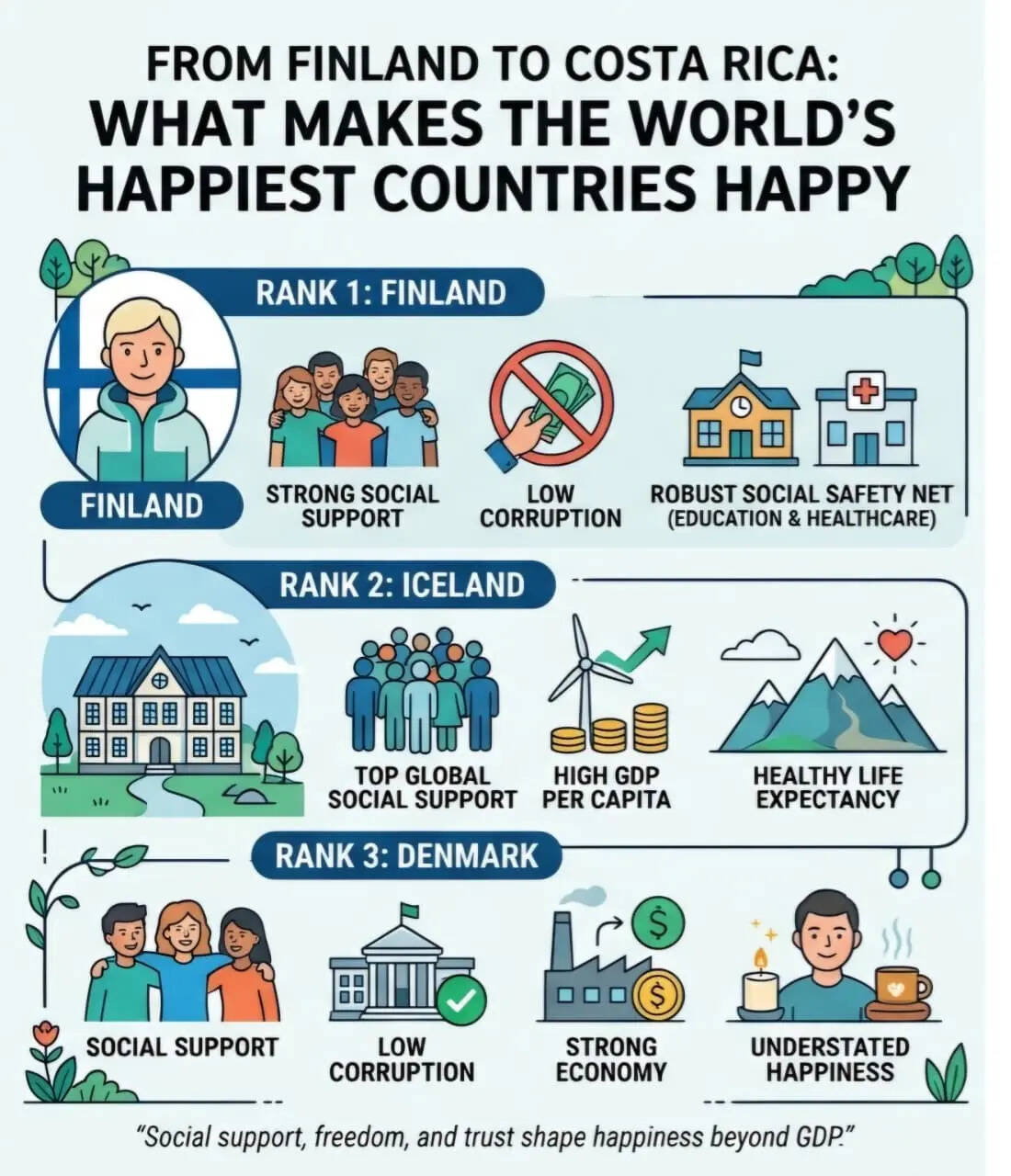
The Nordic countries continue to dominate the World Happiness Report, but 2026 brought a surprise. For the first time in the report’s 14-year history, a Latin American nation cracked the top five: Costa Rica, which rose to fourth place from 23rd in 2023, thanks to strong social support and a sense of personal freedom.Finland remains at the top, holding the number one spot for nine of the past ten years. Its high ranking reflects strong social support, low corruption, and a reliable social safety net, including education and healthcare, which give residents a sense of security.Iceland moved into second place, overtaking Denmark for the first time since 2014. With a population of just 400,000, it ranks first globally for social support, while also performing well in GDP per capita, healthy life expectancy, and generosity.
AI generated image
Denmark comes in third, consistently near the top over the years. High scores for social support and low corruption, along with a strong economy, help sustain its reputation, though happiness here is often described as quiet and understated.Costa Rica takes fourth, buoyed by rising freedom scores and close community support. While its GDP and government services don’t match the Nordic nations, residents report high satisfaction with their lives, often exceeding what the metrics alone would suggest.Sweden rounds out the top five, praised for a balance between progressive urban life and access to nature, healthy life expectancy, and low perceived corruption, securing its place among the world’s happiest nations.
The growth vs happiness paradox
While the idea of “happiness” can seem vague or subjective, researchers say most people are able to give a fairly clear sense of how they feel about their lives when asked in this way. The surveys are designed to capture long-term life evaluations rather than momentary emotions, helping researchers understand how people perceive their overall quality of life.In India’s case, the contrast between rapid economic growth and modest levels of life satisfaction may reflect the pressures that often come along with development. Rising aspirations, increasing living costs and intense competition for education and employment can create a sense of constant striving. For many people, economic progress brings opportunities but also new anxieties, from job insecurity to financial stress.The result is a paradox: while the country continues to grow and change on different fronts, many individuals still feel uncertain about their personal stability and future prospects. The rankings suggest that growth alone does not automatically translate into a greater sense of well-being. Instead, people’s happiness appears closely tied to whether they feel secure, supported and hopeful about the lives they are building.Dr Saloni Seth Agarwal, a consultant psychiatrist at ENT and Mind Care and associate consultant at Max Vaishali, said that while economic growth has expanded opportunities, happiness is shaped by a range of psychological and social factors. Responding to a question on why many Indians report low life satisfaction despite economic progress, she noted that material advancement alone does not necessarily translate into a greater sense of well-being.“Rising aspirations, constant social comparison, and financial pressures often create a feeling that one must keep achieving more. In my clinical practice, I see that while lifestyles have improved, stress levels have also increased. True well-being depends not just on income, but also on emotional stability, social support, and a sense of balance in life,” she added.
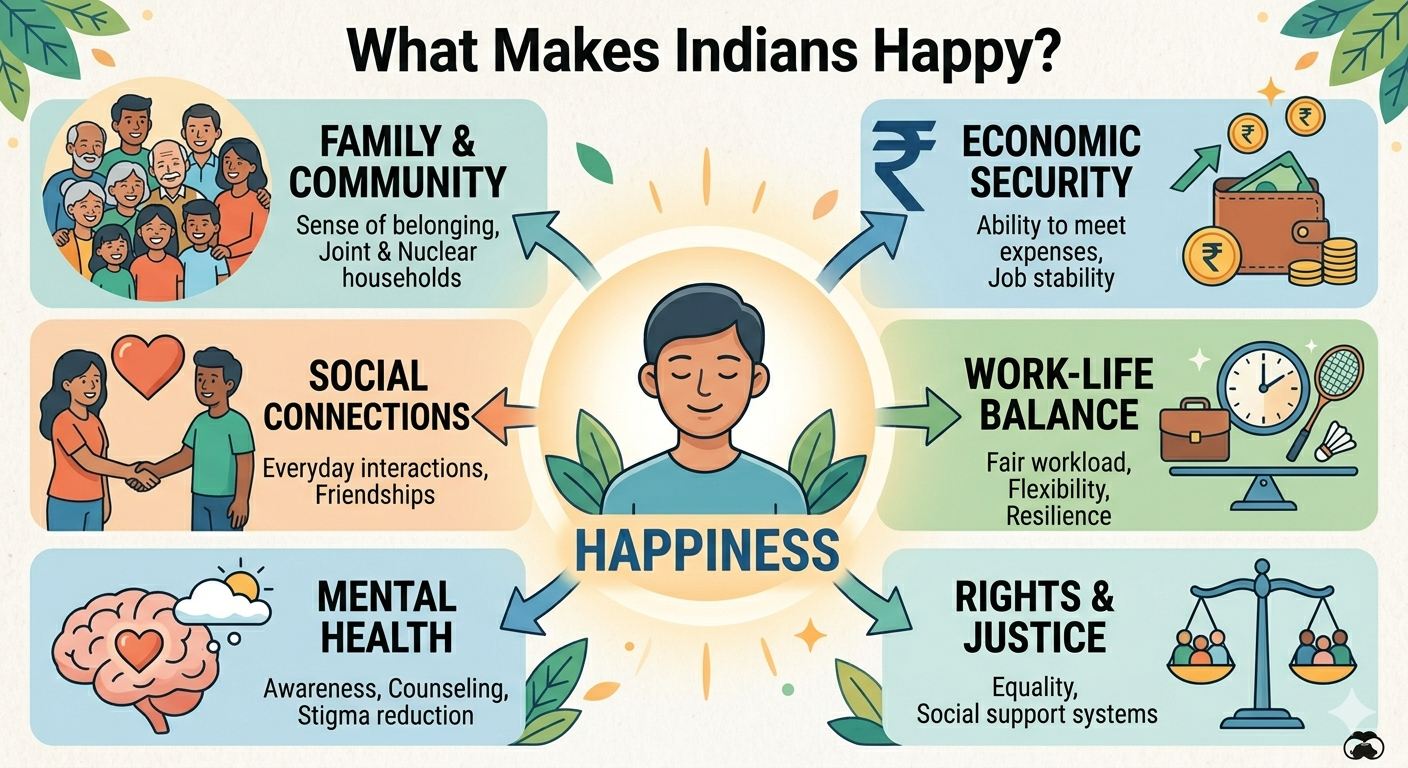
What makes Indians happy anyway?
Another factor often linked to well-being is the changing nature of family and community life. Traditionally, many Indians grew up in joint or extended families where emotional and practical support was readily available. As urbanisation, migration for work and changing lifestyles reshape society, nuclear families and more individualised living arrangements have become common. While this shift offers greater independence, it can also reduce everyday social support and a sense of belonging. In fast-paced urban settings, people may find themselves surrounded by others yet feeling increasingly isolated.“I don’t feel a sense of belonging in my community or neighbourhood, especially as of late. It does affect my happiness, as I believe the mundane joy that community can bring is hard to find elsewhere. I think people in India feel more and more isolated from each other, which is why there’s such a desperate reach for community through online behaviours. This is probably because we live in social bubbles which may feel unfulfilling or superficial,” said Soumili, a 23-year-old corporate worker situated in Kolkata.Soumili added that family, friends and social relationships play a vital role in shaping her idea of happiness. However, she noted that as people grow older and their lives become busier, these connections often begin to fade. “We tend to ignore each other even when we’re in the same space,” she said, pointing out that the pace of modern life can gradually weaken everyday interactions and shared moments.
AI generated image
While city living brings opportunities, it often comes at the cost of close-knit support systems. Without regular interaction with family and community, many feel isolated, and the absence of these bonds can quietly chip away at both mental well-being and overall life satisfaction.“Social changes are playing a significant role. The shift from joint families to nuclear households and increased migration to cities, have both blunted everyday emotional support systems. While urban life offers opportunities, it can also lead to isolation and loneliness. Humans thrive on connection, and when social bonds weaken, it can affect mental health and overall life satisfaction,” added Dr Saloni. For many, happiness is also closely tied to a sense of economic security. While money alone may not guarantee contentment, financial stability often shapes how secure and optimistic people feel about their lives. The ability to meet daily expenses, afford healthcare and education, and plan for the future can significantly influence a person’s sense of well-being. In a country like India, where the cost of living continues to rise and economic opportunities can be uneven, financial pressures are a constant concern for many households. Job insecurity, unstable incomes and the struggle to maintain a certain standard of living can add to everyday stress, making it harder for people to feel satisfied with their lives.“Other things are very important but if financial security is not there then people won’t be in a position to want other things. But ultimately, for happiness, a balance of both financial security and other things such as friendship, community, acceptance are necessary,” said Senjuti, a student pursuing a master’s degree in psychology.Talking along similar lines, Soumili added, “financial security is the baseline for happiness. Sure, you can find moments of true happiness outside of it or even without it, but without knowing that you’re safe and set for the next day, I think it would be extremely difficult to be positive or happy”.Improving well-being in India requires more than economic prosperity; it calls for a broader focus on social and psychological health. Strengthening community ties, fostering meaningful relationships, and creating spaces where people can connect in their daily lives can go a long way in enhancing happiness.Addressing mental health through awareness, access to counselling, and reducing stigma is crucial as well, especially for young people facing academic and professional pressures. Policies that promote financial stability, equitable opportunities, and work-life balance can also help ease stress and provide a foundation for a more secure life. People having access to equal rights and social justice systems are also helpful in fostering an environment that ensures well-being.“We need a broader definition of success that values emotional health as much as achievement. Schools can focus on life skills and resilience alongside academics, workplaces can promote healthier work-life balance, and society must normalize conversations about mental health. Economic development is important, but a truly healthy society is one where people feel supported, connected, and mentally well,” said Dr Saloni.“As a society, we must remember that progress is not only about how fast we grow economically, but also about how well people feel while living their lives,” she added.

