



When Malaysia looks at India, it faces the world’s most populous country, with 1.4 billion people, while Malaysia’s population is only 34 million. However, the latter performs very well economically, with a per capita income of approximately $14,000. Through historical ties, cultural affinity, and the constant reinforcement of the 2.9 million Indian diaspora in Malaysia, there are enduring factors that keep the two nations moving along the path of cooperation, despite many divergences. Moreover, as a founding member of ASEAN, Malaysia is important to Delhi. This is why the nation holds a prominent place in India’s Act East Policy, Indo-Pacific strategy, and MAHASAGAR vision.
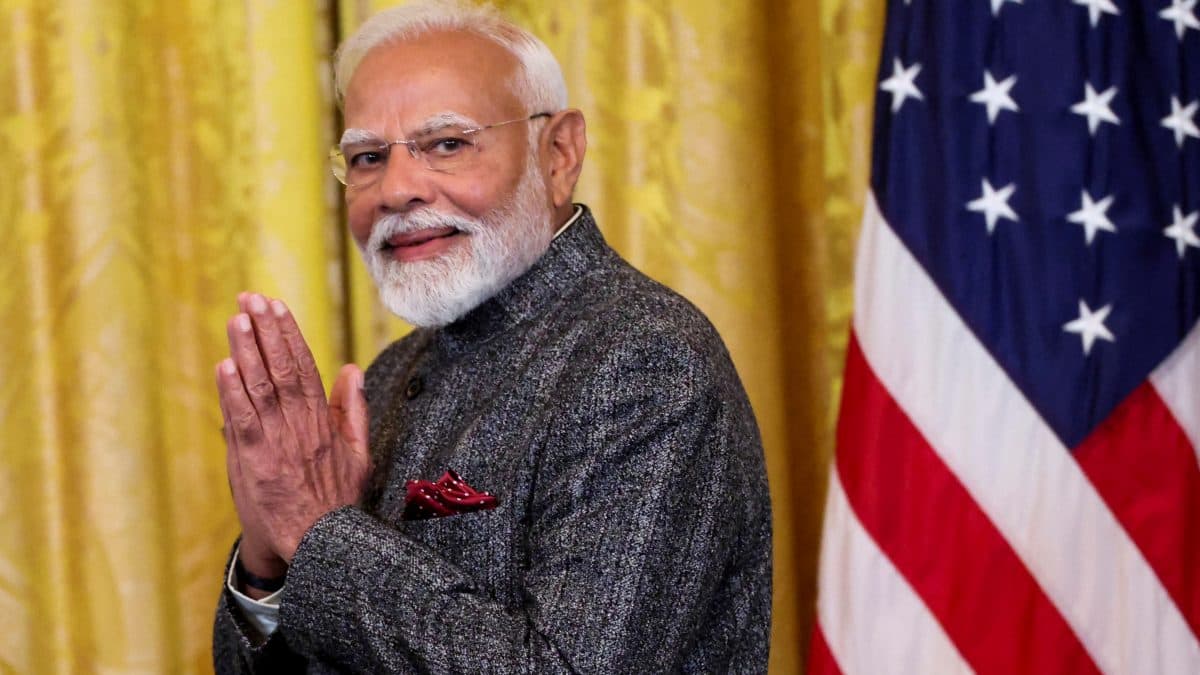
All these dimensions and more came into sharp focus during Prime Minister Narendra Modi’s third visit to Malaysia, which took place from 7 to 8 February. He visited Kuala Lumpur in November 2015 and returned for a short stopover on 31 May 2018 to meet the former Prime Minister Mahathir Mohammad. In August 2024, Anwar Ibrahim, the present PM, paid a state visit to India. At that time, the two leaders decided to elevate the bilateral relationship from the Enhanced Strategic Partnership (ESP) to the Comprehensive Strategic Partnership (CSP). The visit last week was a deliberate attempt to assess progress towards this elevation and to advance its cause more effectively.
What CSP Means
Though perhaps no standard or agreed definition of CSP is available, it is fair to note that it is a diplomatic phrase for ‘a full-spectrum relationship’. It covers all facets where mutual interests exist, including political, diplomatic, economic, security and defence, and various other domains. It is supported by a notable convergence of views and approaches on a range of regional and global issues.
By this definition, CSP between India and Malaysia may be considered a work in progress. They are seeking to manage differences arising from their distinct geostrategic locations and demographic profiles and are in the active phase of expanding and deepening bilateral cooperation. It is worth noting that, while India has numerous comprehensive strategic partnerships, Malaysia maintains such a relationship with only six countries: China, the US, Singapore, Indonesia, Australia, and India.
The latest leaders’ dialogue in Kuala Lumpur and its outcomes indicate the progress the two nations have made on the four key pillars of CSP that link them, as explained below.
The Four Pillars
First, political and diplomatic engagement has been sustained through high-level visits and a range of bilateral mechanisms, including Foreign Office Consultations and Joint Commission meetings. Exchanges include parliamentarians from both countries. On regional and global issues, a new channel has become available following Malaysia’s designation as a ‘partner country’ of BRICS, of which India is a founding member. The Malaysian side appears to have reiterated its interest in securing full membership of this forum, but this will have to wait, as BRICS has no immediate plans to expand further. Nevertheless, Malaysia is expected to provide full support for India’s 2026 BRICS Presidency.
Second, security and defence cooperation is a pillar that has become increasingly significant. It is anchored in the two nations’ unqualified opposition to terrorism. PM Modi’s clear four-word message – “No double standards, no compromise” – was noted by his Malaysian hosts. Further, maritime cooperation and cyber security are areas that receive priority attention. Finally, exchanges have taken place on expanding defence cooperation, including strategic dialogue, naval exercises, training programmes, and the sale and maintenance of defence equipment, such as Dornier aircraft, Scorpene submarines, and potential upgrades to SU-30 aircraft.
Third, trade and investment cooperation needed a special push. It was agreed that the approach should be to review and modify the existing agreements governing this domain and to introduce new technologies in a significant way. The priority sectors identified by the two governments, presumably based on the inputs of business leaders, are “Infrastructure, Energy, including Renewable Energy, Advanced Manufacturing, Semiconductors, Healthcare, Digital economy, Fintech start-ups, Artificial Intelligence, Hospitality, Green technologies, and other high value sectors,” according to the joint statement issued at the conclusion of the visit. Holding the CEO Forum in Kuala Lumpur on 7 February, coinciding with Modi’s arrival there, was a prudent move.
Cultural cooperation and people-to-people connections are also being strengthened. The two PMs attended a major Indian community event, delivering powerful messages to the diaspora, who constitute a vital, living bridge between the two nations. PM Anwar noted, “Alongside their Malay and Chinese neighbours, they (i.e., Indians) helped build the foundation of a great Malaysian economy and country.” PM Modi told the audience that “India has a special place in your hearts,” highlighted the role of the Tamil community, and announced several measures for the community’s welfare. Beyond this, the two governments are working to expand linkages through education, health, and tourism.
A key indicator of the success of a prime ministerial visit is the number and type of bilateral agreements signed. The Modi visit was quite successful from this angle. A total of 10 agreements were signed, covering diverse areas including disaster management, combating corruption, semiconductors, and UN peacekeeping operations.
Conclusion
The past background of differences between India and Malaysia, especially under the leadership of PM Mahathir Mohammad, should not be ignored, but it is wise to look to the future rather than the past. That is what the present prime ministers seem to be doing. It helps that they have a positive personal chemistry. They revealed it somewhat, as Modi told his audience that he knew Anwar Ibrahim before he became PM. The Malaysian host acknowledged Modi’s past “struggles and political tribulations” and expressed immense joy over his visit. “I am personally very excited, very thankful, very appreciative that I have a great friend from India joining us in Malaysia,” he observed.
With such political capital and goodwill, the two nations are well-positioned to advance their relationship in the coming years. Energetic follow-up and persistence will pay rich dividends.
(Rajiv Bhatia is a Distinguished Fellow at Gateway House, Mumbai, and a former Indian High Commissioner to Kenya and South Africa, and Ambassador to Myanmar and Mexico. He served twice in Southeast Asia. Besides, he is the author of three books on Indian foreign policy. Views expressed in the above piece are personal and solely those of the writer. They do not necessarily reflect Firstpost’s views.)
End of Article

