



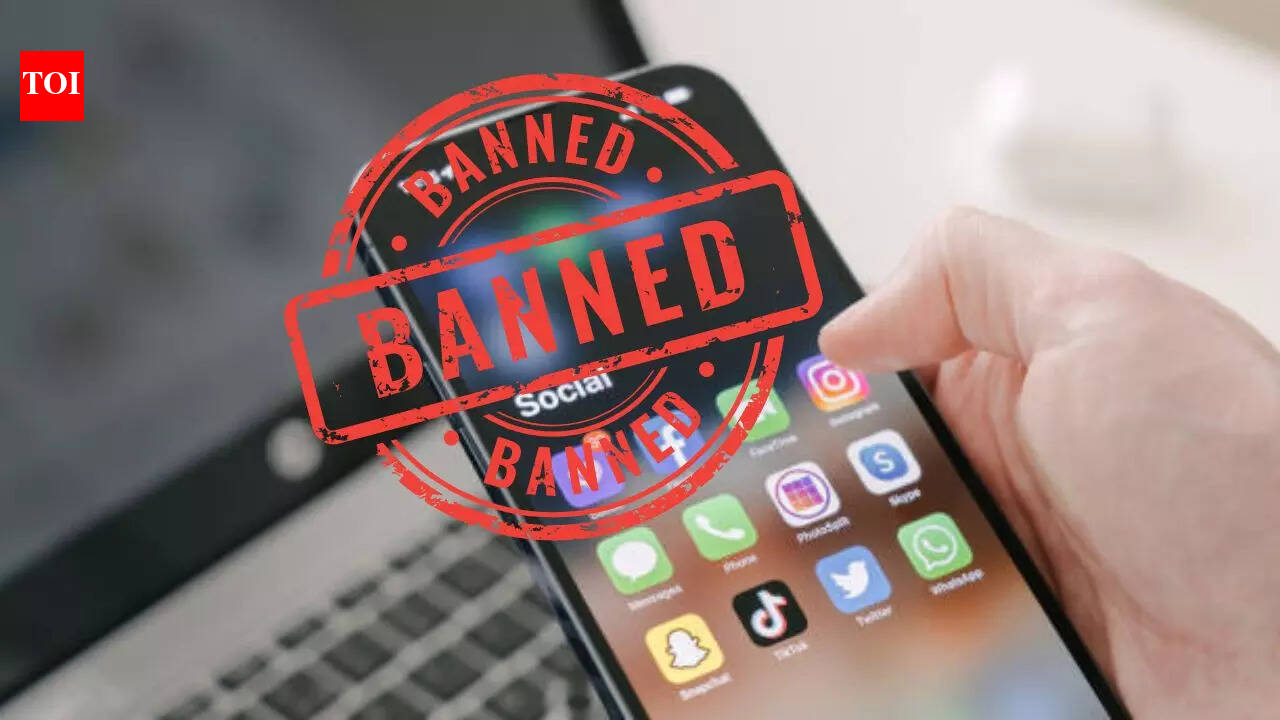

BENGALURU: Karnataka is preparing to ban social media access for children under 16, chief minister Siddaramaiah announced Friday in his budget speech, placing the state in sync with a growing international push to limit young people’s digital exposure.“We are not suggesting that children should not have access to mobile phones. We are only formulating a policy to ban social media access to children, both in schools and at home,” Siddaramaiah said, although there is no clarity yet on how the ban will be enforced.The Congress govt’s announcement draws on mounting global concern about screen addiction, mental health, cyberbullying & cognitive decline among the young.Parents’ associations, private schools and teachers welcomed the Karnataka govt’s move, albeit with calls for structured support to manage the transition and exercising caution.Experts warn of FOMO risks in social media banFollowing Karnataka govt’s announcement on banning social media access for children under 16, Manoj Sharma, head of Service for Healthy Use of Technology at Nimhans, said authorities should watch out for ‘FOMO’ and withdrawal symptoms. “Most children are on social media because of peer pressure. They should be prepared to understand drawbacks of continuous use of technology,” Sharma said.Dr A Jagadeesh, consultant psychiatrist at Bengaluru’s Abaya Hospital, urged caution. “We are not aware of the consequences. How much will the children be left behind by not learning to handle things that are age-appropriate? Censoring social media content will only make them more curious,” he said.Australia became the first country to legislate a minimum age of 16 for social media accounts, which places responsibility on platforms to take steps to prevent anyone younger than that from creating accounts. For serious breaches, heavy fines are slapped on these platforms. Children or their parents aren’t penalised beyond deactivation of profiles.Several other countries are at varying stages of introducing age limits or stricter verification mechanisms.A study by Flinders University’s Institute for Mental Health and Wellbeing and the University of Adelaide on the impact of South Australia’s earlier mobile-phone ban found that many students reported better academic engagement, improved peer interactions and friendships.

