



6 min readMar 6, 2026 05:12 PM IST
First published on: Mar 6, 2026 at 05:11 PM IST
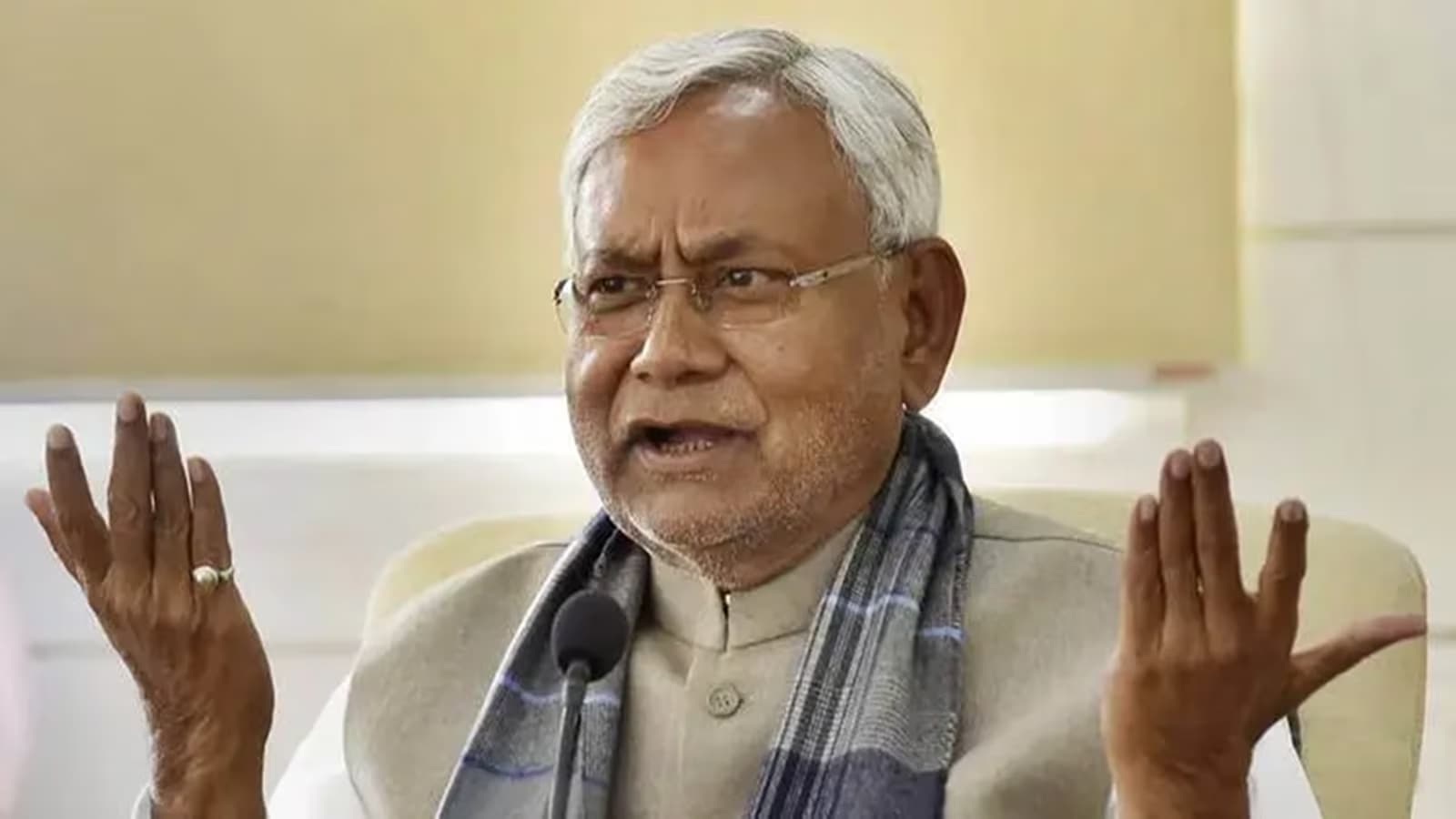
The nomination of Nitish Kumar to the Rajya Sabha has triggered intense discussion in political circles across India. After leading the National Democratic Alliance (NDA) to a decisive victory in the Bihar Legislative Assembly elections and remaining the central figure of the state’s politics for nearly two decades, his shift would mark more than a personal transition. It would symbolise the closing of a distinctive phase in Bihar’s political evolution, often described as the “Nitish Era”, a period in which the state moved gradually from administrative fragility to relative stability, and from a reputation for disorder to a narrative of cautious institutional rebuilding. Much like the transition of long-serving state leaders such as Shivraj Singh Chouhan from the politics of Madhya Pradesh to a larger national role, Nitish Kumar’s move to the Rajya Sabha also marks the beginning of a new phase in which his state-level governance experience would inform wider national policy debates.
When Nitish Kumar assumed office as Chief Minister in 2005, Bihar faced a deep crisis of governance. Infrastructure was weak, public institutions struggled to deliver basic services, and the state’s image nationally was overshadowed by stories of caste violence, kidnapping for ransom, and land conflicts. Restoring the authority of the state, therefore, became Nitish’s first and most urgent priority. His government’s emphasis on law and order, administrative discipline, bureaucratic accountability, and improvements in policing altered the environment of everyday life. The restoration of a sense of security reshaped public confidence and created the conditions for economic activity to expand.

Over the following years, Bihar’s economy registered significant growth. The state’s Gross State Domestic Product is estimated to have expanded to nearly Rs 10.97 lakh crore by 2025–26. Government finances also grew considerably. The state budget, which stood at around Rs 22,000–24,000 crore in the mid-2000s, has expanded to approximately Rs 3.47 lakh crore in 2026–27. Per capita income, although still among the lowest in the country, has risen from about Rs 8,773 in 2004–05 to nearly Rs 76,490 in 2024–25. Road connectivity improved dramatically, electricity access expanded, and administrative infrastructure at the district and block levels received long-overdue investment.
Fiscal governance also underwent an important transformation. Bihar had long suffered from weak expenditure management, once symbolised by the notorious phenomenon of “March loot”, when departments rushed to spend funds at the end of the financial year. Under Nitish’s leadership, administrative systems were gradually streamlined. The partnership between Nitish Kumar and Sushil Kumar Modi proved particularly significant in stabilising fiscal policy and improving budget management.
Yet the most profound legacy of Nitish Kumar’s tenure lies beyond infrastructure expansion or macroeconomic indicators. His most transformative intervention has arguably been the social repositioning of women in Bihar. In a state where deeply entrenched patriarchal norms historically restricted women’s mobility and public participation, Nitish Kumar’s policies sought to open new spaces for female agency in education, economic life, and politics.
One of the earliest and most influential initiatives was the bicycle scheme for schoolgirls, which provided financial support to enable girls to travel to secondary schools. What appeared at first as a modest welfare intervention had wider social consequences. The sight of thousands of adolescent girls cycling to school became a powerful symbol of changing gender norms in Bihar. School enrolment and retention among girls increased significantly.
Parallel to this, the Jeevika rural livelihoods programme expanded networks of women’s self-help groups across the state, linking them to microfinance, training, and collective enterprise. The initiative strengthened women’s financial inclusion and created new avenues for their economic participation. It also drew international attention as one of the largest women-centred livelihood programmes in South Asia. Political empowerment followed these social interventions. Nitish Kumar’s government expanded reservations for women in panchayats and urban local bodies, enabling thousands of women to enter grassroots political institutions. For many villages, the presence of women representatives altered patterns of decision-making and introduced new priorities in development discussions. The reservations in jobs also made women visible and more empowered in police stations, government offices, and educational institutions as teachers, among other roles.
Perhaps the most debated decision of his tenure was the introduction of statewide liquor prohibition in Bihar. While economists and administrators continue to question its fiscal costs and enforcement challenges, the policy carries a strong social message. Many women viewed it as improving household welfare and reducing domestic distress linked to alcohol consumption and domestic abuse. Politically, it strengthened Nitish Kumar’s support among women voters, who have emerged as a decisive electoral constituency in Bihar. Alongside this, his broader political strategy reshaped social coalitions by mobilising Extremely Backward Classes, Mahadalits, and sections of Muslim voters, softening rigid caste polarisation and placing governance and development more firmly at the centre of politics.
His experience and unmatched political acumen could enrich national debates on federalism and development. For Bihar, however, such a transition would mark a significant leadership shift. Both the Janata Dal (United) and the Bharatiya Janata Party (BJP) will need to sustain the political balance and developmental momentum he maintained for nearly two decades, while the future of the JD(U) will depend on its ability to evolve beyond a leadership-centric structure into a stable regional political institution.
The writer teaches at Patna University

