



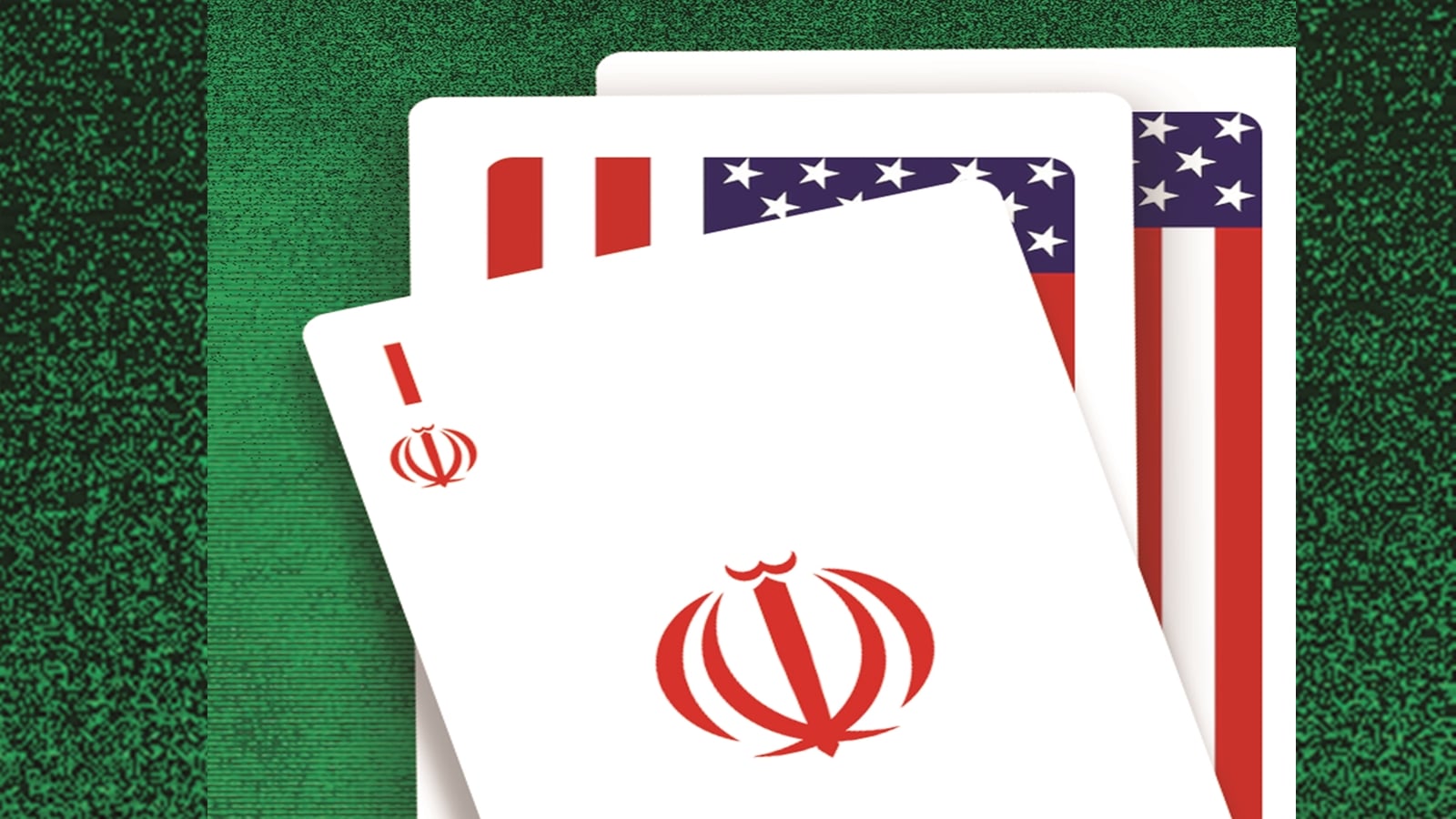
Codenamed Operation Epic Fury by the US and Roaring Lion by Israel, the “preemptive war” on Iran interrupted active diplomacy, purportedly to “remove existential threats”. Analysing the Heritage Foundation’s Project 2025 (which US President Donald Trump’s administration has operationalised substantially), this war was a calculated bid to redraw the balance of power in West Asia, free up geostrategic bandwidth for the Indo-Pacific, disrupt China’s oil lifelines from Venezuela and Iran (although with almost 1 billion barrels stockpiled, China is insulated), reassert the petro-dollar’s hegemony (both Venezuela and Iran were trading in non-dollar currencies) and curb Iran’s drone supplies to Russia for deployment in Ukraine. India must urgently recalibrate to counter these tectonic global shifts, for which External Affairs Minister S Jaishankar’s vapid parliamentary statement offers no blueprint.
US-Israeli forces assassinated Supreme Leader Ayatollah Ali Khamenei to paralyse Iran’s command structure and trigger internal upheaval. They also dropped 2,500 bombs across 131 Iranian cities in the first 30 hours, targeting missile launchers, drone manufacturing units and economic infrastructure. Meanwhile, the Western alliance enhanced naval deployments across West Asia. Despite this, victory eludes the US-Israel axis because Iran has chosen the Samson option. Epic Fury/Roaring Lion has hardened public opinion within Iran, which was inevitable given the killing of the Ayatollah and over 1,200 Iranians, including schoolchildren, during Ramzan. Tehran’s Operation True Promise 4 has become an attrition war.

Lacking conventional parity, Iran is retaliating asymmetrically — redefining escalation thresholds to exhaust US-Israeli defensive systems. To deter deeper allied engagement, it is also widening the battlefield by striking military bases, data centres, energy infrastructure, consulates, and transport hubs in the Gulf monarchies. The de facto closure of the Strait of Hormuz has exacerbated this. Furthermore, Iran’s new leadership has decentralised powers across ministries and provincial administrations to circumvent the targeting of Iran’s intelligence, internal security and institutional architecture, and activated the Axis of Resistance.
The downstream consequences of this war will engulf the whole world. For example, major maritime insurers, including Lloyd’s (which underwrites 40 per cent of marine cargo), Gard, Skuld, NorthStandard, the London P&I Club, the American Club and MS&AD Insurance Group are cancelling war risk coverage for vessels. Without insurance, West Asia shipping will halt, and companies will not be able to raise capital or participate in public markets. A global insurance repricing could even trigger a financial crisis.
Unfortunately, the BJP government has plunged India into a (geo)economic and strategic whirlpool. First, over 50 per cent of India’s LNG imports, 50 per cent of crude oil imports, and over 90 per cent of LPG imports come from West Asia, mostly routed through the Strait of Hormuz. Given that India reduced Russian oil imports to 19.3 per cent of total oil imports by January 2026 (although the US has deigned to “grant” a 30-day OFAC waiver), we are unsustainably dependent on oil from Gulf states and US-controlled Venezuela. Volatility in oil markets will invariably spark socio-economic volatility domestically. For every $10 rise in crude prices, India’s import bill will jump by $13-14 billion annually, drive consumer inflation by 35 basis points and shave 30 basis points off economic growth. This will also impact the rupee, which is hurtling toward the 100 per-dollar cliff. To tackle these, the RBI may hike interest rates, further suppressing private investment.
Second, with six of India’s largest Gulf trading partners now in active conflict zones, trade with the GCC (totalling $178.7 billion) will be disrupted. For example, 60 per cent of the LNG used for urea manufacturing is imported from Qatar. This being halted will impact fertiliser subsidies and deepen the woes of Indian farmers. Likewise, Indian households will also face acute cooking gas shortages with LPG imports under threat. Similarly, Indian exports to non-West Asian markets will dampen because air and sea shipments are facing high premiums.
Third, over 9 million Indians living in West Asia remit $40 billion annually, accounting for 55 per cent of India’s total remittances. Beyond the BJP government’s failure to protect diaspora Indians, a stressed labour market will adversely affect remittances, which will compress mass-market consumption and impact growth, given remittances contribute 3.4 per cent to GDP.
Fourth, the vilification of Iran seeks to legitimise the BJP government’s implicit approval of kinetic action violating the UN Charter. Without discounting our strategic partnership with Israel — which enjoys bipartisan support — we must recognise that Iran consistently supported India with discounted oil, a base for covert operations against Pakistan, counterbalancing Azerbaijan (which supports Pakistan), a strategic link to Afghanistan and Central Asia, and with the Shahid Beheshti terminal at Chabahar (which counterweights Pakistan-China’s Gwadar Port). Disregarding these investments, the BJP ecosystem is gratuitously antagonising Iran just as it did with Bangladesh, overlooking that a weakened Iran strengthens Turkey, Pakistan’s key ally.
Given our civilisational, geo-economic and strategic stakes in West Asia, the BJP government should ideally have deployed India’s relationships, painstakingly forged since Independence, to de-escalate and reassert that security, sovereignty, justice and prosperity are inalienable public goods. Instead, Prime Minister Narendra Modi’s visit to Israel on the war’s eve created the perception of an endorsement — both of military escalation, and of PM Benjamin Netanyahu’s Likud party before Israel’s elections. This perceived sanction of coercive unilateralism undermines India’s legitimate position on Pakistan-Occupied Kashmir. The BJP government has compounded this by tacitly condoning the assassination of a sovereign nation’s leader and the Iranian warship’s sinking in our strategic backyard, as well as by abdicating leadership of BRICS. Unfortunately, the Modi doctrine of foreign policy has made India complicit in dismantling the rules-based world order, edges us towards vassalage and compromises our strategic interests.
Prime Minister Jawaharlal Nehru famously asserted, “The objectives of our foreign-policy are the preservation of world peace and enlargement of human freedom…Where freedom is menaced or justice threatened or where aggression takes place, we cannot be and shall not be neutral.” This means pursuing both our national interests and advancing our core values. Only through an urgent recalibration of our foreign policy and return to a principled middle path can India reclaim leadership of the Global South, and realise our manifest destiny.
Khurshid was external affairs minister, GOI. Deshpande is director, Samruddha Bharat Foundation

