



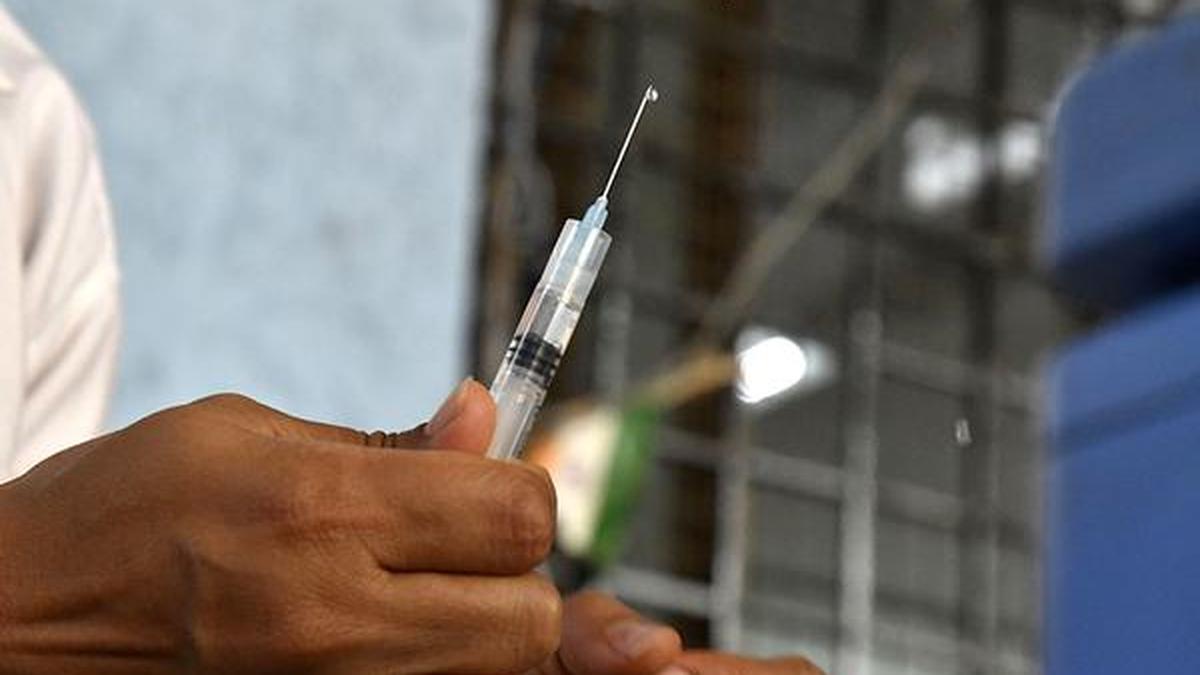
India’s long wait for a dengue vaccine may finally be coming to an end. Takeda’s tetravalent dengue vaccine, TAK-003 (called ‘Qdenga’), recently received clearance from the Subject Expert Committee (SEC) under the Drugs Controller General of India (DCGI) for use among individuals aged 4 to 60 years. This marks a significant milestone in the country’s fight against a disease that causes millions of infections and thousands of hospitalisations every year, especially among children.
While India has not experienced a large nationwide dengue surge in the past year, the disease remains endemic, with substantial transmission and a long-term rising trend. For decades, dengue control in India relied almost entirely on vector control measures such as eliminating mosquito breeding sites, insecticide use, and public awareness campaigns. While essential, these strategies have had limited success in preventing recurring outbreaks. The arrival of a vaccine, therefore, represents a shift from a reactive to a more preventive approach.
TAK-003 comes with several advantages. It has been evaluated in large global trials involving more than 28,000 participants and has already been approved in more than 40 countries. Importantly, unlike an earlier dengue vaccine, it does not require pre-vaccination screening to determine prior dengue infection, making it simpler to use in real-world settings. The vaccine has also demonstrated good safety and, crucially, strong protection against severe dengue and hospitalisation — both outcomes that matter the most in clinical practice.
In a country like India, where healthcare systems are often stretched during dengue seasons, even a modest reduction in the number of severe cases could have a substantial impact. Fewer hospital admissions, reduced intensive care burden, and lower mortality in children and adolescents would all represent meaningful gains.
Challenges and limitations
However, it is equally important to recognise what this vaccine can and cannot achieve. Dengue is caused by four closely related but distinct viruses, known as serotypes (DENV-1 to DENV-4). Immunity to one serotype does not guarantee protection against the others, and in some cases, can even predispose an individual to more severe disease upon subsequent infection. This makes developing a vaccine for dengue uniquely challenging: an effective vaccine must provide balanced protection against all four serotypes.
Herein lies a key limitation of TAK-003. While it performs very well against the DENV-2 serotype, since it was developed on the DENV-2 backbone, and reasonably well against DENV-1, its effectiveness against DENV-3 and DENV-4 appears to be lower — particularly in individuals who have not previously been infected with dengue.
This is not merely a theoretical concern. India’s dengue epidemiology is evolving, with increasing reports of DENV-3 becoming more prominent in several regions. Recent data from India also show that all four dengue serotypes continue to co-circulate, with DENV-2 still predominant in many regions but DENV-3 contributing a substantial and increasing proportion of cases. For instance, surveillance from North and Western India has reported DENV-2 accounting for around 48-66% of cases, followed by DENV-3 at around 20-30%, with DENV-1 and DENV-4 contributing smaller shares.
If this trend continues, the overall effectiveness of the vaccine at a population level may be lower than expected. In simple terms, while vaccinated individuals are still likely to be protected from severe disease, they may continue to experience dengue infections, especially during outbreaks dominated by DENV-3.
This distinction is crucial. TAK-003 is best understood as a vaccine that modifies the disease rather than as one that blocks transmission. In other words, it is likely to reduce the severity of illness rather than prevent infection altogether. As a result, dengue outbreaks will not disappear and public health measures such as vector control will remain indispensable.
Another important consideration is cost and access. Dengue vaccines are expected to be relatively expensive, and TAK-003 requires two doses administered three months apart.The expected price of TAK-003 in India is likely Rs 3,000-6,000 per dose and Rs 6,000-12,000 for the full course. While public programmes may avail the shots at lower prices, questions about affordability and compliance — particularly among lower-income and rural populations — remain unanswered. At least in the initial years, uptake is likely to be limited to the private sector or targeted programmes in areas with a high burden of dengue.
The SEC has appropriately mandated post-marketing safety and effectiveness studies in the Indian population. These will be critical to understand how the vaccine performs in real-world conditions, across different regions and serotype patterns.
Looking ahead, TAK-003 may be only the first step in India’s dengue vaccine journey. A second generation of vaccines, based on a different scientific approach developed by the U.S. National Institutes of Health (NIH), is currently under evaluation.
Indian pipeline
India’s dengue vaccine pipeline is advancing, with an indigenous candidate called ‘DengiAll’, developed by Panacea Biotec in collaboration with the Indian Council of Medical Research, currently undergoing large phase III clinical trials. Based on the NIH’s TV003 platform, DengiAll is a single-dose vaccine designed to provide more balanced protection across all four serotypes.
A similar vaccine has already been approved in Brazil and it has shown strong protection against severe dengue. If the Indian candidate is also successful, it could be available around 2027. These vaccines aim to provide more balanced protection across all four serotypes and may offer the additional advantage of a single-dose regimen.
Early data from similar vaccines tested elsewhere are also promising, particularly in terms of protecting against severe dengue and broader serotype coverage. If these findings are confirmed in Indian trials, such vaccines could be better suited for large-scale public health deployment.
For policymakers, the challenge will be to balance urgency with prudence. There is a clear and immediate need to reduce the burden of severe dengue and TAK-003 is a valuable tool with which to achieve this. At the same time, the long-term strategy must remain flexible, allowing for the country to adopt better vaccines as the evidence evolves.
For clinicians, clear communication will be essential. Their and their patients’ expectations need to be realistic: the vaccine is not a cure-all but it is a meaningful step forward. Even if it does not eliminate dengue, it can save lives and reduce complications.
Ultimately, the introduction of a dengue vaccine in India should be seen not as the culmination of efforts but as the beginning of a new phase. Success will depend not only on the vaccine itself but also on how well it is integrated with surveillance, vector control, and future innovations.
In public health, progress often comes incrementally. TAK-003 may not be the final answer to dengue in India but it is undoubtedly an important start.
Vipin M. Vashishtha is director and paediatrician, Mangla Hospital and Research Centre, Bijnor.
Published – April 01, 2026 08:00 am IST

