



For nearly eight decades, the United States claimed to stand for a rules-based international order. The idea was simple. States should respect sovereignty. Wars should follow international law. Organisations like the United Nations should restrain the reckless use of power. This framework, though imperfect, helped shape the international order for many years. Great powers sometimes did break the rules, but they still felt the need to justify their actions in the language of international law.
That system, built after the Second World War, is now in deep trouble. A series of developments in recent years has shaken its foundations. President Donald Trump’s foreign policy, Israel’s war in Gaza, and the recent attack on Iran that killed their Supreme Leader, Ayatollah Seyed Ali Hossein Khamenei and the United States operation that abducted Venezuelan President Nicolás Maduro all point in the same direction. These are not isolated crises. Together, they suggest that the political and legal framework built after the Second World War is fraying badly.

The liberal international order was never a neutral system. It reflected the power and interests of the US and its allies. But it also established rules that, at least in principle, constrained how power could be used. The United Nations, the International Court of Justice, and later the International Criminal Court were all creations intended to regulate conflict and provide some measure of accountability. Today, those institutions appear increasingly marginal.
Much of that turn can be traced to changes in American foreign policy under Donald Trump’s presidency. He has been openly sceptical of multilateral institutions and international agreements. During both his first and second terms, the US withdrew from or weakened several international commitments. The US left the Paris Climate Agreement during Trump’s first presidency, and then rejoined under President Biden. It pulled out of the Iran nuclear deal in 2018. Washington also suspended funding to several UN agencies and frequently criticised the legitimacy of international courts. Trade agreements were renegotiated or abandoned. Alliances that had once been treated as strategic partnerships began to be framed in transactional terms. The language of American diplomacy also changed. Instead of emphasising international norms, the focus shifted toward immediate national gains. That shift undermined the authority of the very institutions the US had helped create.
Its consequences became visible in several theatres of conflict.
The war in Gaza is perhaps the most vivid example. After the Hamas attacks on Israel in October 2023, Israel launched a massive military campaign in Gaza. The scale of destruction that followed has been extraordinary. By early 2026, international estimates put Palestinian deaths at over 70,000. Many of those killed were women and children. Entire neighbourhoods have been destroyed, and most of Gaza’s population has been displaced.
The humanitarian consequences have been devastating. Hospitals, schools, and basic infrastructure have been repeatedly damaged or destroyed. Aid agencies warn of famine, disease, and long-term social collapse in the enclave. Human rights organisations and international agencies have raised serious concerns about violations of international humanitarian law. The International Criminal Court issued an arrest warrant for Israeli Prime Minister Benjamin Netanyahu over war crimes in November 2024.
Yet, Israel has faced little real pressure from its most powerful ally. Washington has continued to provide diplomatic backing and military support. American vetoes, in the UN Security Council, have repeatedly blocked stronger international action. Israel’s actions in Gaza illustrate how impunity works in practice. Repeated violations of international law have been carried out without any accountability.
The crisis surrounding international norms does not stop in West Asia.
In January 2026, in a US military operation in Venezuela, President Nicolás Maduro was captured and taken to Washington. The operation drew a storm of criticism from legal scholars and international organisations. Many argued that abducting a sitting head of state from his own country was a serious violation of international law and the UN Charter. The episode revived memories of earlier periods in international politics when powerful states routinely intervened in weaker countries. For many observers, it looked like a return to the old Monroe Doctrine.
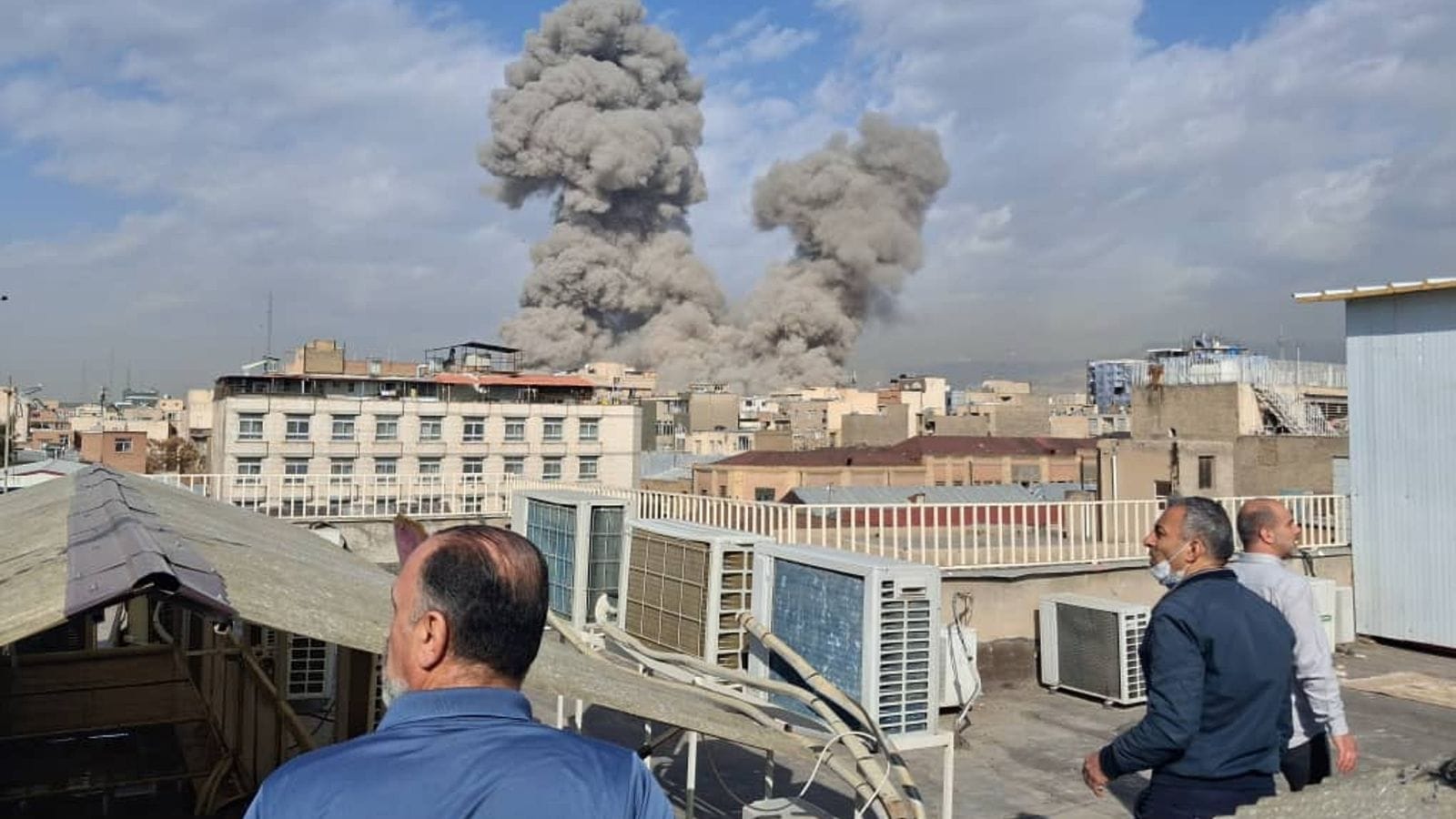
The attack on Iran is a step further and a much more dangerous one.
The assassination of Iran’s supreme leader, Ali Khamenei, by a joint US-Israel operation crosses a major line in international politics. Targeted killings of state leaders are extremely rare because they pose enormous legal and strategic risks. Washington has acknowledged it was done at the behest of Israel, and its justification rests on claims of “imminent threats.” But this argument has a troubling history. In 1999, NATO intervened in Kosovo without the approval of the UN Security Council. In 2003, the US invaded Iraq on the claim that Saddam Hussein possessed weapons of mass destruction and posed an imminent danger. That claim later proved false.
Each of these episodes weakened the legal framework governing the use of force. The strike against Iran pushes that erosion even further. If powerful states can eliminate foreign heads of state based on vague claims of security threats, the principle of sovereignty begins to lose meaning.
The consequences extend beyond West Asia. Other major powers are watching closely. Russia and China have long argued that Western states apply international law selectively. Recent events have given those arguments new credibility. The peril is not only political but structural. International cooperation depends on some mutual acceptance of rules. Without that foundation, many global challenges become far harder to manage. Climate change cannot be addressed by one country acting alone. Countering nuclear proliferation requires robust international agreements. Pandemics demand coordination across borders.
These efforts cannot succeed in a world where rules carry little weight.
The liberal international order was never perfect. It often reflected the interests of powerful states and sometimes ignored the concerns of the Global South. Yet it still provided a framework that placed some limits on the use of force. That framework now looks increasingly fragile.
From Gaza to Tehran and from Caracas to Washington, the message being sent to the world is simple. Power, not law, is once again becoming the primary currency of international politics.
The writer is the Director of the MMAJ Academy of International Studies, Jamia Millia Islamia University, New Delhi

