



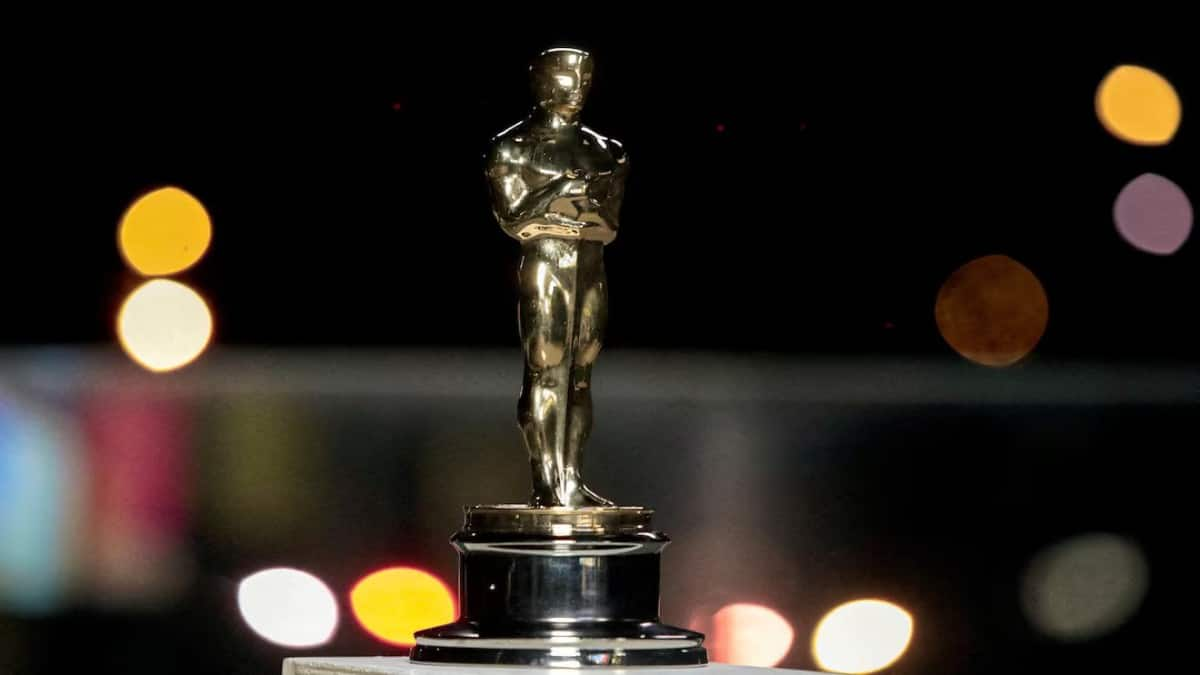
Cinema likes to pretend it is surprised by awards season. It performs astonishment at omissions, polite outrage at snubs, and solemn nods to “important conversations”. Yet nothing about awards is accidental—not the nominations, not the silences, and certainly not the reactions. When it comes to the Oscars, this choreography becomes most visible. Narrative does not merely set the mood for what follows; it scripts it. The hope is that awards will then harden that narrative into canon, regardless of whether the cinema itself earns such permanence.
This year, with 16 nominations, Sinners, a film elevated far more than its capacity, is the chosen one to see the narrative. Positioned as an event, a moment, a cultural inevitability, it’s this year’s Black Panther – a comic book, amusement park kind of film being elevated to a milestone. Awards have never existed to identify what will endure. They exist to stabilise a moment—to affirm what an industry believes it needs to stand for right now.
The pattern is familiar. In 1991, Dances with Wolves emerged as the great reconciliatory epic of its time—expansive, earnest, and morally legible. Its sweep and sentiment were rewarded as signs of maturity. That same year, Goodfellas, jagged and unrepentant, lost decisively. The awards did not misjudge craft; they documented preference. Today, Goodfellas is frequently revisited, quoted, studied, and argued with. The other is remembered largely as a historical outcome.
The pattern repeats across decades. In the early 2000s, Crouching Tiger, Hidden Dragon arrived alongside the West’s growing fascination with China—its capital, its culture, and its promise. In the mid-2000s, Crash (2005) spoke to a period of acute moral anxiety, offering resolution where complexity might have unsettled. Later, towards the end of the decade, Slumdog Millionaire (2008) transformed deprivation into kinetic uplift at a moment when global optimism demanded such translation. Each was celebrated, but hardly any of them are worth remembering.
Awards, in this sense, function less as arbiters of cinema than as archivists of institutional mood. They tell us what the industry wished to reward in a particular year—what anxieties it sought to soothe, what narratives it needed to elevate, and what discomforts it chose to avoid.
Confusing that record with legacy has always been the critical error. There are, of course, exceptions. The Hurt Locker (2009) benefited from its political timing but refused sentimentality thanks to its psychological claustrophobia that captured a timeless zeitgeist of modern warfare. Its restraint, its moral ambiguity, and its refusal to explain itself allowed it to outlive its moment.
Make no mistake—Sinners is being celebrated not because of what it did cinematically, but because of what it symbolises industrially. It feels less like a movie than a consensus. It will likely sweep the categories that matter, not because dissent is impossible, but because dissent is inconvenient. Cinema has always been a delivery system for power—soft power, emotional power, and ideological power. What changes is who controls the narrative and why it needs controlling at that moment.
Hollywood’s current anxiety—its heightened moral urgency, its aggressive signalling—has little to do with art and much to do with the erosion of authority. The ‘Trumpian’ political reality, the fragmentation of audiences, and the loss of cultural monopoly: all of it has made legacy media feel cornered. Remember how Ricky Gervais called it all out—awards become a way to reassert relevance, to announce, ‘We still decide what matters.’
The uncomfortable truth is this: unless you adhere to the preferred narrative of those underwriting the ecosystem, you do not make the cut. And those who do adhere—the dutiful soldiers of the moment—are often the first to be discarded once the utility expires. They push the agenda, gain symbolic proximity to power, and are then quietly replaced by the next necessary voice. No long-term protection. No lasting capital.
Which brings us to One Battle After Another. In a saner ecosystem, its presence would dominate the conversation. Not because it flatters the moment, but because it wrestles with it. The film operates within the ‘system’ (read Old Hollywood) that mistakes alignment for greatness and consensus for legacy but still manages to not dilute the narrative. Bob Ferguson (
Leonardo DiCaprio), a washed-out revolutionary, becomes an unwilling single parent to his 16-year-old daughter Willa (
Chase Infiniti) after his wife Perfidia (Teyana Taylor), who led the revolutionary group, walks out. Bob is in hiding, mostly smokes up and is forced back into action with the help of Willa’s karate teacher Sergio (Benicio Del Toro) after his daughter is attacked.
One Battle After Another is a timely piece that looks at themes that mostly inspire impassioned drawing room debates and shows how action often comes at the cost of lives of those close to you. If Paul Thomas Anderson finally receives Best Director recognition, it will serve two purposes. The obvious one: acknowledging a singular achievement in direction. The more important one: a belated doff of the hat to one of the most rigorous, uncompromising filmmaking careers of the modern era. It would be career recognition disguised as annual judgement—a quiet correction rather than a proclamation.
This is not an indictment of politics in cinema. Cinema has always been political. It is, rather, an observation about fatigue. Awards will continue to certify the mood of their moment. What remains unspoken, yet persistent, is the fate of those who serve these narratives most faithfully. The artists who align closely with the moment are rarely protected by it. They advance the agenda, gain visibility, and are then quietly replaced when the mood shifts.
(The writer is a film historian. Views expressed in the above piece are personal and solely those of the author. They do not necessarily reflect Firstpost’s views.)
End of Article

